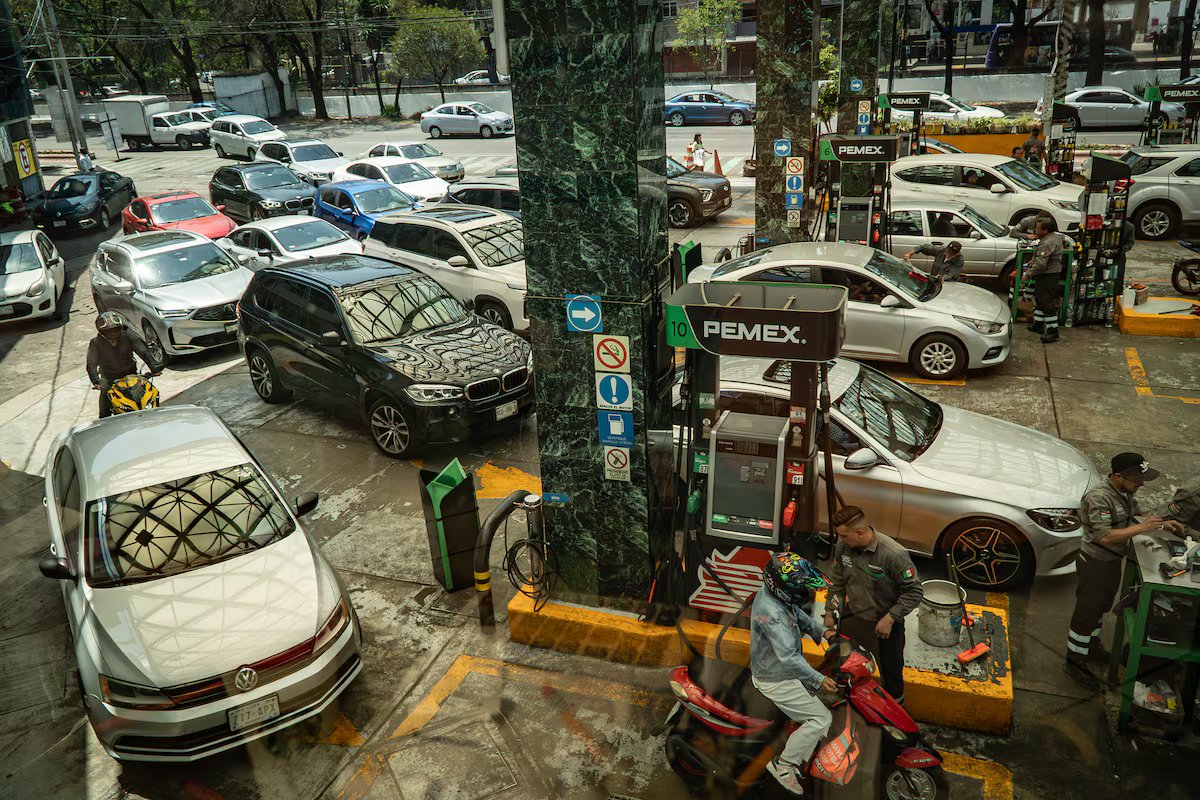
The world economy suffers from the war in Iran. A barrel of crude oil is trading at around $105, very close to the $110 that the International Monetary Fund (IMF) set two weeks ago, at its latest World Economic Outlook report (WEO, in its acronym in English), as the floor from which a global economic recession could develop. Everything will depend on the magnitude and duration of the conflict, of course, but the negative consequences are already putting maximum strain on economies around the globe, mainly due to the rise in inflation, a product of the skyrocketing prices of hydrocarbons.
The main Latin American countries have responded in diverse ways to the new scenario: from extraordinary subsidies in Brazil and tax cuts in Mexico, to transferring all the pressure to citizens’ pockets, as in Chile. A regional overview allows us to glimpse the complexity of the crisis and the efforts—or not—of governments to mitigate them.
Mexico: fewer taxes and agreements with gas stations
From the tortilla to the chili, including the tomato, the rise in energy has had a full impact on the Mexican table. Inflation, although its advance moderated in the first half of April, stood at 4.53% annually, compared to 3.96% in the same period last year.
The Government of Claudia Sheinbaum seeks to alleviate the pressure on prices through two parallel mechanisms: a sacrifice in the collection of the Special Tax on Production and Services (IEPS) to contain the rise in fuel prices and an agreement with gas stations to keep prices anchored, although businessmen have indicated that this strategy has begun to weigh on their profits. For public finances it has also represented a growing cost: 5,000 million pesos (287 million dollars) that the treasury stops receiving each week, Sheinbaum said.
Although fiscal stimuli and negotiations with unions work as a buffer, they do not completely contain the adjustments. Only in the first half of April, tomatoes became more expensive by 24.37% and serrano peppers by 21.94%, both with a great impact on the general basket and fundamental for the rich Mexican cuisine.
Brazil: aid for diesel, gas and airlines for 1.9 billion dollars
Luiz Inácio Lula da Silva signed the first presidential decrees to alleviate the impact of the war on the pockets of Brazilians 12 days after the United States and Israel began bombing Iran, when it became clear that it would not be a lightning operation. That March 12, Lula approved a subsidy and tax reduction on diesel, used by drivers and agricultural tractors, and an extra tax on oil exports to avoid any shortage.
“We are doing economic engineering to prevent the effects of the irresponsibility of wars from reaching the people,” President Lula proclaimed. And he promised: “We will do everything possible.”
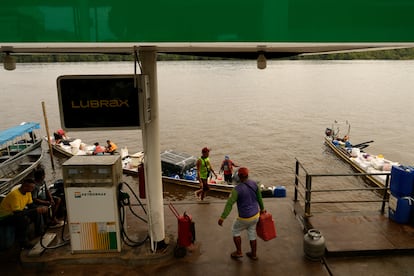
On April 6, Lula expanded aid with a package of 9.5 billion reais ($1.9 billion) to contain the effects on inflation. The Strait of Hormuz was still effectively closed—reducing the world’s supply of oil and fertilizer—ceasefire negotiations had not even begun, and Brazil has elections in a few months.
The federal diesel subsidy increased (a measure to which the states joined), taxes on biodiesel were eliminated and imported cooking gas was subsidized to equal its price to that of domestic production. Credits for airlines and a reduction in the tax on aviation kerosene were also approved, in addition to an extra tax on tobacco to compensate for the loss of revenue.
As the war drags on, Brazil plans to increase the proportion of methanol it mixes with gasoline in May. Another step to reduce dependence on imported fuel. The aid, valid for two months, can be extended for another two months.
Argentina: a sacrifice to libertarian orthodoxy
The president of Argentina, Javier Milei, has not missed any opportunity to stage his support for the US and Israeli attack against Irann. But the global rise in fuel prices comes at the worst possible moment for the president, when opinion polls warn about growing social unrest in Argentina and a marked decline in the popularity of the ultra-liberal adjustment applied by the Government.
If the great management achievement was the slowdown in inflation, that result has been in question since, in May of last year, the consumer price index began to increase until today it has accumulated 10 consecutive months of increase: in March it reached 3.4% monthly and 32.6% year-on-year. The increase in hydrocarbons gave a new boost to inflation in the country, in a context of fiscal adjustment, monetary squeeze, drop in consumption, wages, employment and revenue.
To try to moderate the impact on prices, the Milei Government decided to relegate the president’s ultraliberal principles. After gasoline prices registered increases of more than 20% in the first quarter of the year, the state oil company YPF resolved to freeze the prices of different fuels from April 1 for 45 days. Most companies in the sector took similar measures.
In a country as diverse as Argentina, the increase in the price of hydrocarbons has a dissimilar effect that varies regionally. Finances are favored in the oil and gas producing provinces, especially in Patagonia (south) and the Cuyo region (west): especially Neuquén, headquarters of the Vaca Muerta unconventional crude oil field. In contrast, the most affected districts are those in which fuel use is intensive for agricultural and industrial production, such as the provinces of Buenos Aires, Córdoba and Santa Fe. That is where most of the country’s population is concentrated.
Colombia: return of subsidies and limited impact
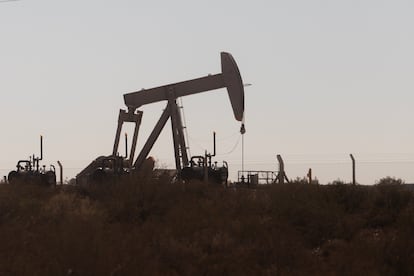
In Colombia, an oil-producing country that, however, must import part of the processed gasoline due to limitations in its refining capacity, the impact of crude oil on inflation in recent months has been limited. Although the country registers a rebound in price increases – which closed in March at 5.56% year-on-year -, the internal debate points rather to the large increase in the minimum wage decreed by the Government at the end of 2024.
However, the Colombian State has subsidized the price of gasoline for years, which has generated a significant fiscal gap. The Government of Gustavo Petro gradually closed that gap, but in February it tried to take a step in the opposite direction: it reduced the price of fuel to recreate a small subsidy. He had to reverse the decision just a month later. It was, in any case, a minor adjustment, with limited impact both economically and politically.
Chile: “historic” price spike at pumps
The Administration of José Antonio Kast set among its priorities a radical fiscal adjustment and, under the motto of an emergency Government and a profound criticism of the public finances inherited from Gabriel Boric, decided not finance the international increase in the price of oil. For this reason, Chileans have had to directly assume this increase that has been classified as “historic.”
Chile had a stabilization mechanism in place since 2014, to contain prices and not have a full impact on the pockets of Chileans, but it was not implemented. Consumers, therefore, have had to pay for the increase, mainly in gasoline and diesel, because the Executive subsidizes paraffin (indispensable in winter for families with less money), provides a bonus of $112 per month for taxis, buses and transportation of schoolchildren (which the beneficiaries classify as insufficient) and, in addition, the freezing of prices in public transportation.
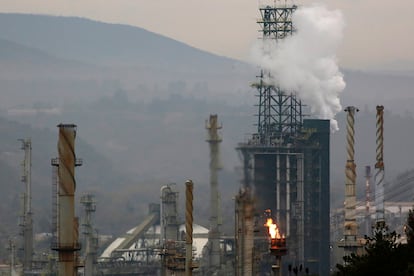
But in a country like Chile, where a good part of consumer goods are transported by land, the rise in heavy cargo transportation has had a direct impact on household finances. Monthly inflation stood at 1% in March – the increase took place on the 26th -, above the expectations of specialists. But the April figure, which will be known at the beginning of May, should reach 1.4%, according to analysts.
This fuel price decision has cost Kast a drop in popularity, when he completes 40 days in power. Support went from 57% to 42%, according to the pollster Cadem, and disapproval rose 16 points, from 34% to 50%. Chileans are also more pessimistic about their personal economic situation and the Central Bank has cut growth projections for 2026. All while the Government presents a mega-reform with an emphasis on lowering taxes on companies.
Eyanir Chinea (Mexico); Naiara Galarraga Gortázar (São Paulo); Rocio Montes (Santiago, Chile); Javier Lorca (Buenos Aires); Juan Esteban Lewin (Bogota)