KUWAIT: As the UN refugee agency grapples with a severe funding shortfall while the number of forcibly displaced people worldwide approaches 130 million, Kuwait on Sunday reaffirmed its commitment to supporting refugees and strengthening its partnership with the UN High Commissioner for Refugees (UNHCR), underscoring the growing role of governments and the private sector in sustaining humanitarian assistance.
Speaking during a World Refugee Day event at the UN House, Assistant Foreign Minister for International Organizations Affairs Ambassador Sadiq Marafi said the unprecedented humanitarian challenges facing the world require the international community to redouble its efforts, honor its humanitarian commitments and address the root causes of displacement.
Marafi said Kuwait has spent more than three decades building a strong partnership with UNHCR, reflecting the country’s longstanding commitment to humanitarian action and support for international efforts to ease the suffering of the world’s most vulnerable people. Stressing that humanitarian action is a shared responsibility, Marafi praised the contributions of Kuwaiti charitable organizations and the private sector, particularly Zain Kuwait, for supporting humanitarian initiatives and strengthening cooperation between businesses and international organizations.

Ambassador Sadiq Marafi

Khaled Khalifa

Nawaf Al-Gharabli
Ethical dilemma
Despite generous support from partners around the world, UNHCR has secured only 29 percent of the funding required for its 2025 operations, leaving the agency struggling to meet growing humanitarian needs. “Receiving only a fraction of the funding we need leaves us with two ethically unacceptable choices: either help only a fraction of those in need or meet only a fraction of everyone’s needs,” said Khaled Khalifa, Senior Advisor and Representative of UNHCR to the Gulf Cooperation Council countries. “Both options are extremely difficult and ethically unacceptable.”
Khalifa told Kuwait Times that UNHCR appealed for $8.5 billion at the beginning of the year to assist nearly 130 million people under its mandate, including refugees, internally displaced people, asylum seekers, stateless people and returnees. So far, the agency has received less than one-third of that amount. He added that around 70 percent of displaced people live in poor and least-developed countries, where host communities are already struggling to meet their own needs.
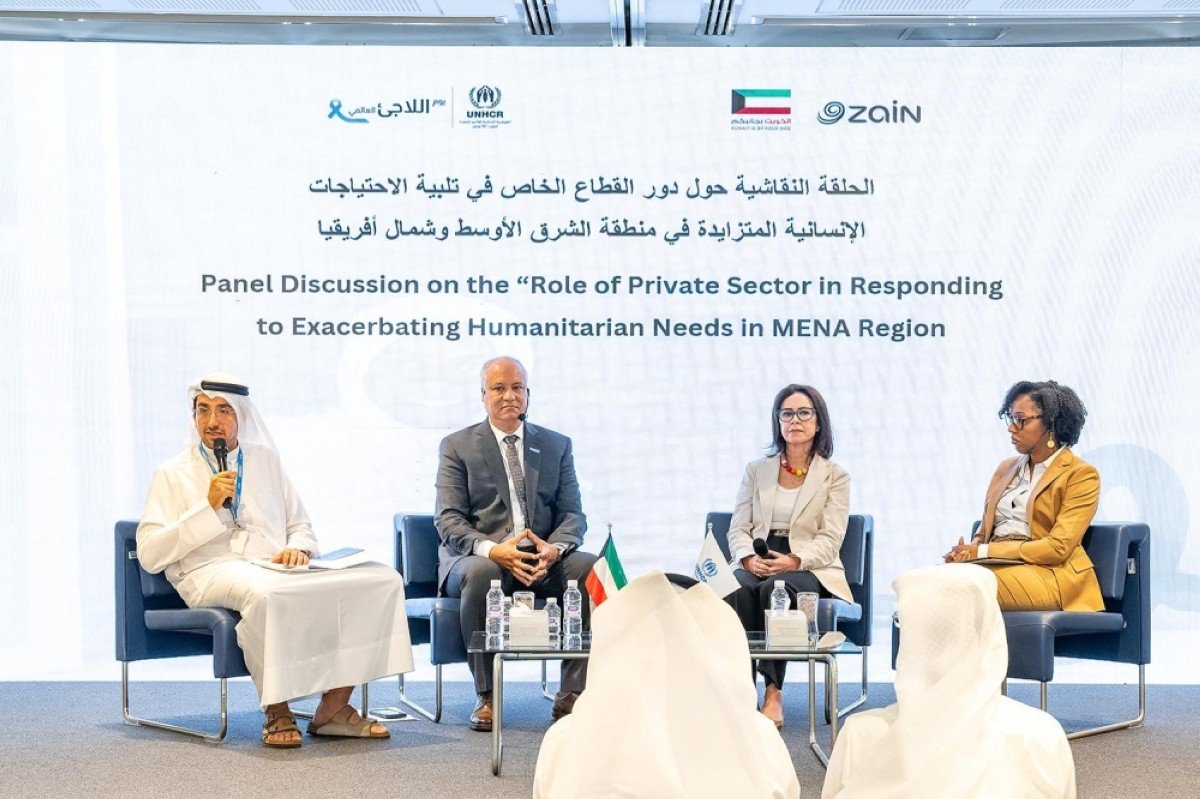
Khalifa said the widening funding gap has made partnerships with the private sector, non-governmental organizations and individual donors increasingly important, providing humanitarian organizations with greater flexibility and independence than relying solely on government funding. “If resources can be allocated solely according to humanitarian needs, regardless of political agendas or affiliations, then humanitarian principles are truly being upheld,” he said, emphasizing the importance of flexible, unearmarked funding that allows UNHCR to respond quickly to emergencies.
Reasons for hope
While highlighting the challenges, Khalifa also pointed to encouraging signs of progress. During 2025, around 14 million people returned to their homes, including more than one million Syrian refugees who returned from abroad and more than two million internally displaced Syrians who went back to their communities. Nearly three million Afghans also returned from Pakistan and Iran, while about 700,000 Sudanese returned from neighboring countries despite the ongoing conflict. “We often focus on crises and humanitarian needs, and rightly so, but there is also hope,” Khalifa said. “The partnerships we build today create real change on the ground and present a historic opportunity to support voluntary returns wherever conditions allow.”
He also highlighted the success of UNHCR’s Islamic philanthropy programs, noting that its Zakat initiatives have raised $300 million over the past five years, benefiting 10 million people in 36 countries. He added that the Global Islamic Fund for Refugees—the UN’s first endowment fund established in partnership with the Islamic Development Bank—is now supporting projects in several countries. Marking the occasion, UNHCR also celebrated 10 years of partnership with Zain, recognizing the telecommunications group’s support for humanitarian programs across the region.
Speaking at the event, Nawaf Al-Gharabally, CEO of Zain Kuwait, said that over the past decade of partnership with UNHCR, Zain has contributed to reaching more than 11,000 beneficiaries across the region, helping translate solidarity into practical humanitarian support. This assistance has been channeled into initiatives aimed at preserving human dignity and improving living conditions, including multi-purpose cash assistance, winter support programs, Ramadan humanitarian campaigns, and other targeted relief efforts for displaced and refugee families.
Building sustainability
Khalifa said sustaining humanitarian work requires moving beyond traditional funding models and involving broader participation from the private sector and the public. He described a “connection economy” approach, where companies use their platforms and customer networks to channel public contributions to humanitarian causes, rather than relying solely on corporate budgets.
“Giving doesn’t always have to come directly from a company’s own resources. A company can act as an enabler or facilitator,” he said. Khalifa noted that this model helps expand donor bases and strengthen the sustainability of aid flows, particularly as funding gaps widen. He added that in some contexts, private sector engagement has proven highly effective in mobilizing support. “In the end, everyone benefits… it’s a true win-win situation,” he said, referring to how such approaches can support humanitarian needs without adding pressure on companies’ core operations.