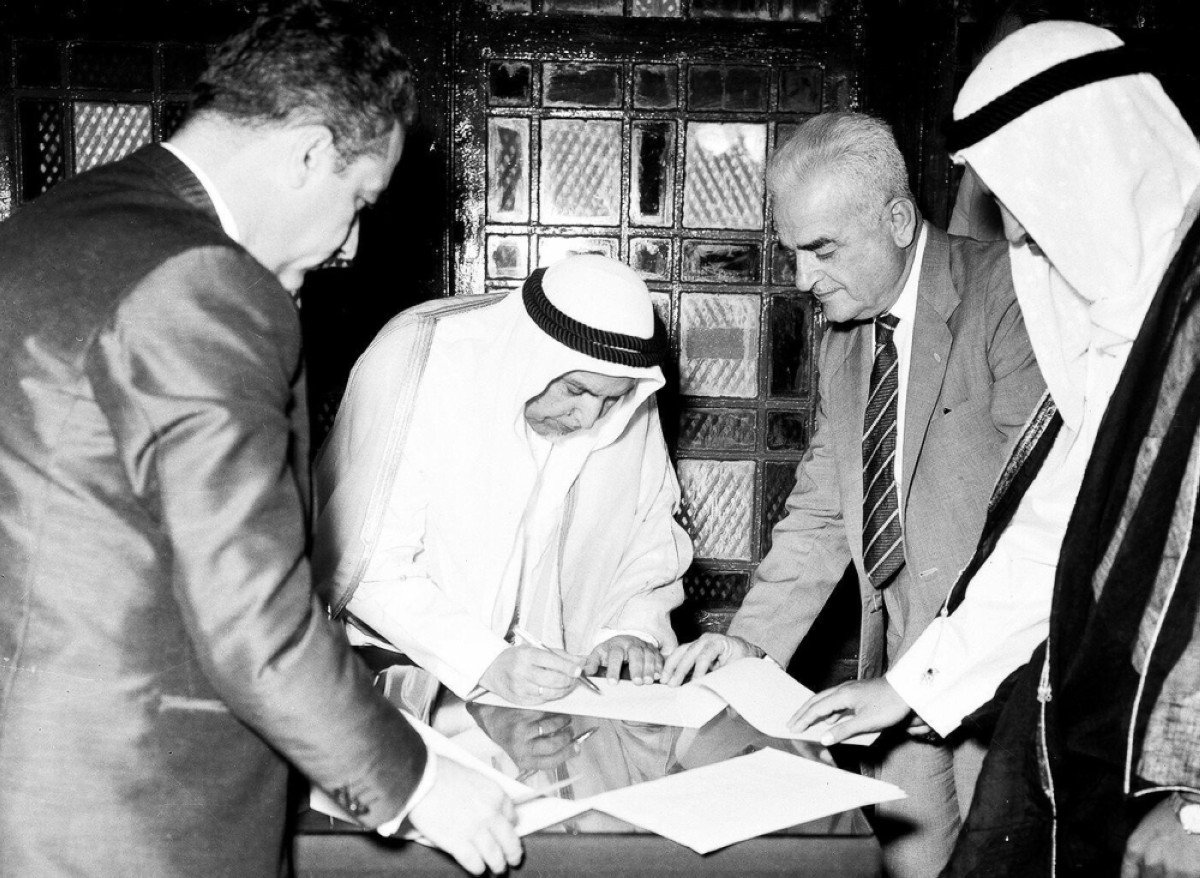
Anniversary recalls the 1961 declaration of sovereignty and the institutions that shaped modern Kuwait
KUWAIT: Kuwait marked the 65th anniversary of its independence on Friday, commemorating a milestone that helped shape the country’s modern political institutions and establish its sovereignty on the international stage. The anniversary recalls June 19, 1961, when the late Amir Sheikh Abdullah Al-Salem Al-Sabah announced the end of Kuwait’s protectorate agreement with Britain, paving the way for the country to become a fully sovereign state.
For many Kuwaitis, the occasion is a moment to reflect on the country’s path since independence, including the development of state institutions, the adoption of its constitution and its growing role in regional and international affairs. Following the declaration of independence, Sheikh Abdullah Al-Salem addressed the Kuwaiti people, describing the moment as the beginning of a new chapter in the nation’s history.
“On this glorious day in the history of our beloved homeland, we move from one stage to another in the course of history. As a new dawn breaks, we close a chapter of the past with all that it carried and contained, and open a new page represented by this agreement through which Kuwait has attained its complete independence and full sovereignty,” he said.
Three years later, on May 18, 1964, a decree merged the celebration of Independence Day with National Day, which is observed annually on Feb. 25 and marks the anniversary of Sheikh Abdullah Al-Salem’s accession.
Efforts leading to independence began years earlier. After assuming power in 1950, Sheikh Abdullah Al-Salem worked toward securing independence and establishing a constitutional framework at a time when Kuwait was preparing for broader development across multiple sectors. On Aug 26, 1961, an Amiri decree called for elections to a Constituent Assembly tasked with drafting a constitution based on democratic principles. The elected assembly completed the draft constitution, consisting of 183 articles, within nine months.
The constitution laid the foundation for Kuwait’s political system and parliamentary life, providing the framework for democratic institutions and governance. In the years following independence, Kuwait introduced a range of laws and regulations aimed at strengthening state institutions. Authorities enacted 43 civil and criminal laws, including legislation covering nationality, currency, passports and the organization of government departments. An Amiri decree also reorganized the judiciary and expanded its jurisdiction over legal disputes in the country.
Kuwait also sought to establish its place within the international community through membership in regional and international organizations. On Nov 30, 1961, the United Nations Security Council began considering Kuwait’s application for UN membership. The country was formally admitted to the United Nations on May 14, 1963, becoming its 111th member state. Kuwait already had a number of organized government departments before independence, including public works, public health, publications and publishing, education, the municipality, postal services, telecommunications, electricity and water services, social affairs, endowments, and radio and television.
Following independence, Kuwait aligned itself with international legitimacy and the principles of the global system, including opposition to aggression, support for human rights, respect for the sovereignty of states and non-interference in their internal affairs. The country also supports the role of the United Nations in maintaining international peace and security.
Sixty-five years after independence, Kuwait continues to pursue development plans and strategies aimed at advancing economic and social progress, while maintaining a moderate foreign policy focused on preventive diplomacy, peaceful conflict resolution and cooperation with friendly and neighboring countries. — KUNA