South Korea’s pipeline of corporate-sponsored semiconductor engineers is set to expand roughly sixfold beginning next year, as the first full cohorts from recently established university programs reach graduation.
Annual output from the country’s “contract departments,” where chipmakers co-design curricula and guarantee employment, will jump from about 70 to between 400 and 480 in 2027, according to industry projections released Monday.
From 2028, when three additional science and technology institutes begin producing graduates, annual output is expected to reach 450 to 520, even after accounting for a 5 to 15 percent dropout rate.
The expansion is aimed squarely at a growing workforce gap. The Korea Semiconductor Industry Association projects the sector will need 304,000 workers by 2031, with a shortfall of up to 54,000 in design and other specialized roles.
Until recently, Sungkyunkwan University’s semiconductor systems engineering department, established in 2006 in partnership with Samsung Electronics, was the only program of its kind. It has produced more than 1,000 graduates over two decades, most of whom joined Samsung’s chip division. Building on that track record, Samsung expanded the model in the early 2020s to Yonsei University, KAIST, Postech and, more recently, to UNIST, DGIST and GIST. SK hynix followed with programs at Korea University, Hanyang University and Sogang University.
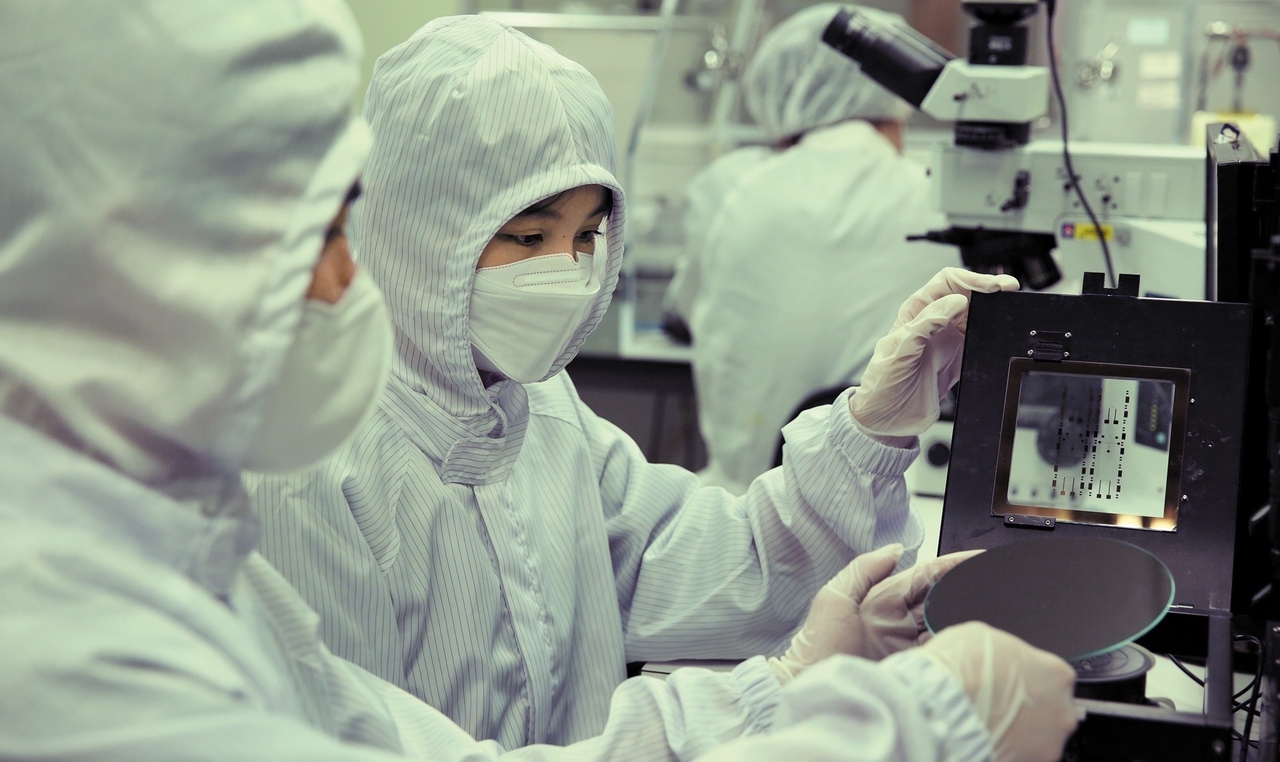
What distinguishes the contract department model is the depth of corporate involvement. Partnering firms shape coursework from enrollment onward, giving students hands-on access to electronic design automation tools and multiproject wafer fabrication. Curricula are updated jointly to reflect industry developments in AI chips, high-bandwidth memory and 3D packaging, and graduates frequently enter with design portfolios already in hand.
Industry experts say demand is strongest in verification and digital layout work, while analog and high-end architecture design still require postgraduate credentials.
The programs have also become a measure of the semiconductor industry’s growing appeal. Jongno Academy data showed contract departments posted an average competition ratio of 7.16-to-1 in the regular admissions track for the 2026 cycle, exceeding the national medical school average of 6.61-to-1. Admission cutoffs at Yonsei and Hanyang’s semiconductor programs also surpassed those of most medical schools, according to the academy.
Neither Taiwan nor the US has adopted a comparable structure tying undergraduate enrollment directly to guaranteed hiring. TSMC partners with universities through research centers and internship programs, while US firms rely on apprenticeship-style training under the CHIPS Act.
mjh@heraldcorp.com