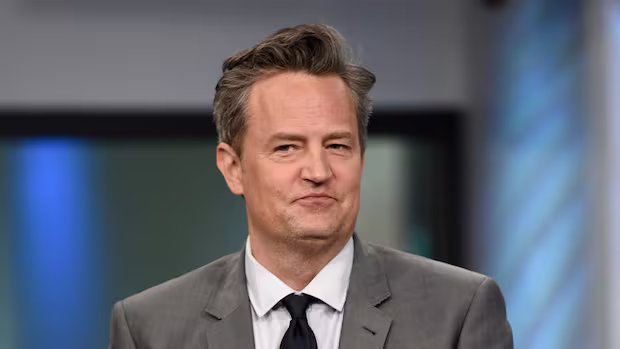
A federal judge on Wednesday handed down a sentence of 15 years in prison to a woman who pleaded guilty to selling Friends star Matthew Perry the ketamine that killed him in 2023.
“You’re going to have to show some epic resilience,” Judge Sherilyn Peace Garnett said to Jasveen Sangha, echoing the defendant’s words earlier in the hearing about her self-improvement.
Citing the unique role she admitted to in Perry’s death and her broader drug-dealing business, the judge gave the 42-year-old a sentence that will almost certainly be more than all four of her co-defendants combined.
Two more will be sentenced later this month. But Wednesday’s hearing in a Los Angeles courtroom was in many ways the pinnacle of the 2.5-year investigation and prosecution that followed the overdose death of the 54-year-old actor. His role as Chandler Bing on NBC’s Friends in the 1990s and 2000s made him one of the biggest television stars of the era.
Keith Morrison, Perry’s stepfather and correspondent for NBC’s Dateline, told the judge that he and Perry’s mother, Suzanne, feel a “daily, grinding sadness and sorrow.”
“There was a spark to that man I have never seen anywhere else,” Morrison said. “He should have had another act. Two more acts.”

Keith Morrison, Matthew Perry’s stepfather and correspondent for NBC’s Dateline, spoke briefly outside a Los Angeles courthouse Wednesday, after a judge handed down a 15-year prison sentence to a woman who sold the Friends actor the ketamine that led to his death in 2023.
Sangha stood at the podium Wednesday just before she was sentenced and told the judge she wears her shame “like a jacket.”
She is the only defendant whose plea deal included an acknowledgment of causing Perry’s death, and her prison term will almost certainly be far longer than all the others combined.
“These were not mistakes. They were horrible decisions,” Sangha said, which “shattered people’s lives and the lives of their family and friends.”
Prosecutors cast her in court filings as a “Ketamine Queen” who had an elaborate drug operation catering to high-end clients to give herself a jet-setting lifestyle despite a life of privilege.
Fifteen years was the exact sentence prosecutors had asked for. Sangha’s lawyers argued that the time she has spent in jail since her August 2024 indictment should be sufficient. They pointed to her lack of a previous criminal record and exemplary behaviour as an inmate, as well as the unlikelihood she would return to a life of drug dealing.
Series of convictions
Perry was found dead in the hot tub at his Los Angeles home. The medical examiner ruled that ketamine, typically used as a surgical anesthetic, was the primary cause of death. Drowning was cited as a secondary cause, with coronary artery disease and buprenorphine also cited as factors.
Mark Geragos, Sangha’s lawyer, said “pernicious” addiction was truly responsible for Perry’s death, not his client.
“There was nobody who was going to stop Mr. Perry from doing what he was going to do,” Geragos said.

In September, Sangha became the last of five co-defendants to plead guilty, admitting to one count of using her home for drug distribution, three counts of distribution of ketamine and one count of distribution of ketamine resulting in death.
Geragos denounced the prosecution’s use of the moniker “Ketamine Queen,” blaming it on E. Martin Estrada, the U.S. attorney when the case was filed.
“That was not her name, that was his very clever name to draw media attention this case,” he said.
Perry had been using the drug through his regular doctor as a legal off-label treatment for depression. But he sought more than the doctor would give him. That at first led him to Dr. Salvador Plasencia, who admitted to illegally selling Perry ketamine and was sentenced to two and a half years in prison.
And, days before his death, it led Perry to Sangha, and a $6,000 US cash buy that included the lethal dose.
Another doctor, who admitted to providing Plasencia the ketamine he sold to Perry, was sentenced to eight months of home detention. Perry’s assistant and his friend, who admitted acting as the actor’s middlemen, are awaiting sentencing.
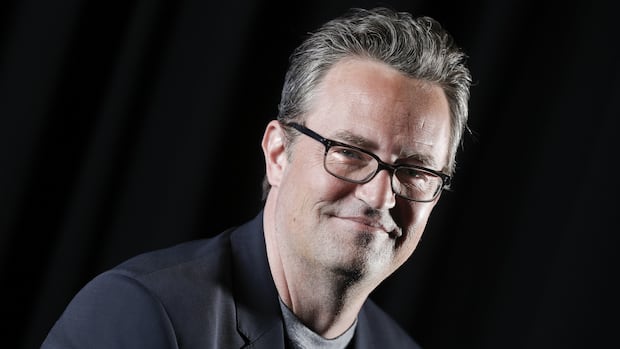
Dr. Salvador Plasencia, the doctor accused of supplying Matthew Perry with ketamine in the month leading up to his death, has pleaded guilty to four counts of distribution of ketamine. Plasencia is the fourth of the five people charged in connection with Perry’s death to plead guilty.
The judge said she was trying to carefully calibrate the sentences for the five defendants. She expressed concern about the balance during the hearing, asking lawyers why Sangha deserved so much more time than Plasencia or Perry’s assistant, Kenneth Iwamasa, who obtained and injected the drugs at Perry’s request and injected them into him.
Geragos seized on this and said the disparity was outrageous.
“The person who supplies the ammunition, they’re more culpable than the person who pulls the trigger?” he asked.
But before sentencing, Garnett said the size of Sangha’s drug business, the years she spent dealing and her long list of clients clearly made her more culpable. And she said she believed Sangha’s criminal history — she has none — was underrepresented.
The judge also cited Sangha’s continued dealing after learning through a text message from his sister that one of her customers, 33-year-old Cody McLaury, had died in 2019.
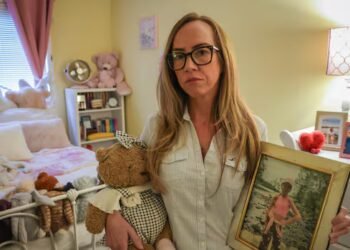
The sister, Kimberly McLaury, spoke in court.
“Had you stopped selling ketamine when I texted you, we wouldn’t be here today,” she said.
Perry’s stepmother Debbie Perry told Sangha she had caused pain for “hundreds, maybe thousands” of people.
The judge commended Sangha for the “countless” letters of support she got from family and friends touting her loving decency. Many of them were there in court, sitting on the opposite side from Perry’s family.
“There’s no joy in this process,” Garnett told the victim’s family members. “Maybe at the end of the day you will feel a sense of justice.”