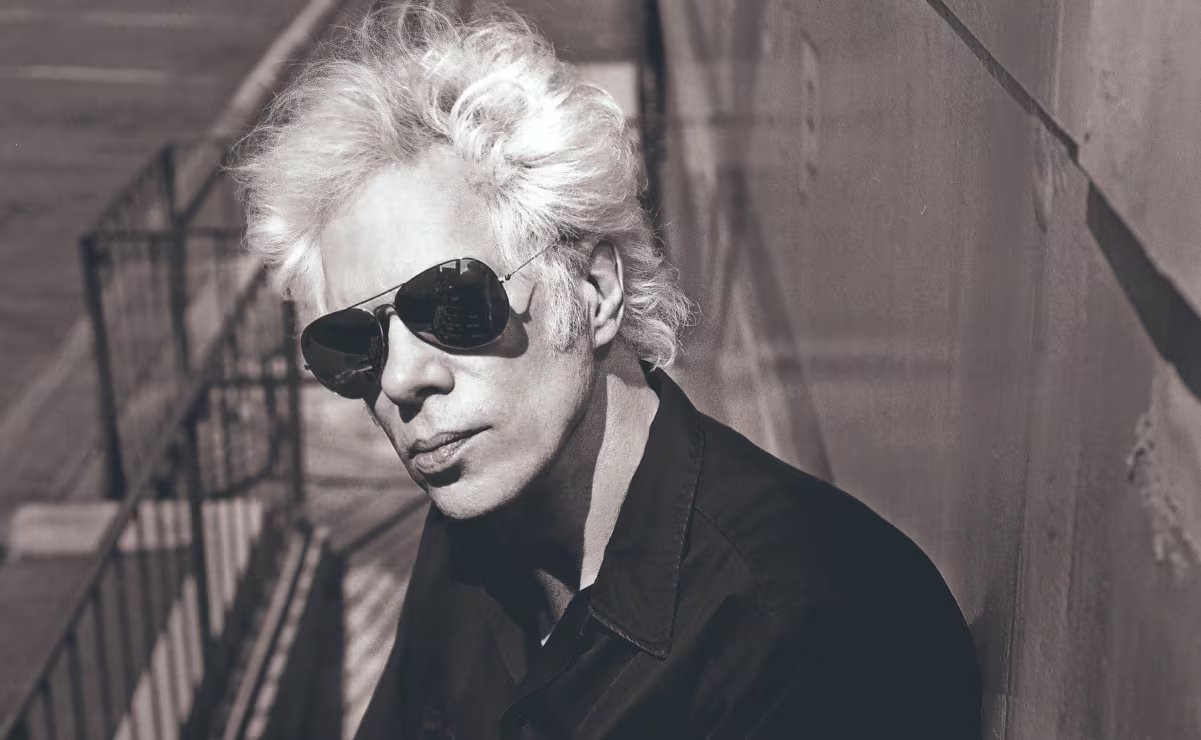
The loners, the apathetic, the observers and those who seem to live in an increasingly alien world found refuge, at the beginning of the 80s, in the independent cinema of Jim Jarmusch.
He made it clear in his debut feature, “Permanent Vacation” (1980), about a man who wanders through a ruined New York, and in his first success, “Stranger than Paradise” (1984), with three young people without aspirations who travel just to look at a frozen lake.
And it is that look, like that of his characters who don’t quite fit in, that has always overcome an industry that usually receives him reluctantly and that seemed to win over him, forcing him to be absent for an entire five years.
“I didn’t make a movie for five years because I was disillusioned by the whole business and the film procedure,” he says in an interview with THE UNIVERSAL.
“There was also the pandemic and the union strike… you know, I’m a union member, but I don’t respect someone who protects the big studios but if you have a small independent film, they crush you,” laments the director.
Fatigue, he acknowledges, developed previously, during the filming of his previous film, the zombie comedy The dead don’t die (2019).
Working with heavy production machinery and meeting profitability expectations dried up his enthusiasm. I needed to distance myself, although, fortunately, the drive to tell stories ended up taking over.
The return is given with “Father mother sister brother“, a film that arrives this weekend at MUBI and for which he won the Golden Lion at the last Venice Film Festival.
The film is divided into three stories set in the United States, Dublin and Paris, where adult children return home to reunite with their parents and siblings.

In the Dublin segment, Cate Blanchett plays a woman who travels to see her sister, in a meeting marked by the silences of the past. Photo: MUBI
Meetings are marked by discomfort, silences and things that are not completely said.
“I have mixed feelings about families… in part I think they are a construct of the capitalist economy. I left my family at 17 to look for my own family, my tribe,” the 73-year-old director acknowledges.
The film, he details, avoids the conventional drama, so current in the era of commercial streaming: the conflict taken to the limit, the twist that rearranges everything, the moment that explains the characters.
“I wanted to observe these characters in a familiar situation without judging them. Make an observational film about the small effects we have on each other. There is a lot of miscommunication, a lot of hidden things.”
In this return, he has a luxury cast, led by Cate Blanchett and Adam Driver, who join historical collaborators for him such as Tom Waits and Charlotte Rampling.
With Blanchett and Driver, the director, he says, applied his rule of not rehearsing, but rather looking for a pure reaction rather than following a rule.
“I really appreciate the actors. I don’t want them to act out a scene that I wrote but rather to become that character that we create together. They are like musical instruments that must be taken care of.”
Still, the big names were not enough: Cannes refused to include his film in official competition and he was criticized for his distinction in Venice.
“There is no moral. I try not to make proclamations… I think of my films as small cinematographic poems that can be understood at any time. Or so I hope,” he says.
Join our channel EL UNIVERSAL is now on Whatsapp! From your mobile device, find out about the most relevant news of the day, opinion articles, entertainment, trends and more.