By Enrico Cerchione, Il Riformista
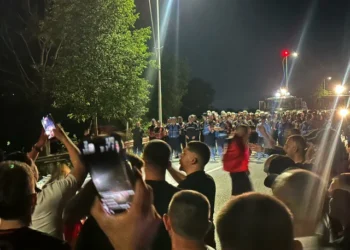
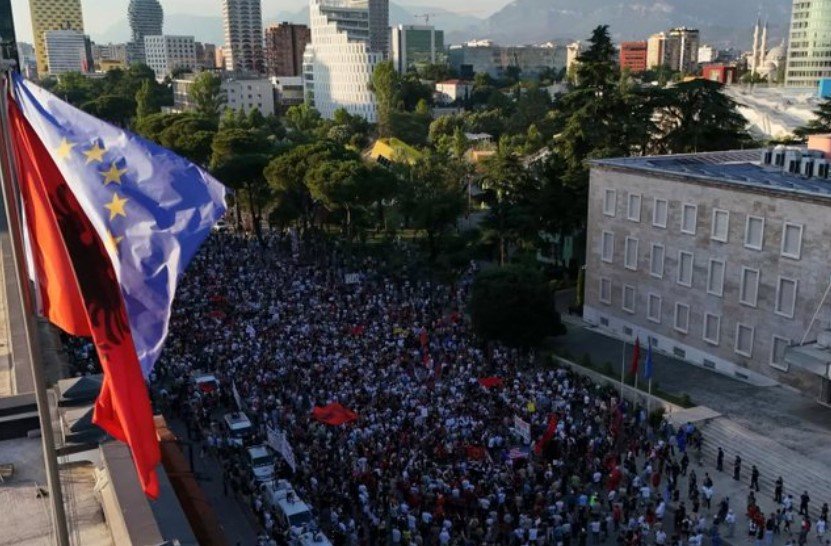
Thousands of people have taken to the streets of Tirana and Vlora for days, carrying pink inflatable flamingos, not for folklore. It is the “Flamingo Revolution”, the name the protesters have given to the protest against the luxury mega-resort that Jared Kushner, son-in-law of Donald Trump, plans to build with his company Affinity Partners in the protected area of Nartë-Zvërnec, opposite the uninhabited island of Saseno. This area is one of the last intact coastal ecosystems in the Mediterranean and is home to colonies of flamingos, monk seals, sea turtles and over 200 species of migratory birds. A 2024 reform has made it possible to develop tourism even in protected areas, and Edi Rama’s government has given the green light to the multibillion-dollar project, touting it as an opportunity for economic development. Protests arose for environmental and territorial sovereignty reasons; They are spontaneous, mostly youth-based and self-organized. They have already led to clashes with the police and moments of high tension.
So far, everything is understandable: the protection of natural heritage from an “eco-monster” is a democratic right. But in recent days, the movement has been intertwined with another event: the friendly football match between Albania and Israel on June 3 in Tirana, which ended 0-1 for the visitors with a goal from Oscar Gloukh. The match took place in a heavily armored stadium. Some Albanian fans whistled the Israeli anthem. After the goal, Gloukh celebrated in a provocative way (pointing his finger to his mouth towards the crowd). A fight broke out on the pitch, with Albanian defender Elseid Hysaj involved in open physical contact with the Israeli player. At the end, objects were thrown from the stands. Some of the protesters carried Palestinian flags. Outrage over the resort has joined those around Gaza and Lebanon, the current trend. Hysaj’s gesture erupted into a veritable ovation on social media, filled with the usual anti-Semitic slurs we’ve long grown accustomed to. Journalists, writers and television commentators do this; let alone the fans, who are always on the lookout for unfortunate epithets. Because, to these keyboard-savvy illiterates, the Israeli soccer team represents the Israeli government, the Jewish people as a whole, and even Jared Kushner, an American citizen of Jewish descent pursuing his own interests.
An automatic association with “Jews” as a collective category. The world’s Jews number 15 million (a real minority) with very different political views: there are right-wing and left-wing Israelis, American Jews, European Jews, secularists, religious figures and fierce critics of their government’s policies. To make them a single bloc responsible for the actions of a single executive or individual entrepreneur means reviving the stereotype of “collective guilt,” one of the most dangerous ingredients of modern anti-Semitism. The “Flamingo Revolution” stems from a just cause: protecting a fragile ecosystem against a planned construction project. If it allows itself to be contaminated by unjustified generalizations or anti-Semitic tendencies, it loses moral and political strength. Albania, a candidate country for membership in the European Union, has every interest in demonstrating that it can manage protests peacefully, protect the environment and attract transparent and sustainable investments, without succumbing to either internal populism or old reflexes.
But the distinction is clear and must be strictly guarded: you can firmly oppose the choices of a government without hating a people. You can protest a real estate project without making an entrepreneur the symbol of an entire community. In a Mediterranean and a Europe increasingly torn by identity and geopolitical tensions, such episodes are a test, a test that has produced grim results for years. Conceptual clarity is not an intellectual imitation: it is the minimum requirement for an environmental protest to remain just that and not turn into something else. Narta’s flamingos deserve to be protected. Albanian streets deserve to be heard, but without being tainted with the most shameful anti-Semitic features that end up undermining the very causes they seek to support.