The number of confirmed Ebola cases in the Democratic Republic of Congo has more than doubled in less than a week. On Monday, according to the most recent assessment made by the World Health Organization (WHO), there were 43 deaths among confirmed cases and there were 263 people with the disease.
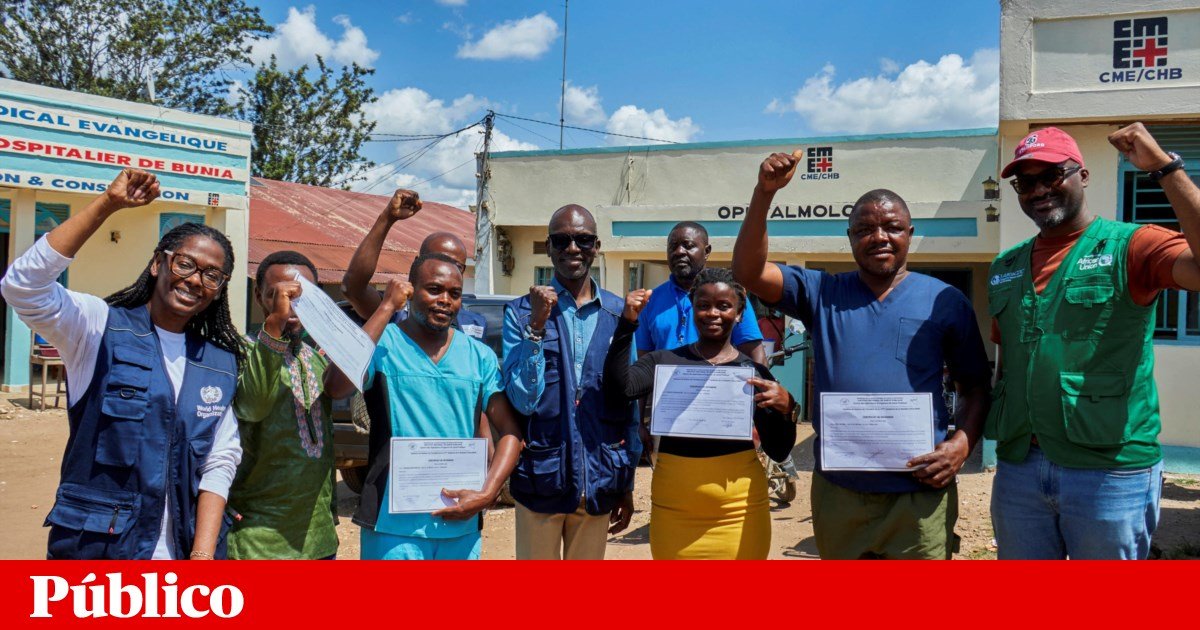
But the weekend also brought another news: five people who were cured. Although there is no vaccine for bundibugyo variant of Ebola, the one currently identified in that African country, “it is possible to survive the virus with good medical care”, highlighted the director general of the World Health Organization (WHO).
Tedros Adhanom Ghebreyesus was on Saturday in Bunia, the capital of the province of Ituri, which is at the center of the outbreak: 264 cases were confirmed in that area. “Seeking medical care in a timely manner makes all the difference”, he highlighted, in a place where distrust towards health authorities and misinformation are real obstacles to controlling the epidemic.
In fact, even before the trip, the director general of the WHO had already sent a message to the population of Ituri, urging young people especially to “talk to friends and family” to “help break the fear and silence that allow the virus to spread”. Already on the ground, Ghebreyesus addressed another problem that the authorities have faced and which has already provoked popular uprisings: the impossibility of holding wakes and funerals as usual.
“Some practices, such as touching the bodies of those who died from Ebola, can spread the virus even further. If we mourn those we have lost, we must do everything we can so that we do not lose more”, defended the person in charge.
Suspected cases in Brazil and Italy
Ghebreyesus has been trying to raise awareness among African governments (and beyond) of the need to act quickly, otherwise the virus will spread to other countries. To date, there are nine confirmed cases in Uganda.
In Brazil, two people who were recently in those two African countries showed symptoms consistent with the disease. Both were diagnosed with other pathologies (meningitis and malaria), but results on the presence of Ebola are still awaited. In Italy, a suspected case detected in Sardinia turned out to be negative this Monday.
This is the 17th Ebola outbreak in the Democratic Republic of Congo, already considered the third largest in the country since the virus was identified half a century ago.
THE big outbreak The one that is in the memory of all authorities is 2014, when almost 30 thousand cases were detected and more than 11 thousand people died in six African countries, but also in Europe and America. Are we heading towards something like that? CNN asked the director general of the WHO. “It will depend on how we respond. If we move quickly — and we are asking the international community to move quickly in terms of funding and other things — we will be able to stop it,” Ghebreyesus responded.