BAKU, Azerbaijan, August 19. Iran and the
countries of Central Asia have intensified their economic dialogue
in recent weeks, with particular emphasis on trade, transport,
energy, and new investment opportunities.
A series of meetings involving government officials and
sector-specific agencies has demonstrated Tehran’s and the Central
Asian countries’ interest in expanding practical economic
cooperation, including increasing trade, developing logistics, and
implementing joint industrial and energy projects. Against the
backdrop of a changing regional environment, Iran is also placing
greater emphasis on diversifying its economic ties and
strengthening engagement with neighboring markets.
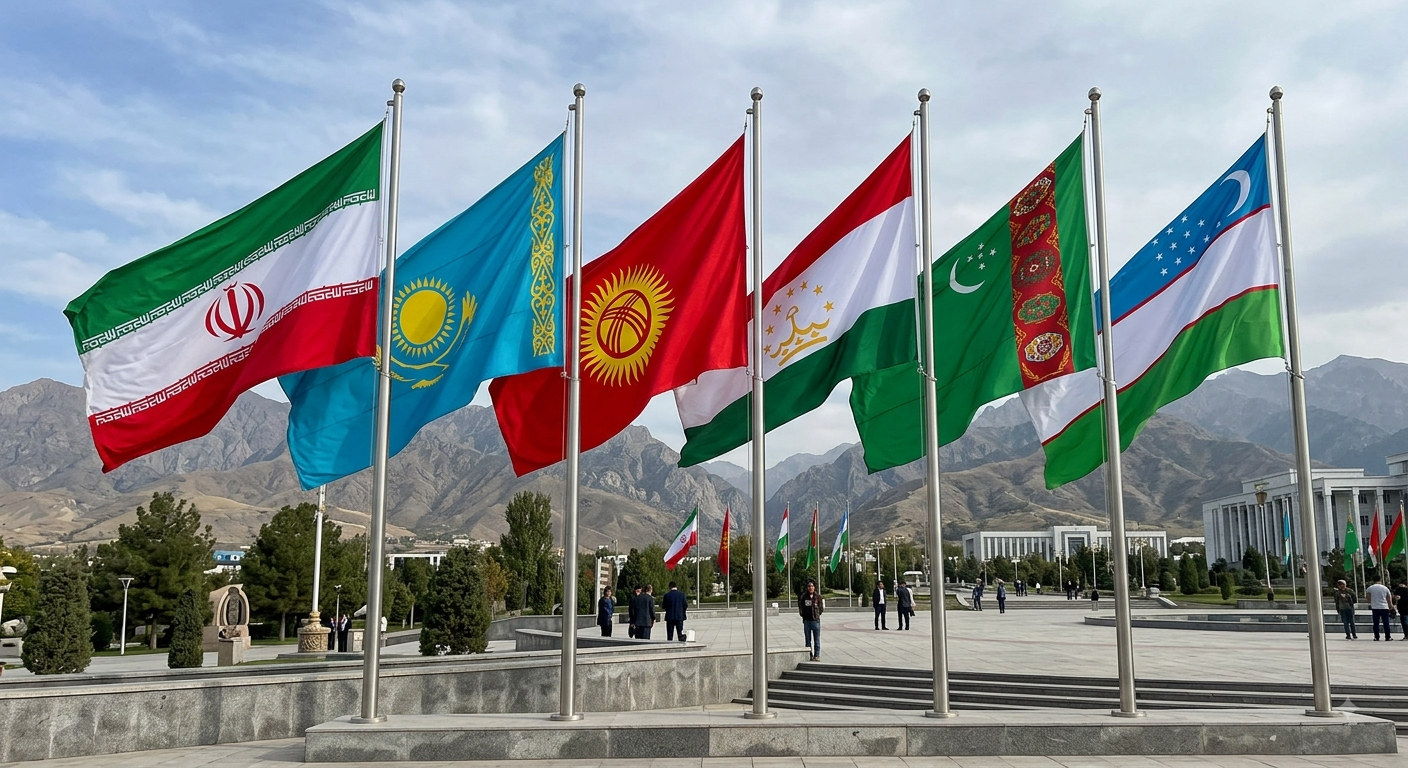
In August 2026, discussions on expanding cooperation were held
with several Central Asian countries. Uzbekistan and Iran conducted
political consultations addressing the development of trade,
economic, and investment ties, as well as the expansion of
transport cooperation. Kazakhstan and Iran discussed closer
cooperation in logistics and regional transport routes. Tajikistan
and Iran focused on energy, rail freight, and port infrastructure,
while Turkmenistan and Iran separately reviewed prospects for trade
and economic cooperation.
At the same time, Iran has outlined a broader vision for
economic engagement across the Eurasian space. Speaking at an
expanded meeting of the Eurasian Intergovernmental Council in
Cholpon-Ata, Kyrgyzstan, Iranian Minister of Industry, Mines and
Trade Seyyed Mohammad Atabak emphasized the importance of further
developing cooperation with the EAEU countries, highlighting the
potential for joint projects in trade, transport, energy, industry,
and the digital economy.
One of the key factors supporting this momentum has been the
free trade agreement between Iran and the Eurasian Economic Union,
which entered into force in May 2025. The agreement eliminated
tariffs on approximately 87% of goods, creating conditions for
further growth in mutual trade.
Atabak described the agreement as an important step in
strengthening Iran’s economic relations with EAEU member states.
“The free trade agreement between Iran and the EAEU member states
has been an important practical outcome of cooperation and has
created favorable conditions for the growth of mutual trade,” he
said at the meeting, in which Iran participated as an observer.
According to the minister, Iran’s cooperation with the EAEU
should extend beyond the trade agreement to encompass joint
investment, energy, transport, agriculture, the digital economy,
banking, and new technologies. From March 21 through November 21,
2025, Iran’s exports to EAEU countries reached $1.46 billion,
representing a 10% increase. In the previous year, exports to the
bloc exceeded $2 billion.
Central Asia remains an important avenue for Iran’s efforts to
expand its economic ties, while each country in the region is
developing its own model of engagement with Tehran. Among these
partnerships, Iran’s cooperation with Uzbekistan has emerged as one
of the most dynamic. According to Uzbekistan’s Ministry of
Investment, Industry and Trade, bilateral trade reached $305
million in the period from January through June 2026, marking a
37.5% year-on-year increase. The two countries are also advancing
29 joint projects and preparing to hold a business forum in
Tashkent. Earlier, they set a target of increasing bilateral trade
to $2 billion.
Transport links are also supporting closer economic ties.
Following the abolition of a mutual $400 fee, the number of Uzbek
trucks entering Iran increased by 117% in 2025. Iran is also an
important transit route for Uzbekistan. In 2025, around $3.9
billion worth of Uzbek imports and approximately $1.4 billion worth
of exports, excluding gold, passed through Iranian territory.
Kazakhstan, meanwhile, sees expanded cooperation with Iran
primarily through transport, logistics and agricultural trade.
Bilateral trade reached $430.2 million in 2025, up 26.4%. The two
countries have set a target of increasing that figure to $3
billion. The development of the International North-South Transport
Corridor remains one of the most promising areas. Kazakhstan’s
freight traffic along the route reached 3.5 million tons in 2025,
up 12%, while rail freight between Kazakhstan and Iran increased by
69%.
Iranian Minister of Roads and Urban Development Farzaneh Sadegh
said the development of international transport routes remains a
priority for Tehran. “Several issues are of major importance for
Iran, including attracting investment in the country’s northern
ports, strengthening freight transport and transit diplomacy,
expanding cooperation with regional countries, and developing
eastern and western terminals,” she said.
According to Sadegh, the Chabahar-Zahedan railway project is
playing an important role in this process by strengthening the
connection between Iran’s southern ports and its national railway
network. “The importance of this railway lies in connecting
international waters through the port of Chabahar to Zahedan and
Iran’s national railway network. This means that Central Asian
countries, as well as Iran’s eastern and western regions, will gain
access to international maritime routes through this
infrastructure,” Sadegh told Trend in an exclusive interview.
The Caspian Sea is another factor supporting regional
connectivity. Former Iranian Ambassador to Azerbaijan Mohsen
Pakayin said its significance extends well beyond maritime access
and is closely linked to trade and transport. “The Caspian Sea is
highly important because of its unique geopolitical position for
shipping, particularly for countries such as Turkmenistan,
Kazakhstan and Azerbaijan, which have no access to international
waters other than through the Caspian,” he told Trend.
According to Pakayin, the development of transport
infrastructure is creating additional opportunities for moving
cargo between countries across the region. “The railway connecting
Iran’s Caspian port to the Rasht railway line links this route to
the port of Bandar Abbas. This allows cargo from the Caspian
countries to reach Iran’s southern port and then continue to other
destinations, including Türkiye and Europe,” he said.
Energy is another major pillar of Iran’s relations with Central
Asia. With Tajikistan, Tehran is discussing increased supplies of
petroleum products and the establishment of a long-term oil supply
framework for Tajik enterprises. Bilateral trade reached $483.9
million in 2025, up 28% from 2024. In the first half of 2026, it
stood at $254.3 million, an increase of 14.8% year on year. Iran
ranked among Tajikistan’s five largest trading partners.
Following talks in Tehran on August 15 with Tajik Minister of
Energy and Water Resources Daler Juma and Minister of Transport
Azim Ibrohim, Iranian Oil Minister Mohsen Paknejad said the two
sides would establish a working group to explore opportunities for
cooperation. “The main part of the talks between Iran and
Tajikistan focused on the possibility of exporting petroleum
products. These efforts are aimed at helping address some of the
challenges Tajikistan is currently facing. A working group will be
established to examine the issues and conduct expert-level
discussions,” he said.
The Tajik side has also pointed to the potential for further
growth. Tajik Transport Minister Azim Ibrohim said the volume of
petroleum product exchanges between the two countries could
increase several times once new cooperation mechanisms are put in
place.
Turkmenistan remains one of Iran’s longest-standing partners.
Cooperation between the two countries covers energy, transport,
trade and cross-border infrastructure. The countries share a
1,100-kilometer border and maintain institutional dialogue through
the Joint Turkmen-Iranian Intergovernmental Commission on Economic
Cooperation, which regularly addresses gas, electricity, transport,
customs, agriculture and investment. At the commission’s latest
meeting in Tehran in 2025, the sides discussed the creation of
cross-border trade and economic zones.
Energy remains a central area of cooperation. In recent years,
Ashgabat and Tehran have expanded cooperation on natural gas
supplies, including swap arrangements, while also discussing direct
exports and transit through Iran to third-country markets. The two
sides are also developing cooperation in electricity transmission
and maritime transport. Recent agreements have covered natural gas,
customs cooperation, partnerships between the ports of Turkmenbashi
and Amirabad, as well as broader intergovernmental cooperation
plans.
Transport and logistics are becoming another important area of
engagement. Turkmenistan and Iran are working to increase freight
flows across their common border, develop road, rail and port
links, and expand multimodal routes connecting Central Asia with
the Persian Gulf.
From March 21 through December 20–21, 2025, bilateral trade
between the countries stood at around $504 million. On August 18,
Turkmenistan’s Ambassador to Iran Ilyas Gayypov and Iranian Deputy
Foreign Minister Mehdi Sobhan discussed prospects for further
bilateral cooperation, with particular emphasis on trade and
economic ties and strengthening the role of the Joint
Intergovernmental Commission.
Kyrgyzstan is also expanding its economic engagement with Iran.
Bilateral trade reached nearly $80 million in 2025, up 37%. Kyrgyz
exports to Iran almost doubled, rising from $18.3 million to $36.3
million, driven primarily by shipments of dried pulses and cotton.
Imports from Iran amounted to around $43.5 million. During recent
talks, the sides discussed trade, joint investment, transport, the
use of national currencies and financial cooperation.
Iran’s economic engagement with Central Asia is gradually taking
on a more comprehensive character. Trade is increasingly being
complemented by transport corridors, energy projects and investment
initiatives. Looking ahead, deeper cooperation could create new
opportunities for businesses, expand the number of available trade
routes and strengthen economic ties between the two regions. For
the global economy, this points to the emergence of additional
supply channels, greater diversification of trade flows and a
stronger role for Eurasia in shaping new patterns of economic
connectivity.