In an arrangement to advance peace negotiations between United States and Iran, the theocracy and President Donald Trump said this Friday (17) that the transit of vessels through Strait of Hormuz is released.
The American also stated that an agreement “is close”, that there will be negotiations mediated by Pakistan over the weekend and that Tehran has agreed to suspend its nuclear program indefinitely. To Reuters, Trump said that the theocracy’s 441 kg of enriched uranium will be sent to the USA.
The Ministry of Foreign Affairs in Tehran said there will be no transfer, raising doubts about the optimism expressed by the Republican. Later, Foreign Minister Abbas Araghchi rejected the idea of transferring the stockpile of enriched uranium out of Iran.
The announcement about Hormuz was initially made on X by Araghchi, ahead of the likely new round of talks between the rivals in Pakistan. However, the post includes a non-trivial detail: the minister claims that traffic is free along routes established by Iran, something that the US does not accept.
Trump, eager to leave the swampy ground he has placed himself in with the war, immediately posted on the Truth Social network a celebration and thanked Iran. He said, however, that the American naval blockade will continue to apply to ships carrying oil from the Persian country until an agreement is reached.
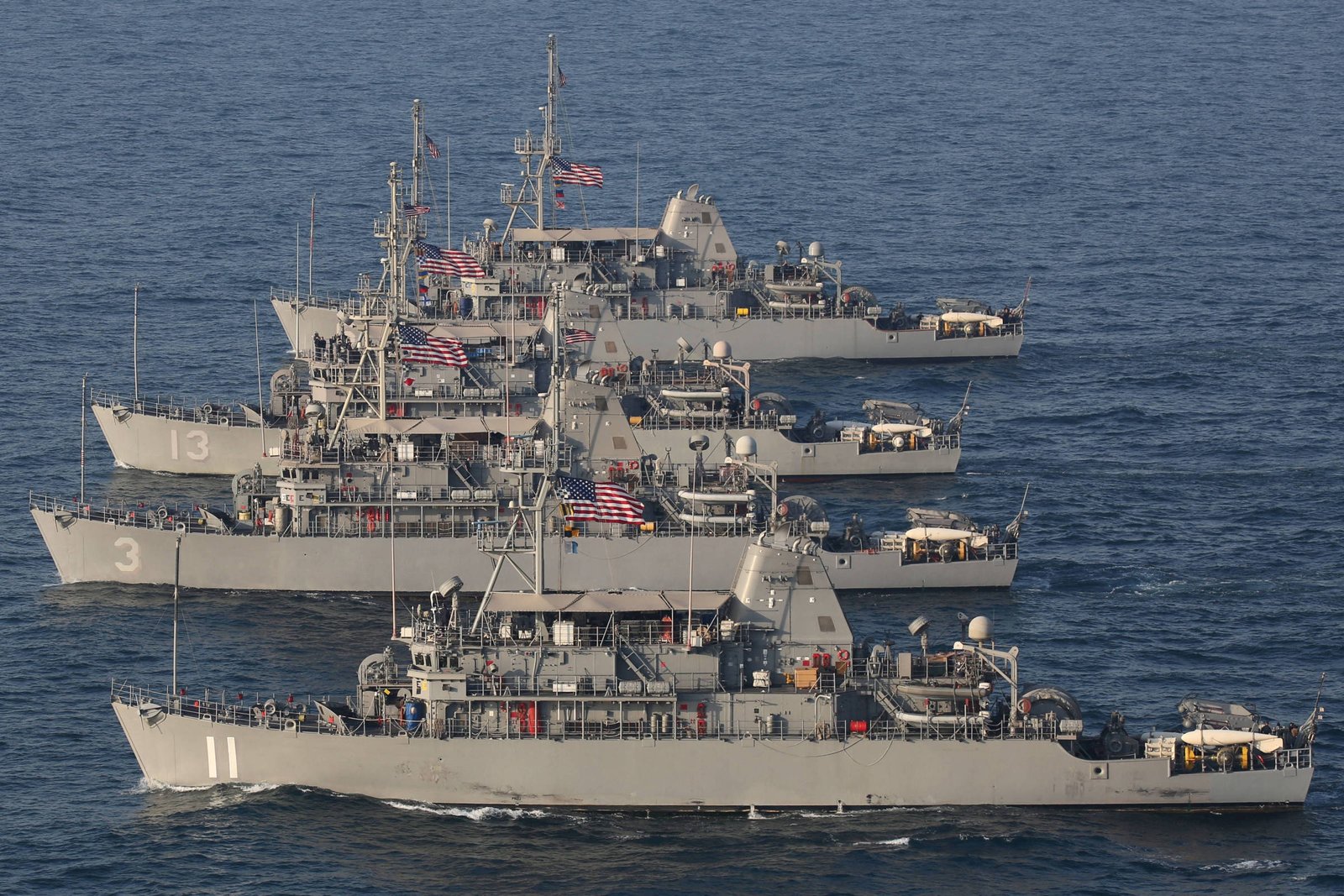
Soon after, he added that Iran had committed to no longer closing Hormuz and that “the situation is over.” According to Trump, the mines placed by the theocracy in the strait “have been removed or are being removed” jointly by the two countries, something that Tehran has not commented on.
In practice, the situation is uncertain. Iranian state TV says the release conditioned on the truce will only be maintained if the US ends the blockade. And the Revolutionary Guard issued a statement reaffirming this, which it called a “new order” in traffic in the region, and said it vetoed any foreign military vessel.
But the oil market cheered: prices for the benchmark Brent barrel fell more than 10%, to around US$90, the lowest value in a month.
The good mood also came with another layer of tension. Commenting on the ceasefire that began on Thursday (16) between Israel and Lebanon, which in practice is between the Jewish State and the pro-Iran group Hezbollah, the American president said that Tel Aviv “will no longer bomb” its neighbor.
“They are BANNED from doing so by the USA. Enough!!! Thank you”, wrote with the usual capital letterswith a tone that is unlikely to please its only ally in the war launched at the end of February against Tehran.
Europe, which was accused of cowardice for not getting involved in the conflict alongside the US by Trump, decided to take an initiative this Friday, announcing in a virtual conference led by France and the United Kingdom a plan to create a naval patrol mission in Hormuz.
Again, the devil is in the details: the proposal will only be implemented when there is a peace agreement in the region. According to the British Prime Minister, Keir Starmer“more than a dozen” of the 42 countries present at the meeting agreed to participate.
Trump shrugged, saying the NATO military alliance had reached out to him offering help but should “stay away” from the Persian Gulf. He had previously criticized the club and considered withdrawing the US from it, 77 years after Washington founded it to contain Moscow in Europe.
Transport companies operating in the region are still cautious, but ship traffic monitors indicate that at least 20 vessels moved towards Hormuz following the announcements.
IRAN OIL TANKERS BREAK LOCKAGE
Also this Friday, the consultancy Kpler, a reference in the maritime traffic monitoringtold France Presse that three Iranian oil tankers managed to break the naval blockade, taking 5 million barrels of oil out of the Persian Gulf on Wednesday (15).
As of Thursday (16), the US Navy said that no ships under blockade restrictions had passed its forces in the Gulf of Oman, and that 13 had turned around.
The embargo began on Monday (13), following an order from the president donald trump to press the position of the Iran in the ongoing peace negotiations between the two countries — USA and Israel They fought a five-week war with the theocracy that has been in a ceasefire since the 7th, which expires next Tuesday (21).
By measure, any vessels going to or coming from Iranian ports could not leave the gulf. The ships that Kpler managed to locate leaving the area are large capacity oil tankers that were already under US embargo.
The fate of Deep Sea, Sonia 1 and Diona is not known, although they will probably head to China, which in 2025 had Iran as its third largest supplier of oil. The ships have their satellite positioning systems turned off, which makes locating them difficult.
Kpler did not say how it identified them, but it probably relied on some triangulation or information at sea, by radio for example. The company operates the MarineTraffic website, which shows maps with all ships in the world, and there the latest position of the three ships is out of date.
According to the company, six ships transited Hormuz on Thursday, all with authorization American. This Friday, at least three left the area, including an oil tanker from Pakistan, a country that is mediating peace efforts between the US and Iran.
The issue of transit through Hormuz is one of the most sensitive in the conflict. Iran used its military control over the road, through which a fifth of the world’s production of oil and liquefied natural gas passed before the war, to put economic pressure on Trump.
By restricting traffic to 10% of usual, Tehran saw the oil prices and gas exploded, floating at around US$100 a barrel before this Friday’s crash. Without the conflict, the World Bank’s forecast was that 2026 would have the lowest commodity values in recent history, below US$60 per barrel.
As a result, alongside diffuse objectives announced throughout the conflict, such as the central issue of the ayatollahs’ nuclear program, the reopening of Hormuz came to the top of the agenda. In this context, Iran doubled down and announced to have mined the usual route of the strait, between its territorial waters and those of Oman.
With this, Iran forced a new path through its area of control and began demanding tolls from ships carrying cargo. It is not known whether the measure was implemented, as the American reaction was to impose a blockade on its ports.
Now, with Araghchi and Trump’s posts, a way out of the impasse may have been found, even though the reality in the waters of the gulf is murky.
The subject must mark the new round of negotiations between the rivals, which should take place this weekend in Pakistan. Alternatively, the truce could be extended, but neither side has confirmed this yet.