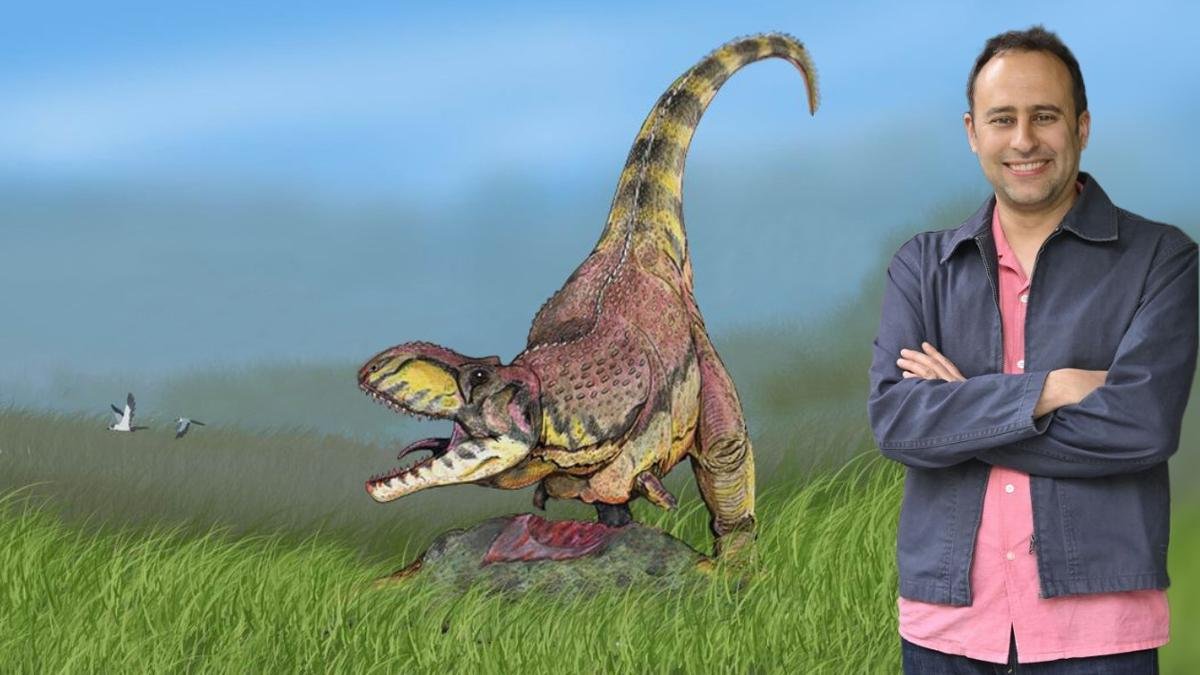

India has spectacular dinosaur fossils, says palaeontologist Steve Brusatte. Here, a recreation of the Rajasaurus, a carnivorous abelisaurid theropod dinosaur, which was excavated in Gujarat and is believed to have inhabited what is now the Narmada river valley.
| Photo Credit: Shiv Kumar Pushpakar, Wiki Commons
Roughly once a week, a creature dead for tens of millions of years is introduced to science for the first time. Around 50 new dinosaur species are named every year — a pace the species might have struggled to match even at their peak in the Cretaceous period, between 145 and 66 million years ago. Steve Brusatte, the University of Edinburgh palaeontologist who consults on the Jurassic World films and wrote the bestselling The Rise and Fall of the Dinosaurs (2018), calls it “a golden age”.
Brusatte was in Delhi recently — on only his second-ever trip to India — lecturing at the Lodha Genius Programme run by Ashoka University, to high-schoolers he calls “incredibly bright”, but with wrinkled optimism. The new discoveries are pouring out of China, Argentina, Brazil, Mongolia and South Africa — the big, fast-growing countries throwing young people at the rocks; however, India is conspicuously under-represented at the dig site, and not for want of fossils, which are “spectacular”.
Published – June 20, 2026 06:35 am IST