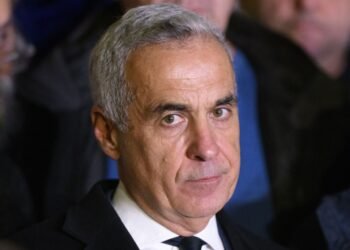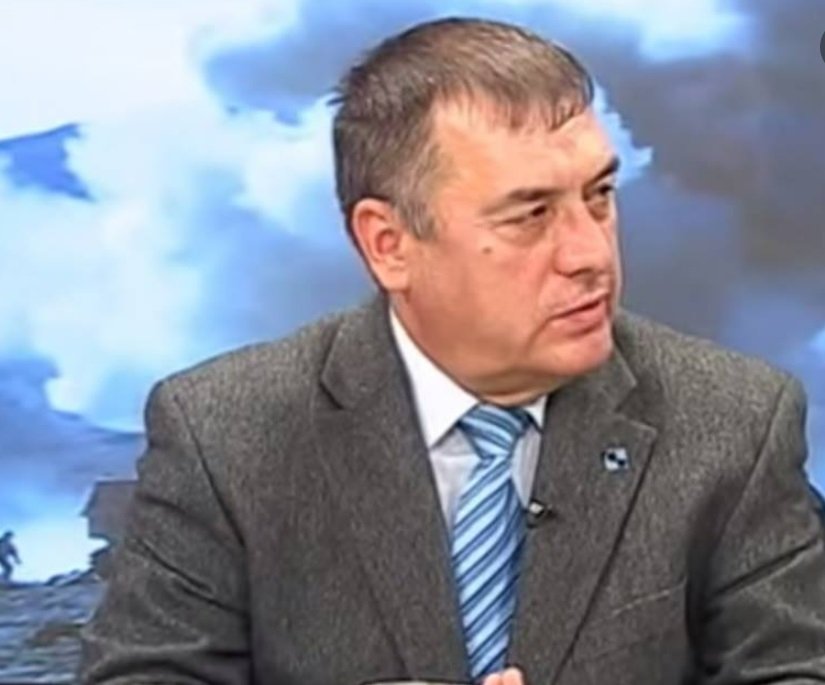
As the compatriots who wore the uniforms of border guards found out, with sadness, their symbolic community is smaller with a compatriot, now passed on to the eternal ones – general Petre Teacă.
For the uninitiated it’s just one less star.
For those who cherished him, he was the energetic commander of the Timisoara 9th Border Guards Brigade (1982 – 1987). Between July 1, 1987 and July 20, 1990, Colonel Petre Teacă was the commander of the Border Troops Command.
So far, apparently, nothing unusual.
And yet, on May 6, 1990, I had the honor of meeting him in the morning and in the evening, at the military dormitory in Iasi, before and after the first FLOWER BRIDGE across the Prut.
In the morning of that day I learned, then as a military journalist, that he was mandated to liaise with Soviet military interlocutors – seriously concerned about the organization of that event.
In the evening, at dinner, he told me that he was taken over by a military helicopter, by the Soviets, this aircraft flying over both the Romanian-Soviet border crossing points and the locations where, as a rule, military trucks were posted, with special troops, equipped with wolf dogs, intended to counteract the supposed enthusiasm of the guests coming from across the Prut, from Romania.
Meanwhile he was informed that the then President of France, the European
François Mitterrand called his Romanian counterpart, Ion Iliescu, on the phone, making him aware that he had another conversation, also by phone, with Mihail Gorbaciov, who asked him to convey to Bucharest, the Romanian president not to force the hand of destiny and not to try to turn the first Flower Bridge, over the Prut, into the beginning of the reunification of Romania with the alienated counties of the former Bessarabia, land of Romanian law, then as now.
Iliescu kept his composure, but while compatriot Petre Teacă was being escorted by the Soviets by helicopter, more than 1,200,000 Romanians, freed from fear of Moscow’s hypothetical repression, were crossing the Prut – with flowers, not weapons.
Were the Russians afraid of the Romanian human tide generated by the first Flower Bridge over the Prut?
Unquestionably, yes.
At the Ungheni Bridge – where I was all day, two KGB colonels came from the USSR embassy in Bucharest. They were pale and coldly repeated the question: “What’s going on?”
Well, it so happened that the Romanians gathered there, on both banks of the Prut, enthusiastically chanted the lines of a well-known song – “Moldova, Transylvania and Wallachia!”
Out of excitement, the Soviet border guard at the end of the railway bridge, from Ungheni, tripped and was about to fall -with his weapon on his shoulder- on the gravel between the train tracks.
Remember – the Kremlin trembled at the idea that the Romanians could unite again, peacefully – an inevitable event in the future.
Without turning his presence at Prut into anything other than the simple and dignified representation of the Romanian state at a long-awaited event, compatriot Petre Teacă reminded his hosts that the million peaceful Romanians could have destroyed, in a 100% motivated rush, the Nazi-type troops from the trucks, you wonder where. This was not the case, but the Soviets feared such a prospect.
Petre Teacă remains in the collective memory as a realistic border guard, loving the homeland and the ancestral borders – here it is only a synthetic reflection of the moral stature of a special compatriot, living in troubled times. Yesterday, like today.
Ion Petrescu is a communicator/journalist with experience in the military field. He successively led the Press Office of the Ministry of National Defense, later, for a while, the Directorate of Information and Public Relations of the army, and for eight years he commanded the Press Trust of the Army, a context in which he modernized the format and content of the weekly “Military Observer”. In recent years, he has written in central publications about transatlantic priorities, being invited to television stations to analyze the dynamics of military events in Eastern Europe and on the world map.
The authors who sign the materials in the Invitations – Ziare.Com section assume full responsibility for the content.