Opposition MP Colm Imbert is warning the Government against appointing relatives, close friends and associates to State boards, cautioning that such appointments could compromise good governance and make it difficult for the administration to hold individuals accountable for misconduct.
He is also urging the Government to exercise caution when appointing people who claim to have been politically victimised under the former People’s National Movement (PNM) administration, warning that some may have been dismissed for legitimate reasons.
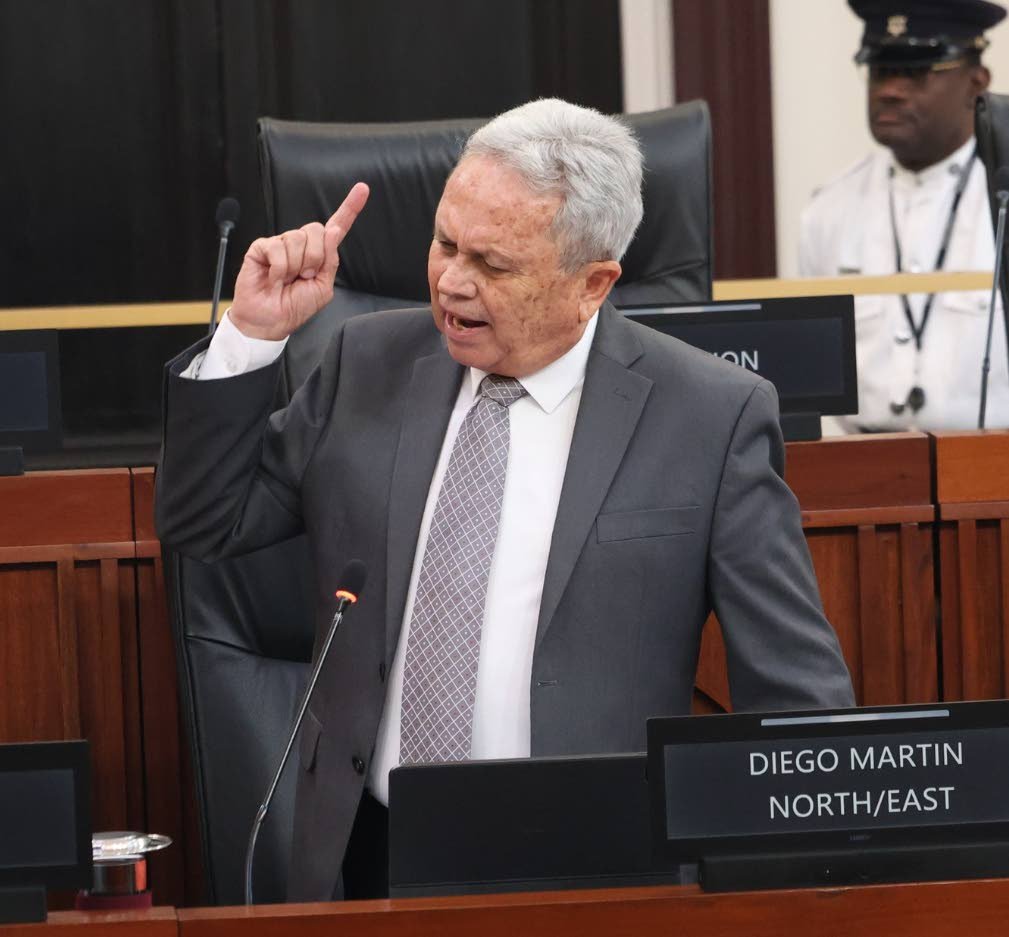
Speaking during Friday’s Private Members’ Day debate on the motion titled “Governance of State Enterprises and State-Controlled Institutions”, Imbert alleged that nepotism had become increasingly prevalent under the United National Congress (UNC) administration.
“Now we have a situation where everybody, brother, sister, mother, father, auntie, wife, husband, is on State boards. And not a word. Nobody says anything,” Imbert said.
The former finance minister argued that appointing people with close personal ties to government officials could create a sense of entitlement and embolden them to act without fear of repercussions.
“Be very careful about appointing relatives to State boards. It leads to all sorts of problems. And be very careful about appointing close friends and associates to State boards,” he cautioned.
Drawing on his own experience of transitioning from Opposition to Government, Imbert said he was often approached by people seeking assistance after claiming to have been unfairly treated by the previous administration.
“There’s always the temptation when these people come running to you and say the previous government treated them bad and all that, they make them managers and they make them directors and then you discover that they were dismissed for good reason,” he said.
‘Scorched earth’
Meanwhile, Imbert condemned what he described as the Government’s “scorched earth” approach to the State enterprise sector, saying he had identified 67 people at board or senior management level who had been dismissed, resigned or sent on leave between May 2025 and October 2026.
He highlighted several departures across State entities, including the National Gas Company (NGC), Heritage Petroleum, Caribbean Airlines, the Water and Sewerage Authority (WASA) and Telecommunications Services of Trinidad and Tobago (TSTT).
According to Imbert, Caribbean Airlines lost eight executives between August 2025 and May 2026, while WASA’s CEO and nine other executives were dismissed in June 2025.
However, he said what was particularly concerning was that several of those who had been removed were appointed by the current administration.
“I have never seen so many unsuitable people appointed to State boards. I have never seen such chaos within the State enterprise sector,” Imbert said.
“It’s not that they came in and they cleaned the house, you know. They put their own people in and then they fire all of them. What’s going on?”
Imbert urged the Government to strengthen transparency, accountability, competence and institutional independence, insisting that appointments to State entities must be made in the public interest.