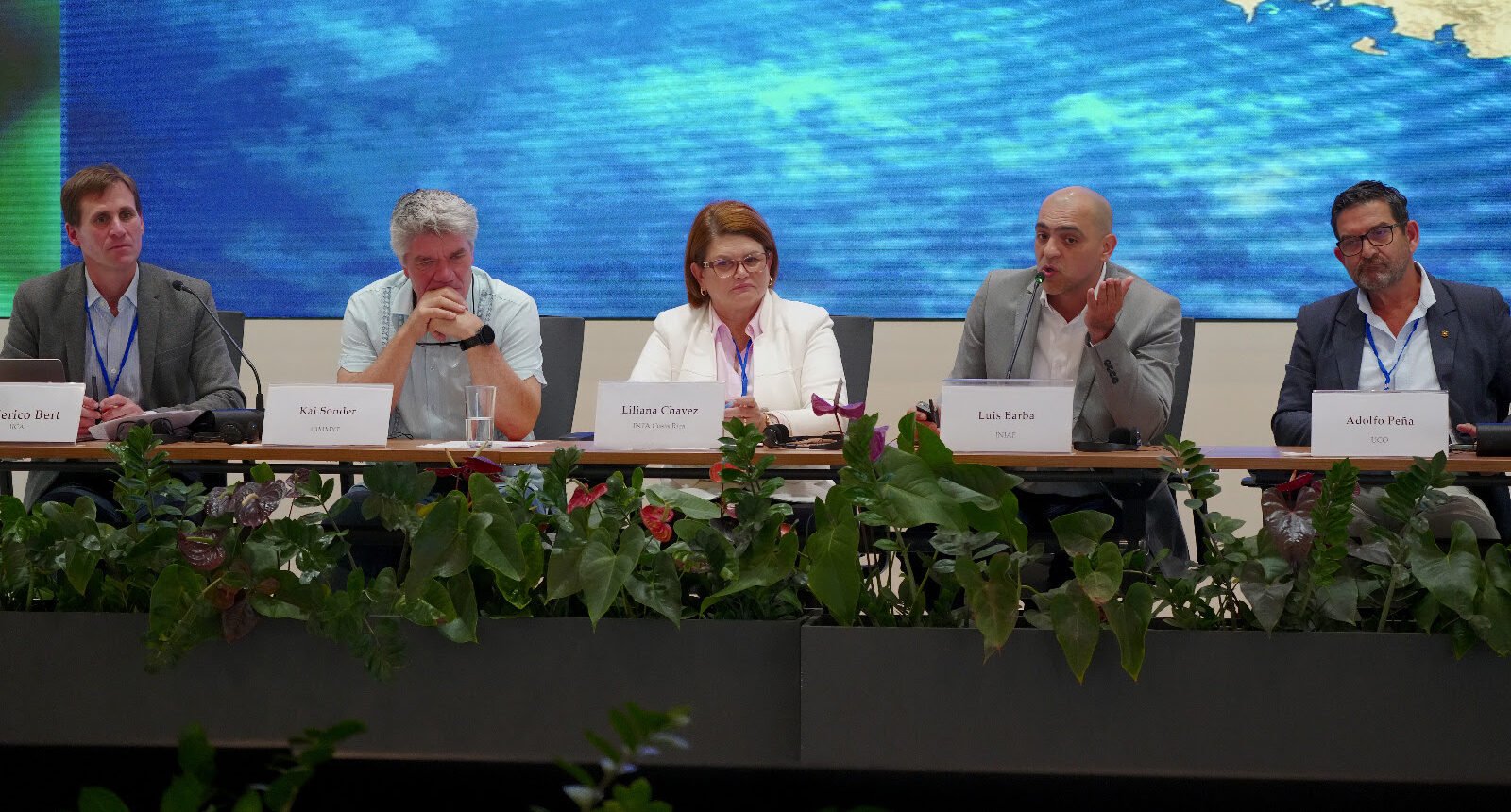

Digital Agriculture Week 2026 has highlighted a growing gap between the technologies available to address agricultural challenges and the pace at which farmers are adopting them.
The fifth edition of DAW concluded after four days at the headquarters of the Inter-American Institute for Cooperation on Agriculture (IICA), bringing together nearly 200 participants from more than 25 countries. According to an IICA press release, the event has become an important forum for advancing the digital transformation of agriculture.
Artificial intelligence (AI) and other innovations were central to discussions on building more productive and sustainable agriculture. Participants examined how technologies can be matched to the needs of individual territories and better coordinated with public policies, financing and institutional capacity.
DAW 2026 featured expert presentations, knowledge-sharing, networking and panel discussions. IICA organized the event with support from ECLAC, the World Bank, Bayer, the University of Córdoba in Spain, the CRUSA Foundation, Costa Rica’s National Training Institute (INA) and the Inter-American Development Bank. More than 30 other organizations also promoted the event.
Fourteen AgTech startups operating in 13 countries in the Americas participated, presenting solutions to agricultural production challenges. The gathering also included incubators, accelerators, investment funds, agricultural research institutes, multilateral organizations, academia and policymakers.
IICA Specialist in Digitalization and Artificial Intelligence Federico Bert said the event showed that innovation continues to expand the technological possibilities available to agriculture. He noted that existing digital tools can address challenges including risk management, financing and rural extension, but said adoption remains a major bottleneck.
“During the event, participants have repeatedly pointed to the existence of a bottleneck, due to the fact that farmers are not incorporating technologies quickly enough. While there must be more innovation going forward, a greater focus on adoption is also required. We need to concentrate on stimulating the interest of producers, developing their skills, tailoring solutions to the context, and providing technical support to people who incorporate new technological solutions,” he observed.
EMBRAPA President Silvia Massruhá said AI would not replace researchers, but could significantly increase their ability to produce knowledge. She stressed the importance of maintaining scientific rigor, ethics and the institution’s public mission.
Massruhá noted that EMBRAPA’s productivity is now five times higher than when it was created more than 50 years ago. The institution has 8,000 officials across 43 research units, while continuing to emphasize training for those applying new technologies.
Uruguay’s INIA President Miguel Sierra said digital transformation and AI are strategic priorities for the next five years, while stressing the continued need for data validation, human input and critical thinking.
Costa Rica’s INTA Executive Director Liliana Chavez said AI can help address pests, diseases and soil degradation, but warned against widening the technology gap as young people leave rural areas. She stressed that people must remain at the center of the transformation.