It hits hard in the Tasiilaq areawhen next year Icelandair drops the flights between Keflavik and Kulusuk from March to May. The company has already dropped flights on the route in the winter from October to February.
– It is a shame – and it will invariably affect both the business world and the population. That’s what Demokraatits Justus Hansen says, who comes from Tasiilaq and is a member of both the municipal council in Kommuneqarfik Sermersooq and Inatsisartut.
It hits hard in the Tasiilaq areawhen next year Icelandair drops the flights between Keflavik and Kulusuk from March to May. The company has already dropped flights on the route in the winter from October to February.
– It is a shame – and it will invariably affect both the business world and the population. That’s what Demokraatits Justus Hansen says, who comes from Tasiilaq and is a member of both the municipal council in Kommuneqarfik Sermersooq and Inatsisartut.
– Unfortunately, there is nothing we can do purely politically. Icelandair is a foreign company that operates the route on commercial terms, so of course they will not fly if there is no economy in it.
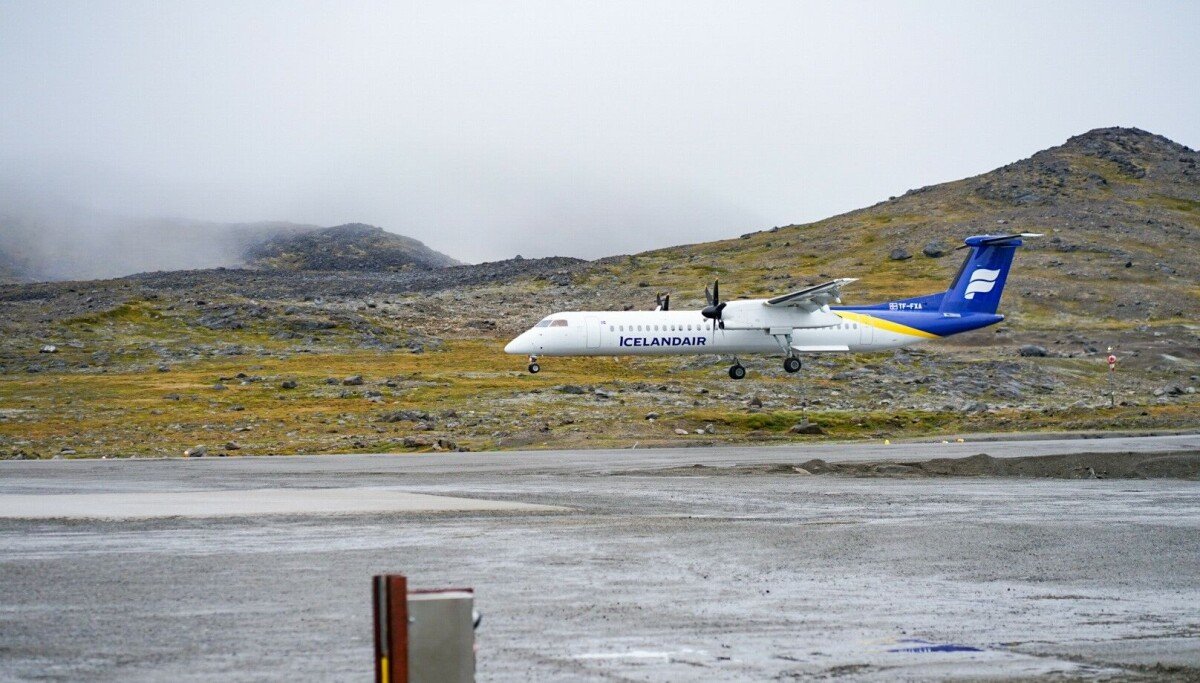
Icelandair has been flying between Iceland and Kulusuk for a number of years. Previously year-round, but back in 2024 flights were stopped in the winter from October to February. Now the company has decided to also suspend the flights for next year in the period from March to May.
Challenges in Kulusuk
– It has proven to be challenging to maintain the Kulusuk route outside the high season under the current operating conditions, writes Icelandair’s communications manager Guðni Sigurðsson in an email to Sermitsiaq.
Icelandair will henceforth exclusively use aircraft of the Dash8-400 type with room for 76 passengers on the route to Kulusuk. Previously, some of the departures were flown with Dash 8-200 similar to Air Greenland’s Dash aircraft with room for 37 passengers.
– Operating costs for this aircraft have increased in recent years, while revenues have not kept pace. The service will therefore be concentrated during the high season in summer, when conditions allow larger aircraft and more reliable operation. Due to limitations on the runway surface in Kulusuk, this is only possible in the summer season, from June to mid-September, explains Guðni Sigurðsson.
– Although passenger demand in the spring period has been encouraging, the route has continued to experience significant operational disruptions due to the weather. The cost impact of cancellations, delays and salvage operations has increased significantly, meaning that the service cannot be maintained commercially at this time of year.
Icelandair recognizes that the decision will have a significant impact on the local community in East Greenland.
– Although the route plays an important role in regional connectivity, it has proven to be challenging to maintain under current operating conditions. In the current economic environment – where operating costs have risen rapidly, including the recent increases in fuel prices, Icelandair needs to focus on routes and seasons that can be operated on a commercially sustainable basis, says Guðni Sigurðsson, who is keeping a small door open to perhaps expanding capacity again sometime in the future.
– We will continue to work with stakeholders to explore ways to strengthen the reliability and long-term sustainability of the Kulusuk service.
It looks black

Justus Hansen sees no possibilities for a solution to the challenges here and now.
– It looks a bit black. Because it hits hard in the area. This goes in addition to the postal delivery and deliveries of fresh produce to the district’s shops and tourism businesses. And we are otherwise well underway in the development of the district as a tourist destination.
– Previously, we received a large part of the mail via Keflavik – and we are actually dependent on that. The mail should preferably arrive quickly. I have heard of companies that have been reported to RKI because they have paid bills late this past winter because the mail has been delayed.
In the short term, Justus Hansen suggests that Naalakkersuisoq enter into an agreement with Air Greenland that the company makes a pit stop in Kulusuk when the company flies between Nuuk and Keflavik.
– Instead of flying over the Tasiilaq district, Air Greenland can fly via Kulusuk on the route, suggests Justus Hansen, but also points out that the whole problem emphasizes the need for a new airport in Tasiilaq.
– That is why it is also urgent to get a new regional airport adopted in Tasiilaq. It is the only long-term solution, Justus Hansen explains, adding that work can start quickly if the airport is decided.
– In Kommuneqarfik Sermersooq, we already have the planning basis in place, so it is not what is going to slow down a new regional airport in Tasiilaq.
– In Tasiilaq, Keflavik is actually more important than the airport in Nuuk. Because it is in Keflavik that we have our hub to the outside world. From Keflavik, we can quickly reach the whole world – both Europe, Denmark and North America. For us in East Greenland, Keflavik is usually a much better choice than Nuuk.