Monday, May 4, 2026
    The GeoStrategic Consensus
    No Result
    View All Result
    • Login
    • HOME
    • AMERICAS
      • Argentina
      • Brazil
      • Canada
      • Chile
      • Colombia
      • Costa Rica
      • Cuba
      • Dominican Republic
      • Ecuador
      • El Salvador
      • Greenland
      • Guatemala
      • Honduras
      • Mexico
      • Nicaragua
      • Panama
      • Paraguay
      • Peru
      • United States
      • Uruguay
      • Venezuela
    • ASIA-PACIFIC
      • Australia
      • Brunei Darussalam
      • Cambodia
      • China
      • Federated States of Micronesia
      • Fiji
      • Indonesia
      • Japan
      • Kiribati
      • Laos
      • Malaysia
      • Marshall Islands
      • Mongolia
      • Myanmar
      • Nauru
      • New Zealand
      • North Korea
      • Palau
      • Papua New Guinea
      • Philippines
      • Samoa
      • Singapore
      • Solomon Islands
      • South Korea
      • Taiwan
      • Thailand
      • Timor-Leste
      • Tonga
      • Tuvalu
      • Vanuatu
      • Vietnam
    • CARICOM
      • CARICOM – Non-English
        • Haiti
        • Suriname
      • CARICOM Associates
        • Anguilla
        • Bermuda
        • British-Virgin-Islands
        • Cayman-Islands
        • Curacao
        • Turks-and-Caicos
      • CARICOM English
        • Antigua and Barbuda
        • Barbados
        • Belize
        • Dominica
        • Grenada
        • Guyana
        • Jamaica
        • Montserrat
        • Saint Kitts and Nevis
        • Saint Lucia
        • Saint Vincent and the Grenadines
        • The Bahamas
        • Trinidad and Tobago
    • EURASIA
      • Armenia
      • Azerbaijan
      • Balarus
      • Georgia
      • Kazakhstan
      • Kyrgyzstan
      • Moldova
      • Russia
      • Tajikistan
      • Turkmenistan
      • Ukraine
      • Uzbekistan
    • EUROPE
      • Albania
      • Andorra
      • Austria
      • Bosnia and Herzegovina
      • Bulgaria
      • Croatia
      • Cyprus
      • Czech Republic
      • Denmark
      • Estonia
      • Finland
      • France
      • Germany
      • Greece
      • Holy See
      • Hungary
      • Iceland
      • Ireland
      • Italy
      • Kosovo
      • Latvia
      • Liechtenstein
      • Lithuania
      • Luxembourg
      • Malta
      • Monaco
      • Montenegro
      • Netherlands
      • North Macedonia
      • Norway
      • Poland
      • Portugal
      • Romania
      • San Marino
      • Serbia
      • Slovakia
      • Slovenia
      • Spain
      • Sweden
      • Switzerland
      • United Kingdom
    • MIDDLE EAST AND NORTH AFRICA
      • Algeria
      • Bahrain
      • Egypt
      • Iran
      • Iraq
      • Israel
      • Jordan
      • Kuwait
      • Lebanon
      • Lybia
      • Morocco
      • Oman
      • Palestinian Territories
      • Qatar
      • Saudi Arabia
      • Syria
      • Tunisia
      • Turkey
      • United Arab Emirates
      • Western Sahara
      • Yemen
    • SOUTH ASIA
      • Afghanistan
      • Bangladesh
      • Bhutan
      • India
      • Maldives
      • Nepal
      • Pakistan
      • Sri Lanka
    • SUB-SAHARAN AFRICA
      • Angola
      • Benin
      • Botswana
      • Burkina Faso
      • Burundi
      • Cabo Verde
      • Cameroon
      • Central African Republic
      • Chad
      • Comoros
      • Cote d’Ivoire
      • Democratic Republic of the Congo
      • Djibouti
      • Equatorial Guinea
      • Eritrea
      • Eswatini
      • Ethiopia
      • Gabon
      • Gambia
      • Ghana
      • Guinea
      • Guinea Bissau
      • Kenya
      • Lesotho
      • Liberia
      • Madagascar
      • Malawi
      • Mali
      • Mauritania
      • Mauritius
      • Mozambique
      • Namibia
      • Niger
      • Nigeria
      • Republic of the Congo
      • Rwanda
      • Sao Tome and Principe
      • Senegal
      • Seychelles
      • Sierra Leone
      • Somalia
      • South Africa
      • South Sudan
      • Sudan
      • Tanzania
      • Togo
      • Uganda
      • Zambia
      • Zimbabwe
    • HOME
    • AMERICAS
      • Argentina
      • Brazil
      • Canada
      • Chile
      • Colombia
      • Costa Rica
      • Cuba
      • Dominican Republic
      • Ecuador
      • El Salvador
      • Greenland
      • Guatemala
      • Honduras
      • Mexico
      • Nicaragua
      • Panama
      • Paraguay
      • Peru
      • United States
      • Uruguay
      • Venezuela
    • ASIA-PACIFIC
      • Australia
      • Brunei Darussalam
      • Cambodia
      • China
      • Federated States of Micronesia
      • Fiji
      • Indonesia
      • Japan
      • Kiribati
      • Laos
      • Malaysia
      • Marshall Islands
      • Mongolia
      • Myanmar
      • Nauru
      • New Zealand
      • North Korea
      • Palau
      • Papua New Guinea
      • Philippines
      • Samoa
      • Singapore
      • Solomon Islands
      • South Korea
      • Taiwan
      • Thailand
      • Timor-Leste
      • Tonga
      • Tuvalu
      • Vanuatu
      • Vietnam
    • CARICOM
      • CARICOM – Non-English
        • Haiti
        • Suriname
      • CARICOM Associates
        • Anguilla
        • Bermuda
        • British-Virgin-Islands
        • Cayman-Islands
        • Curacao
        • Turks-and-Caicos
      • CARICOM English
        • Antigua and Barbuda
        • Barbados
        • Belize
        • Dominica
        • Grenada
        • Guyana
        • Jamaica
        • Montserrat
        • Saint Kitts and Nevis
        • Saint Lucia
        • Saint Vincent and the Grenadines
        • The Bahamas
        • Trinidad and Tobago
    • EURASIA
      • Armenia
      • Azerbaijan
      • Balarus
      • Georgia
      • Kazakhstan
      • Kyrgyzstan
      • Moldova
      • Russia
      • Tajikistan
      • Turkmenistan
      • Ukraine
      • Uzbekistan
    • EUROPE
      • Albania
      • Andorra
      • Austria
      • Bosnia and Herzegovina
      • Bulgaria
      • Croatia
      • Cyprus
      • Czech Republic
      • Denmark
      • Estonia
      • Finland
      • France
      • Germany
      • Greece
      • Holy See
      • Hungary
      • Iceland
      • Ireland
      • Italy
      • Kosovo
      • Latvia
      • Liechtenstein
      • Lithuania
      • Luxembourg
      • Malta
      • Monaco
      • Montenegro
      • Netherlands
      • North Macedonia
      • Norway
      • Poland
      • Portugal
      • Romania
      • San Marino
      • Serbia
      • Slovakia
      • Slovenia
      • Spain
      • Sweden
      • Switzerland
      • United Kingdom
    • MIDDLE EAST AND NORTH AFRICA
      • Algeria
      • Bahrain
      • Egypt
      • Iran
      • Iraq
      • Israel
      • Jordan
      • Kuwait
      • Lebanon
      • Lybia
      • Morocco
      • Oman
      • Palestinian Territories
      • Qatar
      • Saudi Arabia
      • Syria
      • Tunisia
      • Turkey
      • United Arab Emirates
      • Western Sahara
      • Yemen
    • SOUTH ASIA
      • Afghanistan
      • Bangladesh
      • Bhutan
      • India
      • Maldives
      • Nepal
      • Pakistan
      • Sri Lanka
    • SUB-SAHARAN AFRICA
      • Angola
      • Benin
      • Botswana
      • Burkina Faso
      • Burundi
      • Cabo Verde
      • Cameroon
      • Central African Republic
      • Chad
      • Comoros
      • Cote d’Ivoire
      • Democratic Republic of the Congo
      • Djibouti
      • Equatorial Guinea
      • Eritrea
      • Eswatini
      • Ethiopia
      • Gabon
      • Gambia
      • Ghana
      • Guinea
      • Guinea Bissau
      • Kenya
      • Lesotho
      • Liberia
      • Madagascar
      • Malawi
      • Mali
      • Mauritania
      • Mauritius
      • Mozambique
      • Namibia
      • Niger
      • Nigeria
      • Republic of the Congo
      • Rwanda
      • Sao Tome and Principe
      • Senegal
      • Seychelles
      • Sierra Leone
      • Somalia
      • South Africa
      • South Sudan
      • Sudan
      • Tanzania
      • Togo
      • Uganda
      • Zambia
      • Zimbabwe
    No Result
    View All Result
    Agentially
    No Result
    View All Result
    Home AMERICAS United States

    How geography powers Iran’s grip on the Strait of Hormuz

    The Analyst by The Analyst
    April 14, 2026
    in United States
    How geography powers Iran’s grip on the Strait of Hormuz


    Shipping traffic through the Strait of Hormuz remains constrained a week after the United States and Iran said they would facilitate vessel passage under a two-week ceasefire agreement. Instead, tensions have escalated. After Iran said ships must coordinate with its forces — and, in some cases, pay a toll — President Donald Trump called the demands “extortion” and announced Sunday that the United States would block ships entering or exiting Iranian ports, adding pressure to an already fragile truce.

    But even as Washington seeks to squeeze Iran economically, Tehran retains a powerful advantage: geography. Over six weeks of conflict, Iran has halted virtually all traffic in the strait by laying mines, according to its military forces, and exploiting the vulnerability created by its terrain. Even under a U.S. blockade, these factors allow Iran to continue exerting influence over who crosses — and at what risk.

    That risk, more than any formal closure, is what is keeping ships away. According to data from Kpler, only nine vessels have crossed the strait daily on average since the ceasefire, compared with the prewar traffic of more than 130 ships. “De facto, the ceasefire has done absolutely nothing to change the situation [in the strait]. None whatsoever,” said Lars Jensen of Vespucci Maritime, a container shipping consultancy based in Copenhagen.

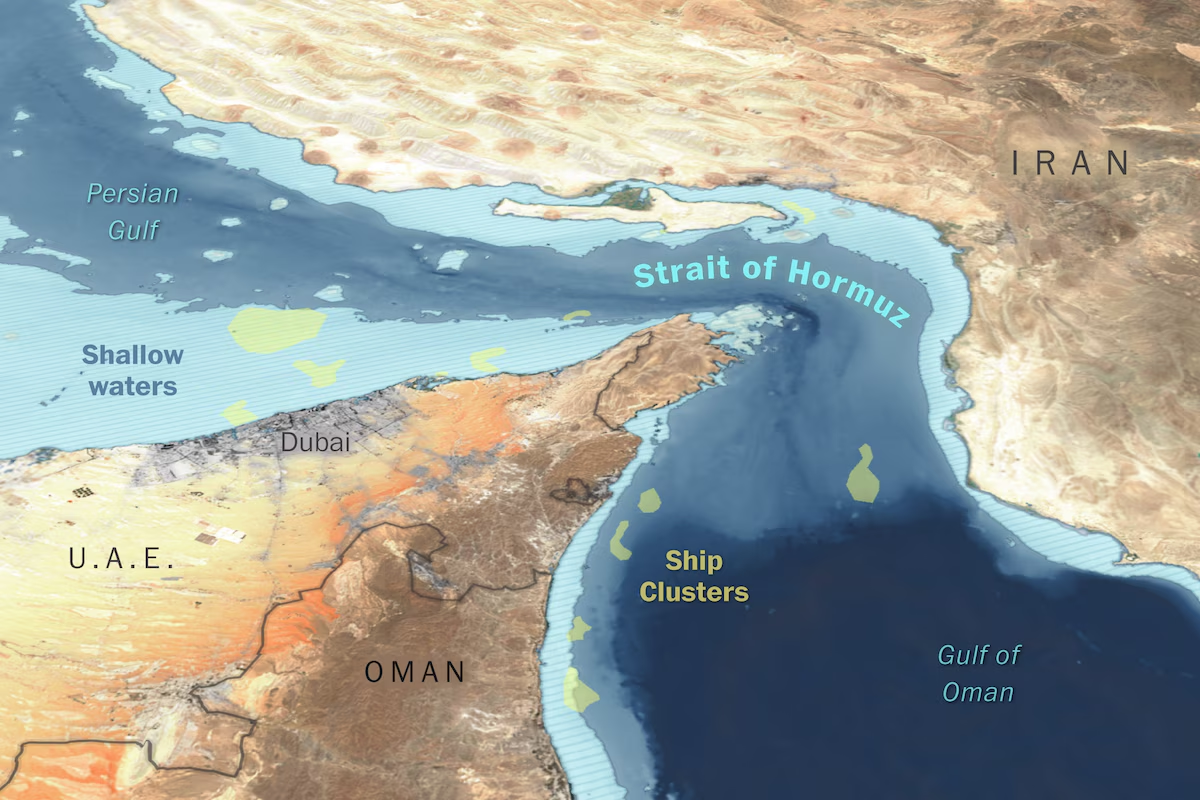
    Here’s what makes the Strait of Hormuz so critical, and how its geography continues to define the standoff.

    Before the war, the Strait of Hormuz facilitated about 20 percent of global oil flows, roughly 20 million barrels of oil per day, and 20 percent of the global liquefied natural gas trade. It is the only maritime exit from the Persian Gulf, making it a critical choke point.

    Key oil refineries dot the coastline of the strait and the Persian Gulf.

    The geography of the strait itself makes this energy pipeline vulnerable and easy to disrupt.

    Even during peacetime, only a few ships could transit at a time, leading others to queue or anchor nearby, creating clusters of vulnerable targets.

    Shallow waters in the strait force ships to be funneled through two narrow lanes (about two miles wide each). This leaves vessels extremely vulnerable to missile and small-boat attacks.

    Crews crossing the narrow strait also have to worry about sea mines, which can detonate upon contact or upon sensing movement. “Mines are a psychological issue as much as they are a real issue,” said Frank Galgano, an associate professor of geography and the environment at Villanova University, adding that it would take several weeks to clear mines from the navigation lanes.

    Iran’s Islamic Revolutionary Guard Corps said Thursday that vessels transiting the strait must divert around Larak Island, off the country’s coast, with the primary navigation lanes posing a risk because of sea mines. The detour also allows Iran’s military to screen ships and collect tolls for passage.

    A rugged coastline offers hiding spots for small attack ships.

    The elevated terrain along Iran’s coast provides clear vantage points for surveillance and for launching anti-ship cruise missiles.

    The small islands also can be used to launch missiles at ships passing by.

    Bandar Abbas, a city at the mouth of the strait, allows Iran to deploy boats and missiles and to monitor or disrupt traffic within minutes.

    “All in all, Hormuz’s geography amplifies Iran’s anti-access and area-denial leverage at low cost,” said Basil Germond, a professor of international security at Lancaster University.

    These tactics, combined with the fact that the ships crossing the strait are usually massive and travel slowly, make the passage extremely dangerous. Defense experts say the vessels have close to no ability to detect a threat. “The Iranians are literally right on top. So you’ve got an instant almost to react,” Galgano said.

    Iran’s ability to threaten ships with low-cost drones and mines has proved a frustration for Trump, who acknowledged last month that such attacks would persist “no matter how badly defeated they are.”

    Although no vessel attacks have been recorded since the ceasefire announcement, risk has become the defining force driving the standstill in traffic. Experts say that even when all blockades are lifted, it will take time for traffic to return to prewar levels. “This is very simple: Shipping companies will continue to avoid the strait as long as Tehran maintains its capability to credibly threaten commercial shipping in the strait and the Gulf,” Germond said.

    After the U.S. announced its blockade, Iran said it would strike back if its ports were threatened, heightening tensions for shipping companies already hesitant to cross. At the same time, Tehran’s toll system has introduced a new legal risk: Vessels that pay the Revolutionary Guard for safe passage could be seen as violating U.S. or European Union sanctions on Iran, further deterring operators.

    With confusion surrounding the status of the strait, shipping operators remain in a wait-and-see mode. According to Windward, more than 800 vessels were still trapped in the Gulf as of Tuesday.

    A spokesperson for the shipping giant Hapag-Lloyd told The Washington Post in an email Tuesday that its vessels were still refraining from transiting the strait and would continue to do so until there were safety and security guarantees and clarification on potential fees for crossing. “We believe that for the time being ships will continue to be stuck in the Persian Gulf,” Nils Haupt said.

    For traffic to return to normal, analysts say, the shipping sector will need to be confident that the ceasefire will hold and that Iran will not attack in-transit vessels. “If you move your ship and you’re halfway through the Hormuz channel and the ceasefire breaks down, well, your seafarers are then in a shooting gallery,” Jensen said. “So you want to see a relatively solid ceasefire before you even trust going in there.”

    But that confidence depends on a delicate balance. It is in Iran’s interest to keep restricting passage in the strait, “one of their last remaining leverages in the war,” Germond said in an email. “So long as Tehran is serious about the ceasefire, they must implement (or be seen as implementing) its Hormuz clause and, thus, allow more and more ships to transit. If they still restrict traffic to keep some leverage, this actually risks collapsing the ceasefire altogether. So, for them, this is a thin boundary to navigate.”

    About this story

    The data for the map was collected from multiple sources: Global Maritime Traffic (previous shipping routes), Sentinel-2 (ship locations, satellite imagery), Kuva Space (ship locations), Mapzen (terrain), NASA (populated areas), General Bathymetric Chart of the Ocean (Bathymetry), and MapStand (refinery locations).

    Reporting by Júlia Ledur and Dylan Moriarty. Editing by Emily M. Eng and Maureen Linke. Copy editing by Shibani Shah.




    Source link

    Related Posts

    Supreme Court Temporarily Restores Access to Abortion Pill by Mail
    United States

    Supreme Court Temporarily Restores Access to Abortion Pill by Mail

    May 4, 2026
    Wild parrots copy their friends when deciding whether to try new foods, study finds
    United States

    Wild parrots copy their friends when deciding whether to try new foods, study finds

    May 4, 2026
    What passengers need to know about Spirit Airlines
    United States

    What passengers need to know about Spirit Airlines

    May 4, 2026
    Rubio to Visit Rome, Vatican Says, After Trump’s Feud With Pope and Meloni
    United States

    Rubio to Visit Rome, Vatican Says, After Trump’s Feud With Pope and Meloni

    May 4, 2026
    Americans Will Do Anything to Get Indian Mangoes
    United States

    Americans Will Do Anything to Get Indian Mangoes

    May 4, 2026
    How Republicans came to embrace psychedelic drugs
    United States

    How Republicans came to embrace psychedelic drugs

    May 4, 2026
    Next Post

    QPCC whips Tier II champs Defence Force

    POPULAR NEWS

    Justin Bieber fans flood Coachella festival for headlining show – Entertainment

    Justin Bieber fans flood Coachella festival for headlining show – Entertainment

    April 20, 2026

    Over 600 flee homes as Army, NPA clash in Negros Occidental

    April 21, 2026

    Ex-DPWH exec recalls P800-M ‘delivery’ to Zaldy Co 

    April 20, 2026

    Former PM Paluckas suspends party membership, to waive immunity over criminal probe

    April 24, 2026
    Pres. Ali challenges CARICOM to transform into health research powerhouse

    Pres. Ali challenges CARICOM to transform into health research powerhouse

    April 23, 2026

    EDITOR'S PICK

    Labour minister concerned about rise in work place deaths

    Labour minister concerned about rise in work place deaths

    May 1, 2026
    Strength of Boxing and Gentle Rhythm of Yoga Bring Balance to My Heart

    Strength of Boxing and Gentle Rhythm of Yoga Bring Balance to My Heart

    May 3, 2026
    Scientists invented a fake disease. Artificial intelligence has convinced people that it exists

    Scientists invented a fake disease. Artificial intelligence has convinced people that it exists

    April 22, 2026
    Mexican Cartels Export Ukraine’s Drone Warfare to Guatemala | The Lighthouse

    Mexican Cartels Export Ukraine’s Drone Warfare to Guatemala | The Lighthouse

    April 14, 2026

    Recent Posts

    • Regional symposium targets renewable transition and stronger energy data across Pacific SIDS
    • The Prime Minister of Italy arrived in Yerevan – ARMENPRESS Armenian News Agency
    • How can this pan-Armenian shrine, an architectural pearl, be distorted like this? Lilit Galstyan
    • Turkmenistan plans 10 bcm gas processing plant at Galkynysh field – Turkmengaz

      © 2026 Agentially - Navigating shifting sovereignties and global risk .

      Welcome Back!

      Login to your account below

      Forgotten Password?

      Retrieve your password

      Please enter your username or email address to reset your password.

      Log In
      No Result
      View All Result

        © 2026 Agentially - Navigating shifting sovereignties and global risk .

        This website uses cookies. By continuing to use this website you are giving consent to cookies being used. Visit our Privacy and Cookie Policy.