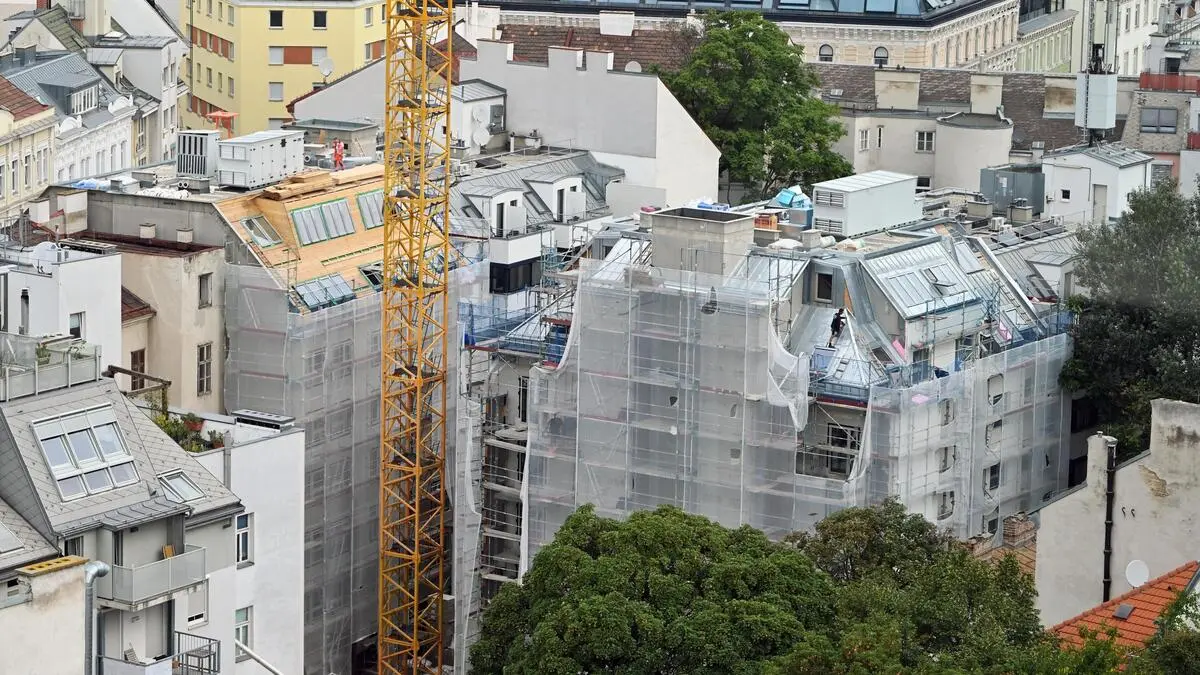
Housing construction is stalling, while new and affordable apartments are urgently needed. In order to be able to create more affordable housing in Austria more quickly, representatives of the real estate industry believe that the process must be significantly accelerated. The need for living space is “high and the demand is still increasing,” said Andreas Köttl, President of the Association of Austrian Project Developers (VÖPE), to journalists on Tuesday. “But it’s taking longer and longer for apartments to come onto the market.”
According to a survey conducted by VÖPE among its members, it currently takes around five and a half years for a residential building project to be approved: on average, it takes 67 months from the dedication to the legally binding approval. The dedication process takes an average of 35 months, the approval process takes another 21 months and the objection process takes another eleven months.
This slow pace creates higher risks for developers and ultimately higher costs, explains Köttl. The Association of Non-Profit Building Associations (GBV) is also feeling the extension of the procedures, said GBV chairman Michael Gehbauer. In order to bring more speed back into residential construction, VÖPE and GBV have drawn up joint suggestions on how things could go faster.
For example, the fire protection test could be confirmed by an independent expert before the project is submitted that the project meets the fire protection regulations. The authority could then limit itself to a check, says Gehbauer. According to GBV, this alone could shorten the process by six to nine months.
Secondly, a so-called “approval fiction” is proposed, which means that approval occurs automatically if no decision is made within a certain period of time.
The third proposal relates to non-neighborhood objections to projects. These can cause long delays, so an obligation to prove a legitimate interest or cost consequences in the event of objections is proposed.
In general, Gehbauer spoke out in favor of more dedication to subsidized housing. The fourth point is the greater digitalization of procedures through a “transparent act”. This means that everyone who submits a project should be able to digitally see where the file is currently located in the respective office. According to VÖPE, this would relieve the burden on the offices and create more efficiency. This information is already available within the office.
The associations now want to go to politics with their suggestions; the concerns could be raised in expert panels, said Gehbauer. It was important that the proposals did not put any additional strain on the currently tight state budget. “It’s not about the call for money,” emphasized Köttl, adding that they want to make budget-neutral proposals that can be implemented as quickly as possible. (APA/hbh)