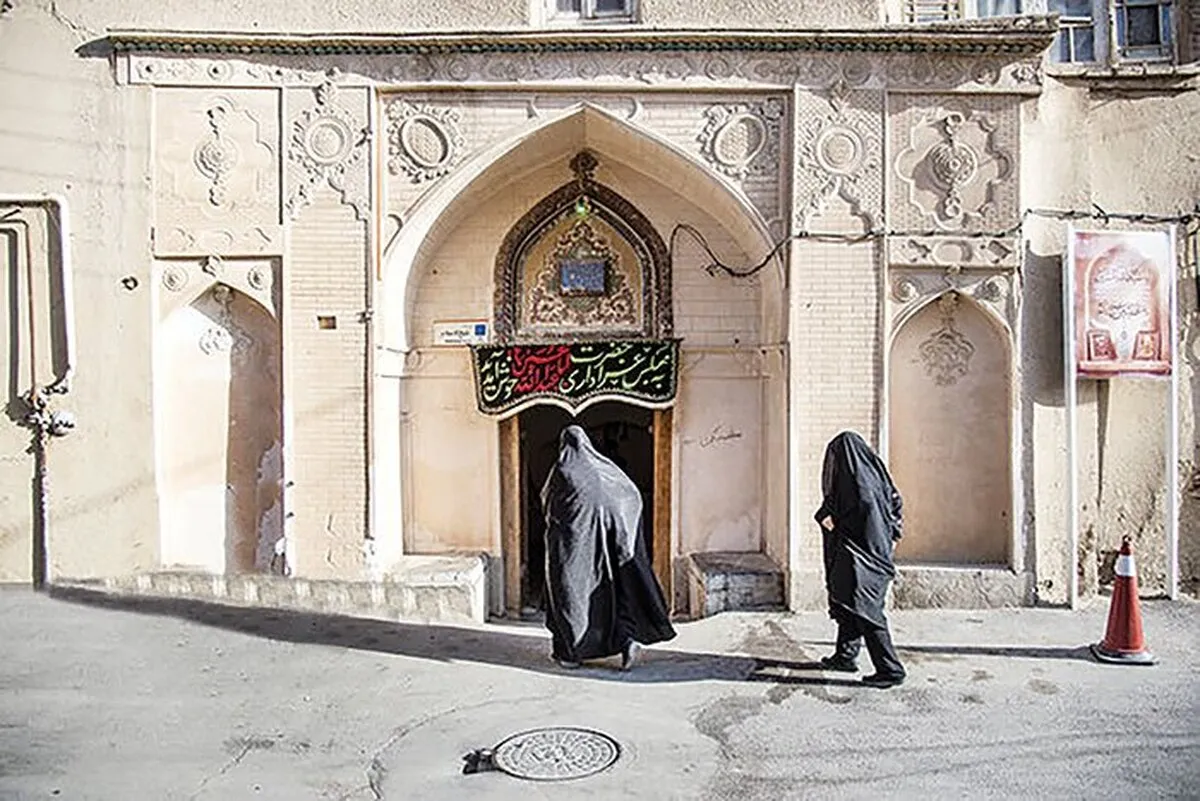
In recent years, changing the use of historical houses has become one of the most important ways to protect valuable urban buildings. Many historical houses in Isfahan have been converted into residences, cultural centers, restaurants or tourist complexes to avoid the risk of being destroyed or abandoned. However, a group of cultural heritage researchers believe that among all types of new uses, Muharram religious rituals are still the most original historical function of some houses in Isfahan. A function that was not formed to attract tourists, nor is it a product of today’s economic needs, but is considered a direct extension of centuries-old tradition. Surveys show that one of the most important topics of the World Cultural Heritage Day is the issue of continuity of historical monuments. International experiences have proven that when a building becomes merely an object for display, it loses part of its identity. A historical house becomes meaningful when it is still present in the context of social life. The historical houses of Isfahan were not only residences in the past, but were considered a part of the city’s social network. Religious ceremonies, family gatherings, scientific meetings, special rituals and charitable activities took place in these spaces. Therefore, to check the authenticity of the function of a historical house, it is necessary to pay attention to the same social and cultural roles.
Architecture in the service of religion
It is not possible to understand the relationship between the historical houses of Isfahan and the Muharram ritual without knowing the urban culture of this region. From the Safavid period onwards, an important part of the religious life of the city took place in the houses, and the home shrines were considered one of the most important social institutions of the city. The architecture of historical houses in Isfahan is also not unrelated to this fact. Large halls, palaces, large courtyards and semi-open spaces made it possible to hold religious gatherings. In many cases, traces of ritual needs can be seen in the spatial organization of the building. Rozeh Khani in Isfahan was not just a religious ceremony, but played an important role in transferring cultural values, strengthening social solidarity and forming collective memory. The houses that hosted this ceremony gradually became a part of the neighborhood’s identity. When we talk about the old mosques of Isfahan, we are actually facing a kind of social heritage whose value is not limited to the age of the architecture, but is rooted in a network of human relationships, shared memories and lasting traditions. If these rituals disappear, part of the cultural meaning of the buildings will also be lost.
A ritual that prevented the destruction of buildings
Field surveys show that a number of historical houses in Isfahan have been saved from the danger of being abandoned due to the continuation of religious rituals. When a building hosts a significant population of people every year, social sensitivity towards its condition increases.
In many cases, it has been observed that the families who own historical houses are forced to carry out continuous repairs due to the celebration of Muharram. Although this process is sometimes done in a traditional way, it has prevented the severe wear and tear of the building. In other words, the religious ritual has become a factor for the permanent care of the building. One of the biggest challenges of preserving historical houses is the lack of continuous use. A house that remains empty will quickly suffer damage. Dampness, erosion, destruction of decorations and even human attacks become more intense in abandoned buildings, but a house that is prepared for an important ceremony every year is usually in a better condition.
Isfahan’s experience is very valuable from this point of view. In some houses, the ritual of Muharram not only helped to preserve the building, but also caused the responsibility of protection to be transferred from one generation to another. The children and grandchildren of the families consider themselves committed to maintaining the house, because they consider it a part of a religious and family tradition. Today, historical houses with Muharram ritual are a successful example of linking tangible and intangible heritage; A link that can be a model for sustainable protection of many historical monuments of the country.
A treasure of tangible and intangible heritage
A significant part of the historical houses of Isfahan, which are now registered in the list of national monuments of the country, have been the hosts of prayers and mourning rituals of Hazrat Aba Abdullah Al-Hussein (AS) for many years, and this connection between tangible and intangible heritage has caused the continuation of the life of these buildings.
Sheikh-ul-Islam Historical House, Zargarbashi House, Fasihi House, Ghadiriya House, Angorestan Malik, Qanadan House, Arab Historical House and a number of other historical houses of Isfahan city are the place of mourning and prayer ceremonies every year during Muharram and Safar days. In many cases, the owners of these buildings have paid special attention to the maintenance, restoration and revival of historical houses due to their history of holding prayer and religious offerings, and this has prevented them from being destroyed or abandoned. If the tradition of reciting prayer did not continue in some of these houses, it is possible that some of these buildings, like many other historical houses, would be damaged or destroyed over time.
In Aran and Bidgol, Zavareh, Kashan, East Isfahan and other areas of the province, there are also many historical houses that still retain their religious function and Muharram mourning rituals are held in them.
Agha Shahab’s house in Aran and Bidgol is one of the examples whose rituals are also considered in the field of intangible heritage. Also, Khadim al-Hosseini’s house in Zavareh, which is known as Hashtbehesht Zavareh, is one of the other historical buildings related to mourning traditions in the province. The connection between historical monuments and religious rituals is one of the important capacities of Isfahan’s cultural heritage, which, in addition to protecting historical monuments, also helps to transfer religious traditions and cultural identity to future generations.
From the soul of Muharram to the cultural identity of the city
What emerges from the total findings and views is that Muharram is not just a religious occasion in many historical houses of Isfahan.
In some cases, this ritual has been able to play the role of a bridge between the past and the present; A bridge through which historical monuments are still present in the context of social life. Houses that come to life every year at the beginning of Muharram are a rare example of the connection of tangible and intangible heritage. In these buildings, the bricks are not only witnesses of history, but part of a living tradition. Perhaps this is the reason why many researchers believe that Muharram is the last authentic use of some historical houses in Isfahan. A function that arose not from economic necessity, but from the heart of the city’s historical memory. However, the future of this valuable heritage depends on the attention of society, cultural institutions and future generations. Although historic houses can be restored, it is much more difficult to revive a tradition that has been lost. Therefore, the protection of Isfahan’s historical shrines should be considered not only the protection of a few valuable buildings, but also the protection of a part of the historical and cultural identity of this city. An identity that still breathes in the nights of Muharram, behind the wooden doors of the old houses of Isfahan.