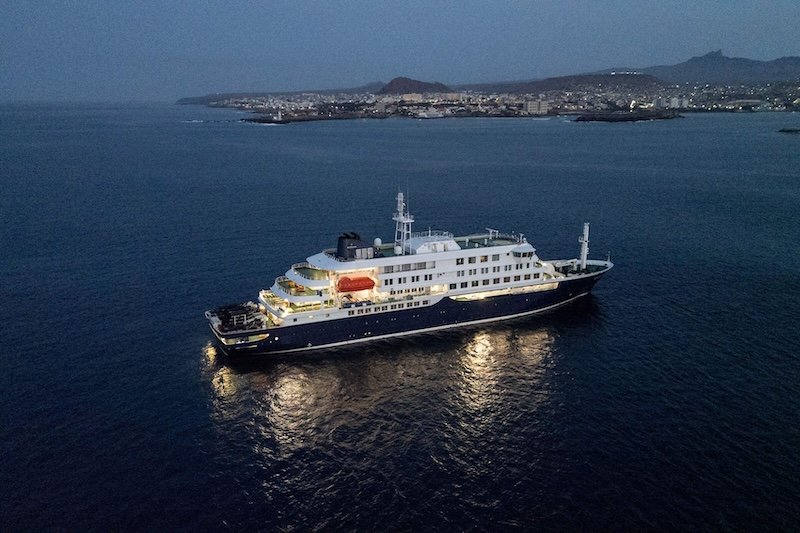
Health authorities across several countries are tracing passengers from the MV Hondius after a hantavirus outbreak linked to the Dutch-flagged cruise ship left three people dead and five confirmed infections.
The World Health Organization said the cases involve the Andes strain of hantavirus, a rare rodent-borne virus found in South America. The agency said the public health risk remains low, while warning that more cases are expected because symptoms often appear weeks after exposure.
The ship left Ushuaia, Argentina, on 1 April and later travelled through the South Atlantic before reaching Cape Verde. It is now heading to Tenerife in Spain’s Canary Islands with about 150 passengers and crew on board.
Three people have died since the voyage began. CNN reported that the first suspected case was a 70-year-old Dutch man who fell ill on board with fever, headache, abdominal pain and diarrhoea before dying on 11 April. His wife later disembarked at St Helena and died in South Africa. A German woman also died on the ship.
Oceanwide Expeditions, the vessel’s operator, said passengers who remain on board are under precautionary measures. Three people were evacuated from Cape Verde to Europe for treatment, including a British national, a Dutch crew member and a German passenger.
The BBC reported that at least 29 passengers of 12 nationalities left the ship at St Helena on 24 April. The Dutch government gave a higher figure of 40. Those passengers included citizens from Britain, the United States, Germany, Sweden, Denmark and Switzerland.
Authorities in the United Kingdom said two British nationals who left the ship at St Helena are isolating at home. Singapore said two men in their 60s who left the vessel are self-isolating and being tested. Health officials in Georgia and Arizona are monitoring three passengers who returned to the United States and have no symptoms.
South African authorities are tracing dozens of people who had possible contact with infected passengers. AP reported that officials had identified 62 contacts, including airline passengers, airport workers, health staff and cleaners.
WHO Director-General Tedros Adhanom Ghebreyesus said the first two cases had travelled through Argentina, Chile and Uruguay and visited sites where rats known to carry the virus were present.
Hantaviruses usually spread to humans through contact with infected rodent urine, droppings or saliva. Most strains do not spread between people, but the Andes strain has been linked to limited human-to-human transmission through close contact.
The WHO has said the outbreak is serious but not comparable to Covid-19. Its epidemic expert Maria Van Kerkhove told reporters: “This is not the next Covid, but it is a serious infectious disease.”
HT