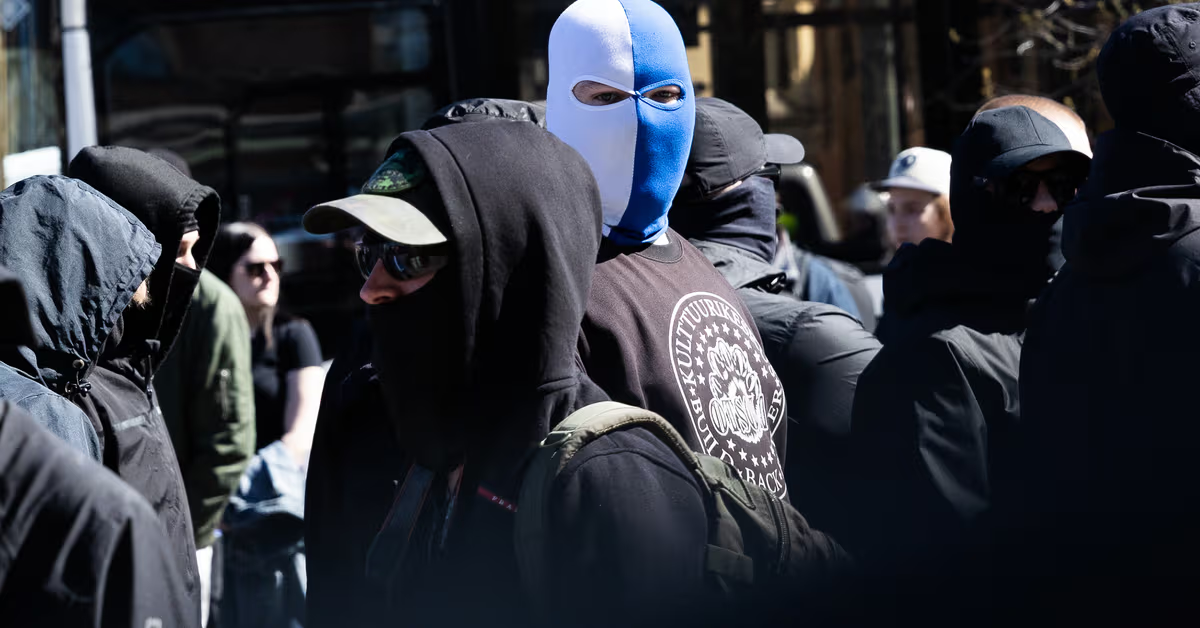
Experts say Finland’s current legislation poses difficulties in identifying suspects when demonstrators cover their faces.
Violence linked to a far-right May Day march in Tampere prompted calls to review Finland’s laws on face coverings at demonstrations.
During the march, counter-protestor Tytti Hynninen was assaulted. Police are investigating the incident, but identifying those responsible has proved challenging, as many participants had covered their faces.
A number of those taking part in the ‘White May Day’ procession, organised by the Blue-and-Black Movement group, wore face coverings, making identification difficult.
Partly founded by former Finns Party members, Blue-and-Black has been widely described as an openly fascist and racist group. It was re-registered as a political party last year.

According to Kimmo Nuotio, criminal law professor at the University of Helsinki, Finnish legislation does not include a general ban on wearing face coverings at protests.
Wearing a face covering in a public place is only prohibited if it is clearly linked to an intention to commit a crime, such as violence or property damage.
“In my view, police could prohibit face coverings if they expected violence at a demonstration,” Nuotio said.
Police presence during the event has also drawn scrutiny. Officers were stationed at the beginning and end of the march, but not at the location where the assault took place.
“This decision was based on where we assessed the greatest risk. We were already more prepared than usual. If we had been in other locations, we would have needed more resources,” said Mikko Masalin, Police Chief for Central Finland.

Calls for legal changes
Following the incident, politicians including Rami Lehtinen (Finns) and Jouni Ovaska (Centre) have called for a full ban on wearing face coverings at demonstrations.
Professor Nuotio also agreed that the legislation may need to be reassessed, suggesting that protests increasingly involve threats or acts of violence.
Extremist symbols
Some participants in the march made Nazi salutes and used white supremacist hand signals.
According to Nuotio, such gestures could in some cases meet the legal threshold for incitement against a group, depending on the context and how the case is handled in court.

The public display of certain extremist symbols, such as swastika flags, is already prohibited in Finland.
The police chief was not aware of any criminal reports being filed regarding Nazi salutes or white supremacist hand gestures.
Officials in Tampere have said they are exploring ways to prevent the Blue-and-Black Movement from organising similar demonstrations in the city in the future.