Eight confirmed or suspected cases, three people have diedRare Andes strain confirmed, only strain known to cause human-to-human transmission, which is uncommonHantavirus usually spreads through contact with infected rodents
The UK Health Security Agency (UKHSA) said that neither of these people who were on board the MV Hondius are reporting symptoms for the rodent-borne virus and that a number of close contacts of those on the boat are also being “offered support and are also self-isolating”.
There are two Irish people aboard the vessel, where the outbreak has been linked to eight cases and three deaths, as it heads for port in Spain’s Canary Islands, despite initial resistance from the local government. However, it is not believed they are affected.
Today’s News in 90 Seconds – May 6th
The UK health authority said that it is also helping to trace people who may have been on the same flight as a confirmed case.
It said that it is working to prepare for the arrival of British nationals to the UK from the Dutch-flagged ship.
Health officials said once the ship docks in Tenerife the remaining British nationals can be repatriated if they do not develop symptoms.
They stressed that the risk to the general public “remains very low”.
Dr Meera Chand, deputy director for epidemic and emerging infections at UKHSA, said: “Our thoughts are with all those affected by the hantavirus outbreak onboard the MV Hondius.
“It’s important to reassure people that the risk to the general public remains very low.”
The outbreak has been linked to a birdwatching expedition in Argentina which two of the passengers went on before boarding the ship.
Some 19 British nationals were listed as passengers on the cruise, which was sailing from Argentina to Cape Verde, with four British crew members.
Two Britons, a passenger and a crew member, are among those taken ill in the suspected outbreak, which has been linked to three deaths.
The crew member, understood to be a doctor on the ship, along with a Dutch crew member and another passenger were taken from the ship on Wednesday for onward travel to the Netherlands, the World Health Organisation (WHO) said.
Spanish health officials said the British medic is now in a more “stable condition” after previously being in a “critical condition”.
The Associated Press reported that a medical evacuation flight arrived at Amsterdam’s airport on Wednesday evening.
The passenger was medically evacuated from the ship on April 27 and taken to Johannesburg, South Africa.
The evacuation means the ship can now continue on its three-day journey to the Canary Islands after Spanish authorities gave permission for the boat to dock.
But a row erupted after the president of the Canary Islands expressed concern over the ship docking in Tenerife.
In an update posted online, Spanish health authorities said that the ship is expected to arrive within 72 to 96 hours.
The European Centre for Disease Prevention and Control (ECDC) said that everyone on board should be considered as a “close contact”.
A Threat Assessment Brief posed by the European health agency states: “We consider everyone on the ship to be close contacts, due to the closed setting and shared social areas and activities, aligned with the precautionary principle.”
The Associated Press reported the Argentine government’s hypothesis is that a Dutch couple contracted the virus during a birdwatching outing in the city of Ushuaia before boarding.
Two Argentine officials told the news agency that the couple visited a landfill during the birdwatching tour where they may have been exposed to rodents carrying the infection.
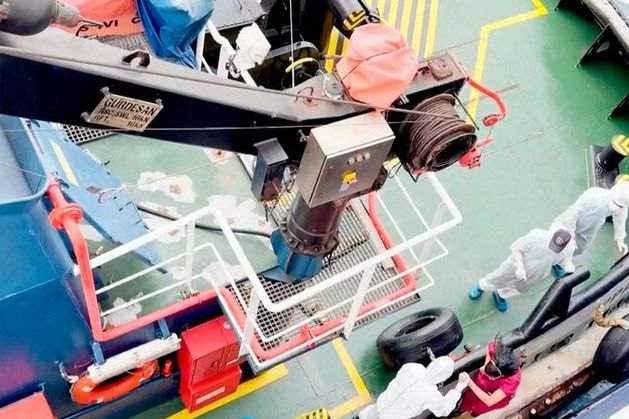
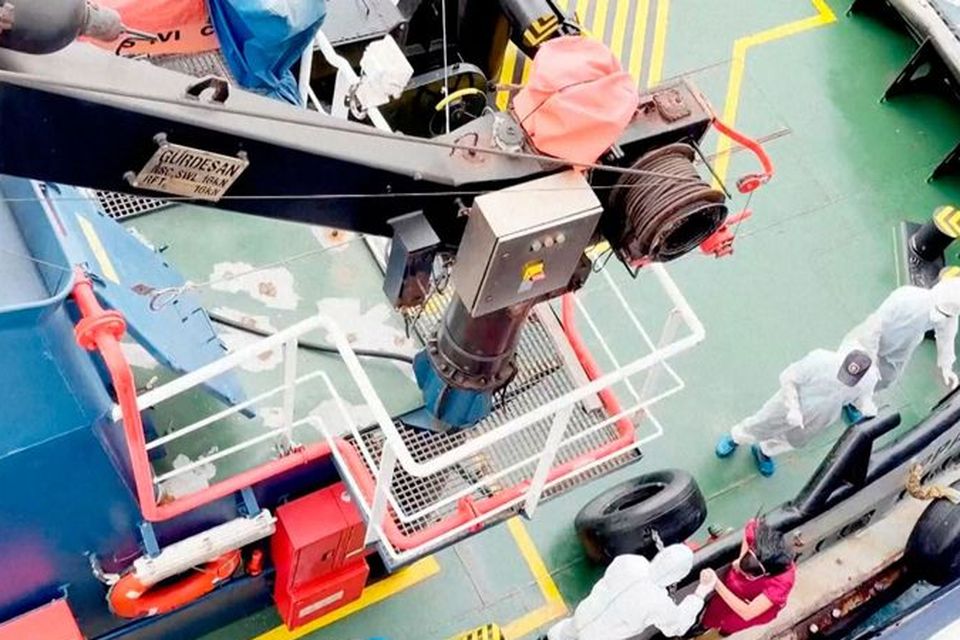
The ship has been anchored off Cape Verde. Passengers are confined to their cabins while “disinfection and other public health measures are carried out”, the WHO said on Tuesday.
It is understood that none of the remaining passengers on board have symptoms and two extra medics have been flown in to assist.
The WHO said there are eight cases, three of which are confirmed.
The Hondius had been anchored off Cape Verde while arrangements were put in place to evacuate the crew members.
Dr Tedros Adhanom Ghebreyesus, director-general of the global health body, posted on X: “Three suspected hantavirus case patients have just been evacuated from the ship and are on their way to receive medical care in the Netherlands in co-ordination with WHO, the ship’s operator and national authorities from Cabo Verde, the United Kingdom, Spain and the Netherlands.
“WHO continues to work with the ship’s operators to closely monitor the health of passengers and crew, working with countries to support appropriate medical follow-up and evacuation where needed.
“Monitoring and follow-up for passengers on board and for those who have already disembarked has been initiated in collaboration with the ship’s operators and national health authorities.
“At this stage, the overall public health risk remains low.”
Tour operator Oceanwide Expeditions said in a statement: “At this stage, the planned destination for m/v Hondius following the successful medical transfer is the Canary Islands.
“Oceanwide Expeditions remains in close and continual discussion with relevant authorities regarding our exact point of arrival, quarantine and screening procedures for all guests, and a precise timeline.
“We are unable to confirm the details of onward travel for guests at this stage. This is dependent on medical advice and the outcome of stringent screening procedures.”
Commenting on the variant of the virus linked to the outbreak, the Andes virus, Professor Sir Andrew Pollard, director of the Oxford Vaccine Group at the University of Oxford, told BBC Radio 4’s Today programme: “With this particular hantavirus, the Andes virus, it is known very rarely to spread between people with close contact, usually symptomatic individuals who are in close contact with each other.
“That’s important because it means it is very easy to isolate people who are unwell and to follow sort of quarantine and so on to avoid spread to other people.
“It’s not like the situation we had with Covid-19 in the pandemic where people could spread even without symptoms, and therefore it was able to spread very easily in the population.”
He added: “I think the risk is essentially zero of spread outside of this particular outbreak, because the authorities have recognised this and they know exactly what to do to make sure that the individuals are isolated and there’s no-one with transmission now that we know what we’re dealing with.”
Dr Jacqueline Weyer, acting deputy executive director for the National Institute for Communicable Diseases in South Africa, said the Andes virus is a “slow burner” and “moves really slowly” which “allows a window of opportunity to contain the outbreak”.
But she told Sky News that the British passenger in hospital in Johannesburg will be under “strict isolation precautions to ensure that we don’t see onward transmission”.
She said that investigations have found no rodent infestations on the ship itself and that the “exposure event” was probably through rodent exposure in Argentina.