SAN JUAN (AP):
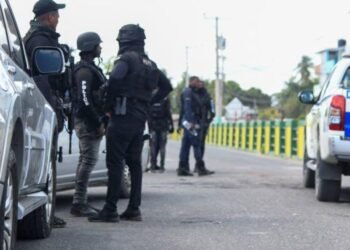
Haiti’s government has announced new election dates as the armed gangs who terrorise the country continue to fight against Haitian police and soldiers, who are now backed by the recent arrival of more than 2,000 troops from El Salvador.
The Provisional Electoral Council said late Wednesday that the first round of general elections will be held next July 18 and the second round on October 4.
Haiti has not held elections in more than a decade and is run by an unelected prime minister. The presidency has been vacant since President Jovenel Moïse was killed in 2021.
The council said it expects to publish the final candidate list, including those running for the presidency or the Senate, by mid-January, with May 20 marking the end of voter registration. Among the presidential hopefuls are former presidents Michel Martelly, Claude Joseph and Jocelerme Privert, along with a former president of Haiti’s Chamber of Deputies, Gary Bodeau, and Public Prosecutor Jean Ernest Muscadin. Martelly and Bodeau have been sanctioned by the US following allegations of corruption, while Muscadin has been accused of summary executions of suspected criminals.
Among those seeking to become mayor of Port-au-Prince, Haiti’s capital, is Samuel Joisil, leader of the civilian brigade of Canape-Vert, whose members include vigilantes known for successfully pushing back the violent gangs seeking to take over their community.
The first round of elections was initially scheduled for December 13, but was delayed by gang violence in Haiti’s central region and in Port-au-Prince. Four aviation technicians from El Salvador working with a UN-backed gang suppression force went missing on October 18 in the capital after coming under attack.
In response, Salvadoran President Nayib Bukele sent more than 2,000 troops to Haiti to help rescue the four technicians, whom the Haitian government says were abducted.
Scrutiny of Salvadoran troops
El Salvador’s Ministry of Foreign Affairs said in a statement late Wednesday that Bukele had spoken with Haitian Prime Minister Alix Didier Fils-Aimé about the security operation to rescue the technicians.
Meanwhile, Haiti’s government issued a statement saying the two leaders are reinforcing cooperation within the framework of the UN-backed gang suppression force.
Experts have questioned exactly what role the Salvadoran troops are playing in Haiti.
Romain Le Cour, head of the Haiti Observatory at the Global Initiative Against Transnational Organized Crime, said their rules of engagement, chain of command, objectives and duration “remain opaque”. He questioned what kind of coordination they might have with the gang suppression force, Haitian police and Vectus Global, the private security firm founded by former US Navy SEAL and Blackwater founder Erik Prince.
“Are we witnessing yet another model of deployment, parallel to the multilateral framework? The role of the United States, which supported and facilitated this deployment, also deserves scrutiny,” he said.
Le Cour said the number of Salvadoran troops in Haiti will surpass that of personnel in the gang suppression force, raising questions about the future of the UN-backed force.
“What does that mean for its authority, its coherence and its future?”
He added, “The most basic question remains unanswered: why were the Salvadoran technicians in a gang-controlled neighbourhood in the first place?”
Le Cour and others also raised concerns about the safety of Haitian civilians caught in a gun battle between Haitian gangs and the international forces.
On Wednesday, Doctors Without Borders issued a statement calling on “the authorities and all parties involved to spare civilians and ensure access to health care facilities for all the wounded and sick, without distinction.”
The aid agency said it treated 30 patients injured by gunfire or drone explosions from October 18 to 26, and that it took some of the wounded several hours to reach hospitals run by Doctors Without Borders.
More than 5,700 people have been killed or wounded in Haiti from January to mid-September, according to the UN. Those recently killed include two Haitians who worked for the Norwegian Refugee Council.