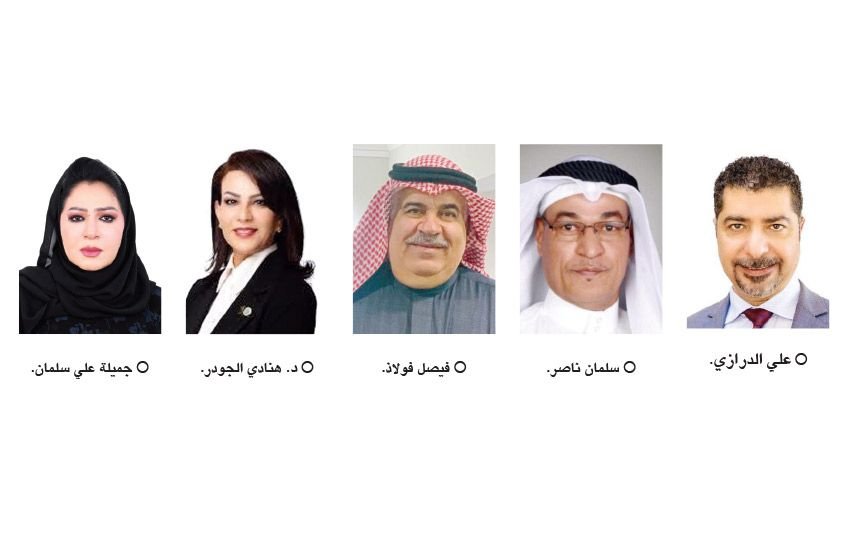
A number of jurists, lawyers, and national figures affirmed their strong rejection and denunciation of the statements made by the editor-in-chief of the Iranian Kayhan newspaper, Hossein Shariatmadari, which included false claims and accusations that affect the sovereignty, Arab identity, and independence of the Kingdom of Bahrain. Engineer Ali Ahmed Al-Darazi, head of the National Institution for Human Rights, affirmed that the sovereignty, independence, and national identity of the Kingdom of Bahrain are established legal and historical facts, expressed by the people of Bahrain of their free will, and confirmed by international legitimacy, Stressing that any attempts to undermine or question it, whether through Iranian media, writers, or press institutions, are considered unacceptable allegations that contradict the principles of international law and the United Nations Charter, and are not consistent with the rules of good neighborliness, respect for the independence of states, and non-interference in their internal affairs.
He explained that the right of peoples to self-determination, to preserve their national identity, and to live in security and stability under an independent, sovereign state is one of the basic principles of human rights, stressing that the people of Bahrain have always demonstrated their pride in their national affiliation, their unifying identity, and their loyalty to their homeland and its institutions.
The head of the Foundation called on those parties to stop adopting or promoting any speech that affects the sovereignty of states and the dignity of peoples, and to refrain from creating tension or repeating allegations that are not based on any legal or factual basis, stressing that the Kingdom of Bahrain will remain an independent Arab state with sovereignty and a firm position in the international community.
Salman Nasser, head of the “Independent Jurists” group, said that the statements of the editor-in-chief of the Iranian newspaper Kayhan reflect the state of political bankruptcy experienced by the Iranian regime, which is trying to escape from its internal crises by invoking outdated expansionist claims. Instead of addressing the poverty, unemployment, and deteriorating living conditions that millions of Iranians suffer from, some regime figures are busy making allegations targeting the sovereignty and stability of Arab countries.
Meanwhile, Hanadi Al-Jowder pointed out that the speech by the editor-in-chief of the Iranian Kayhan newspaper, Hossein Shariatmadari, is nothing more than an illusion and hope that has been undermined by the reality of the opinion of the people of Bahrain in the international referendum that was held in 1971, in which the people of Bahrain voted for its Arabism and independence. This was repeated in several situations, including the current popular reaction to the sinful Iranian aggression by rallying around the leadership of Bahrain in confirmation of the unity of the national ranks, its Arabism and its independence, and what the demands were. Iran is nothing but illusions and dreams that will never see the light, God Almighty willing.
Lawyer Jamila Ali Salman added that what Shariatmadari claims is a slander refuted by history and law. Historically, Bahrain is the cradle of the oldest civilizations, the Dilmun civilization, before Iran had its modern name, and Dilmun Island is an island whose identity is Arab-Islamic, and its population is Arab in affiliation, language, and culture since ancient times.
Faisal Foulad, Secretary-General of the Bahrain Human Rights Monitoring Society, condemned in the strongest terms the provocative and irresponsible statements made by Hossein Shariatmadari, editor-in-chief of Kayhan newspaper, in which he falsely claimed that the Kingdom of Bahrain is part of Iranian territory, and that the people of Bahrain consider themselves Iranian and demand to join Iran.