Gulf security has become linked to the stability of the global economy and supply chains
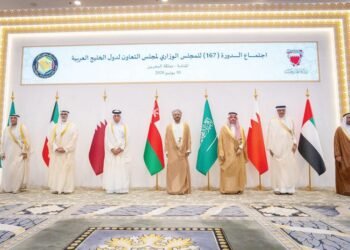
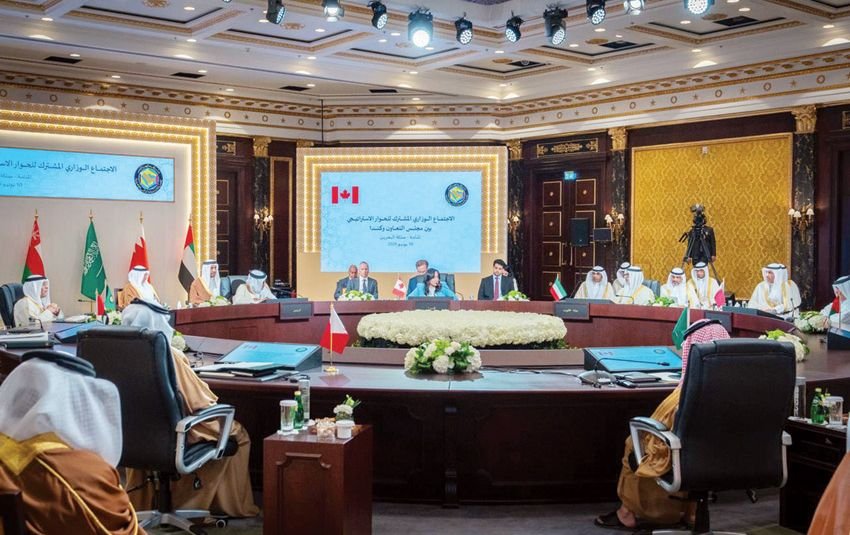
Dr. Abdul Latif bin Rashid Al Zayani, Minister of Foreign Affairs, Chairman of the current session of the Ministerial Council of the Gulf Cooperation Council, chaired the ministerial meeting for the strategic dialogue between the Gulf Cooperation Council and Canada, which was held in the presence of the foreign ministers of the Gulf Cooperation Council countries, Anita Anand, Minister of Foreign Affairs of Canada, and the participation of Jassim Mohammed Al Budawi, Secretary-General of the Gulf Cooperation Council.
At the beginning of the meeting, the Minister delivered a speech in which he conveyed the greetings of His Majesty King Hamad bin Isa Al Khalifa, King of the country, and His Royal Highness Prince Salman bin Hamad Al Khalifa, the Crown Prince and Prime Minister, expressing the Kingdom of Bahrain’s pride in hosting this ministerial meeting for the strategic dialogue between the Gulf Cooperation Council and Canada, noting that the Minister’s presence to participate in the meeting in these delicate regional circumstances is an eloquent message confirming Canada’s solidarity with the GCC countries and its standing by their security and stability, which is A position we greatly appreciate.
The Minister of Foreign Affairs said: The Gulf Cooperation Council is proud of the growing partnership it has with Canada, embodied in the joint action plan for the years 2025-2029 in the political, security, trade and investment fields, in a way that serves common interests and supports bridges of communication between peoples.
He added that this meeting is being held under extremely delicate security conditions, with the continued sinful Iranian attacks on the GCC countries with ballistic missiles and drones targeting civilian objects, energy facilities, and residential areas, in flagrant violation of the United Nations Charter, international law, and the principles of good neighborliness, and in contravention of Security Council Resolution No. 2817, noting the recent renewal of these attacks, including against the Kingdom of Bahrain and the sisterly State of Kuwait, and resulting in loss of life and serious injuries.
He said: While the GCC countries affirm their right to protect their security and the safety of their citizens, they stress the importance of intensifying serious diplomatic work to prevent the widening circle of escalation, expressing appreciation for the Canadian position in solidarity with the GCC countries, which condemned these attacks and supported Security Council Resolution No. 2817, which reflects Canada’s commitment to the rule of law and protecting regional security.
The Minister of Foreign Affairs stressed that the security of the Gulf region has become closely linked to the stability of the global economy, energy security, and supply chains, and that attempts to close the Strait of Hormuz or use international waterways as a means of political pressure represent a serious challenge to global energy and trade flows, in an international corridor in which the United Nations Convention on the Law of the Sea guarantees the right of transit passage without hindrance, and the international community cannot stand idly by in the face of any attempt to undermine freedom of navigation.
The Minister stressed that the security and stability of the region depend on resolving its issues by peaceful means and through dialogue, foremost of which is achieving a just and comprehensive peace in Palestine that leads to the establishment of an independent, sovereign, viable State of Palestine, with the establishment of a ceasefire in Gaza, the delivery of humanitarian aid, and support for reconstruction.
The Minister also affirmed the support of the GCC countries for the security, stability and unity of Lebanon, Syria, Iraq, Yemen, Libya and Sudan, and for their governments to extend their control over their entire territory, and to confine arms to the state alone, in a way that preserves its sovereignty and safeguards the aspirations of its people towards stability and development.
The Minister of Foreign Affairs said: The belief in dialogue and respect for international law that unites the Gulf Cooperation Council and Canada makes our meeting an opportunity to enhance coordination and build on what has been achieved, in a way that serves our common interests and the security and stability of our region.
During the meeting, the two sides discussed ways to strengthen the historical friendly relations between the Gulf Cooperation Council and Canada within the framework of the strategic dialogue between the two sides, and reviewed the path of joint cooperation, including opportunities for trade and investment cooperation in the fields of logistics services, infrastructure, energy, defense industries and food security, and the achievements that have been achieved aimed at strengthening bilateral cooperation and developing the partnership in areas of common interest in a way that meets the aspirations and interests of both sides.
It was decided at the meeting that the General Secretariat would coordinate with member states and the Canadian side to enhance cooperation in areas of common interest in accordance with the joint action plan for the strategic dialogue between the two sides (2025-2029).
The two sides discussed the most prominent regional developments, the Iranian attacks that the GCC countries were subjected to, targeting civilian objects, vital installations, and residential areas, the repercussions of Iran’s closure of the Strait of Hormuz on maritime navigation, energy and food supplies, and international trade, and the Pakistani mediation efforts to reach an agreement that ends the conflict and restores peace, security, and stability to the region.
Ways to confront the various challenges facing the region, developments related to the situation in Lebanon and Palestine, and advancing efforts to bring comprehensive peace to the region for the benefit of all its peoples were also discussed.
The Kingdom of Bahrain’s delegation to the meeting was headed by Ambassador Sheikh Abdullah bin Ali Al Khalifa, Director-General of Bilateral Relations, with the participation of Ambassador Dr. Yousef Abdul Karim Bucheery, Director-General of Legal Affairs and Human Rights, Ambassador Saeed Abdul Khaleq Saeed, Head of the Coordination and Follow-up Sector, Ambassador Nawar Abdullah Al-Mutawa, Acting Head of the Gulf Cooperation Council Affairs Sector, and Salman Hassan Al-Jalahma, Head of the Americas Affairs Sector.