In Venezuela, a process of transition to democracy has not yet begun, after the events of January 3, but the so-called “rodrigato” and Chavismo are still waiting for some sign indicating that they would be willing to facilitate the route. Politicians, jurists and human rights defenders considered that the appointment of a new prosecutor and ombudsman who adhered to the laws was an opportunity to demonstrate a willingness to change.
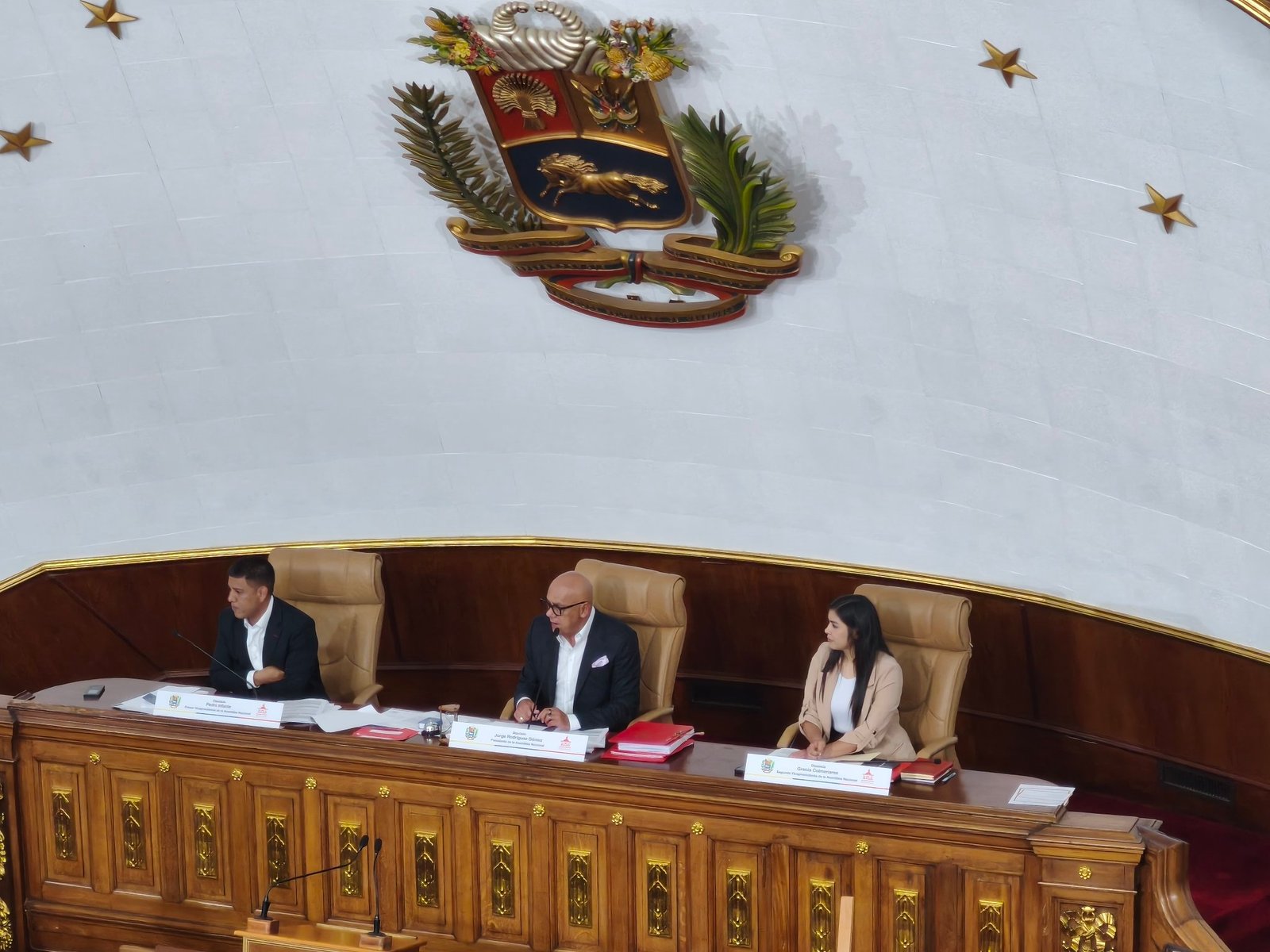
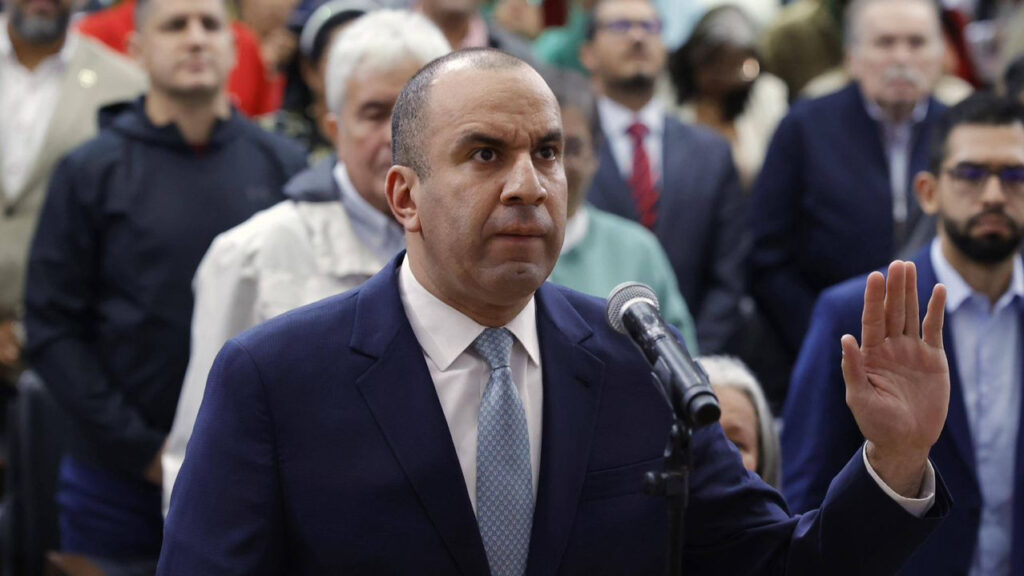
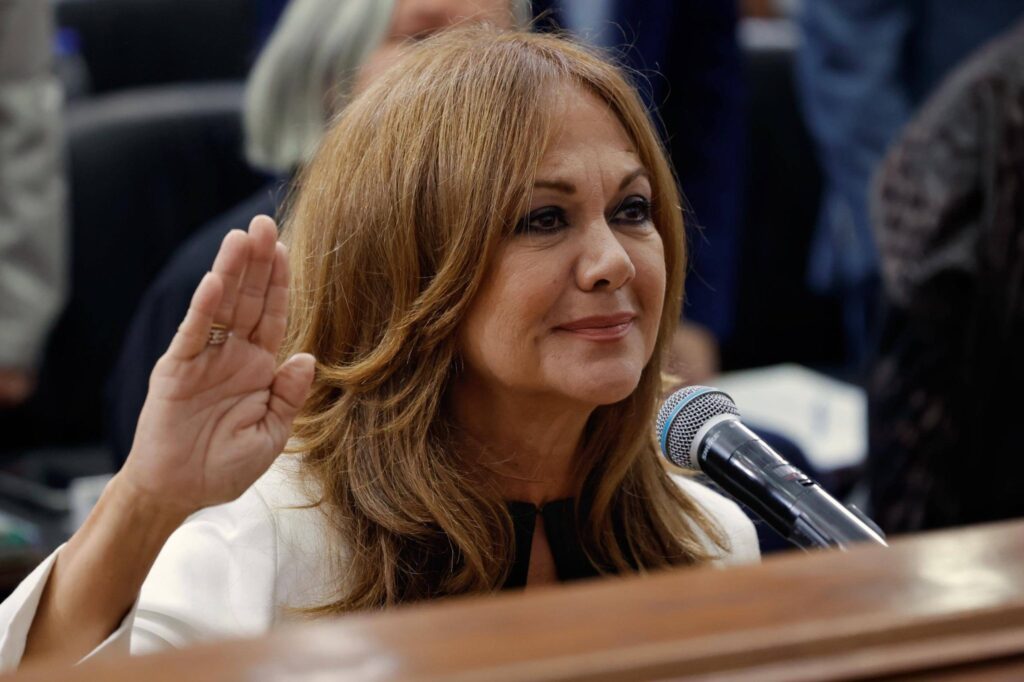
Despite the demand of civil society, the National Assembly (AN), dominated by Chavismo, with the votes of the Democratic Alliance, ratified the attorney general in charge, Larry Devoe, and appointed the former legal consultant of the Electoral Branch, Eglée González Lobato, as the new ombudsman.
In a process that exceeded the established deadlines (there was a 48-hour extension for applications), the scale or the final list of eligible candidates was not published, Parliament ruled out jurists with extensive experience such as Magaly Vásquez to head the Public Ministry and names such as the director of Human Rights at the Central University of Venezuela (UCV), Vladimir Alvarado, for the Ombudsman’s Office.
The fact that Davoe, very close to the governor in charge, Delcy Rodríguez, went from manager to chief prosecutor, evidence, from the perspective of analysts consulted by Cocuyo Effectthat Chavismo was not willing to negotiate institutional control and still does not show great signs of a democratic opening 100 days after the capture of Nicolás Maduro.
In the case of the Ombudsman’s Officethey recalled, the system itself has been responsible for taking away the power that it should have, so it was not a problem for the interim to appoint a person without partisan militancy and who was more “potable” for both a sector of the opposition and for Chavismo in these functions.
For lawyers, those appointed should immediately focus on review the cases of political prisoners and request dismissal of the causes because they have not committed crimes.
Authoritarian adaptation
The doctor in Contemporary Political Processes, Juan Manuel Trak, emphasizes that in Venezuela a democratic transition has not begun, so the partial renewal of Citizen Power (the Comptroller’s Office is missing) by the AN, this April 9, does not fall within the framework of a route towards that process, but towards what he calls “a authoritarian adaptation«.
“What we have is an authoritarian system that suffered very strong pressure with the removal of Maduro. An event that we can call a black swan; that is, a disruptive event that has caused some modifications in the power structure. One of these modifications has been precisely in Citizen Power, in the midst of demands for a political opening,” explained the researcher and political consultant.
He maintains that the appointments of the prosecutor and defender, especially the first, contradict a possible intention of political opening. In the case of Devoe, for having been the government’s lawyer before international organizations such as the United Nations (UN), where he has denied human rights violations in Venezuela.
“It is an unmistakable sign that The institutional control of the Prosecutor’s Office is not negotiable. So what we are seeing is a rearrangement of who the actors are within Chavismo and not so much a democratic opening,” Trak stressed.
The Libertad parliamentary group, headed by the head of the faction, Stalin González and Henrique Capriles RadonskiDuring the ordinary session, they proposed the prominent jurist Magaly Vásquez as the new prosecutor and the former deputy Marialbert Barrios as the ombudsman.
Without hesitation, Chavismo passed the steamroller and, ironically, the president of the AN, Jorge Rodríguez, counted the votes of the plenary: 10 votes for Vásquez and Barrios and 275 for Devoe and González Lobato, who, in addition to the Psuv, were supported by the Democratic Alliance and Fuerza Vecinal.
“The Ombudsman’s Office, since its creation, has never played a relevant role in the defense of the human rights of citizens. Basically it has a testimonial role. Now it falls into the hands of a person linked to non-governmental sectors, whose main characteristic is to oppose more the leadership of María Corina Machado and the Unitary Platform. We will see if it will be a symbolic role or if we are going to have an Ombudsman’s Office defending the rights of citizens,” Trak said about the appointment of the former CNE legal consultant.
Politics vs. merits
Capriles, who stopped to read the extensive resume of lawyer Vásquez that far surpassed Devoe’s career, warned before the final selection that it was an opportunity to choose a person without political militancy, independent, defender of the Constitution and the laws. Jorge Rodriguez, When defending Devoe, he responded to the deputy that they did not have the votes to prevail.
Devoe has accumulated positions such as member of the supervisory boards of the National Superintendency of Crypto Assets (Sunacrip) in 2023 and the Venezuelan Corporation of Guayana (CVG). And before the AN he swore to work “without rest until we achieve the new criminal justice” and “a new democratic state of law and justice.” While González Lobato assured that the doors of the Ombudsman’s Office will be “open to everyone.”
“All the changes you’ve made Delcy Rodriguez In recent months they are basically a political team, there is no origin due to a change in management. All those who left the Cabinet were close to Maduro and those who entered are from Rodríguez’s entourage. It is no different in the case of the Prosecutor’s Office. Devoe is a person linked to Rodríguez’s management, close to her, with political ties; “That is the nature of the designation,” warned political consultant Ricardo Ríos.
The president of the firm Poder y Economía says that although González Lobato is known for her career in electoral matters and her government involvement is recent, in recent months she has aligned herself narratively with the Rodríguez brothers. In any case, in agreement with Trak, he points out that he can be given the “benefit of the doubt” and that institutional management is expected of both officials, key to an eventual political transition.
González Lobato has a PhD in Law, a specialist in Administrative Law and coordinated the Free Democracy and Elections Chair at the UCV, as well as a legal consultant for the CNE between 2014 and 2016.
What does the US say?
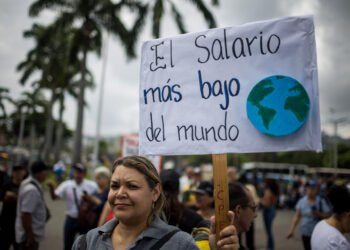
The appointment of the prosecutor and the ombudsman occurred on the same day that the police forces and groups affected by Chavismo They repressed a march of workers that was heading to Miraflores to demand an increase in the minimum wage and pensions. At least 10 press workers were also attacked, according to the National Union of Press Workers. On social networks, the new office holders were required to establish responsibilities for the attacks and claim the right to protest.
All of this occurs under the tutelage of the United States over the interim government and the presence of the ambassador. Laura Doug in Caracas. The North American president, Donald Trump, has expressed satisfaction with the oil and mining cooperation between the interim administration and the White House. Just this April 9, the AN also sanctioned the new Mining Law that opens the sector to national and foreign private companies for the extraction of resources, which is key for exchange with Washington.
Why doesn’t the US say anything about the human rights violations that continue to occur in the country and the delayed release of political prisoners? Did the appointments of the prosecutor and the defender have your approval?
For Trak, the US is more concerned about maintaining a fluid relationship in terms of the exchange of geostrategic resources, essential for the new positioning that the country is seeking in the global arena, than about democracy in Venezuela.
“The appointment of the prosecutor and the Ombudsman, at least at this time seems to have no relevance to the three phases of Marco Rubio. “They are trying to guarantee that there is stability and access to Venezuelan resources and, therefore, that there is a real democratic opening is not the priority of the United States,” he said.
In coincidence, Ríos adds that it is in the economic issue, mainly oil and mining, in which the interim has little negotiating capacity with the US, which exercises direct tutelage in those areas. But on other issues, he maintains, he has greater room for maneuver, in exchange for cooperating financially, and this is what is seen in the appointments of the prosecutor and the ombudsman.
“The US may not impose designations, it may veto some, but there is greater room for maneuver. It is relative tutelage on some non-economic issues,” he noted.
End the criminalization of dissent
For lawyers, human rights defenders, the prosecutor and the ombudsman must review the issue of political prisoners and the delayed, selective and discriminatory application of the Amnesty Law, sanctioned by the AN on February 19.
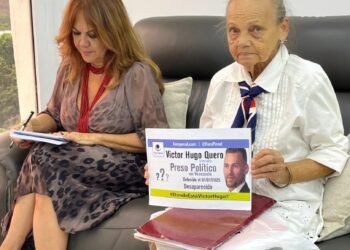
According to the NGO Foro Penal, 485 people remain deprived of liberty unjustly, for political reasons until April 6, 2026. While Justicia, Encuentro y Perdón registers 669 political prisoners until March 16, 2026.
“What would be expected of the prosecutor in the case of political prisoners is that he review so many cases in which there are accusations that have no basis and request the dismissal because they are not criminal in nature, the person did not commit crimes, and thus those who remain unduly detained can be released,” said the lawyer for political prisoners, Joel García.
In the case of the ombudsman, the criminal lawyer and the expert lawyer in international criminal law, Simón Gómez Guaimara, he indicated that the first thing he should do is visit the detention sites to listen directly to the political prisoners, document the situations of unconstitutionality and human rights violations and demand their releases.
“With the amnesty there are no half measures. These officials (prosecutor and defender) must stop criminal proceedings for political reasons and must promote the release of all people detained for exercising their constitutional rights. The MP must review the cases, request dismissal and end the criminalization of dissent”Gómez Guaimara stressed.
Another of the MP’s actions, he noted, must be to initiate investigations into the serious allegations of human rights violations that have occurred in Venezuela, reported by the UN Fact-Finding Mission, and to cooperate with the investigation carried out by the Prosecutor’s Office of the International Criminal Court (ICC) for crimes against humanity that occurred in 2017. Of course, he said, if they aspire to gain credibility.
“At the moment, Devoe’s appointment sends a bad message to the international human rights organizations that carry out investigations into Venezuela, before which, as an alternate agent, he has denied the commission of human rights violations and crimes against humanity despite the strength of the evidence. The message is not one of openness or recognition of the problem, but of continuity of the same line of the State, which can affect cooperation and confidence that there can be real progress in terms of justice and accountability in the country,” added Gómez Guaimara.