Finland’s government has entered its final round of budget negotiations with plans to impose new spending cuts, with more than half expected to fall on social and healthcare services.
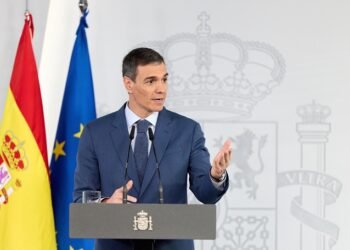
Prime Minister Petteri Orpo said the talks began in a “serious situation” as ministers gathered in Helsinki to agree on measures worth around €400 million. The negotiations mark the last framework session before the next parliamentary election.
Officials confirmed that about €218 million in savings would come from the social and healthcare sector.
The measures include higher patient fees in specialist care and long-term residential services, as well as reductions linked to administrative changes.
The government aims to finalise spending limits for the coming years while maintaining earlier commitments to reduce the deficit. Orpo said there would be no pause in austerity efforts. “Public finances remain in a critical state,” he told reporters.
Finance Minister Riikka Purra said all additional spending must be matched by savings elsewhere due to EU fiscal rules. She added that updated forecasts after the talks would reflect weaker economic growth and a rising deficit.
The government has already agreed on a broader adjustment programme worth about €10 billion during its term. That includes spending cuts and tax changes, with a large share targeting social benefits.
Data from the Finnish Institute for Health and Welfare shows income reductions have hit lower-income households the most. Some of the poorest households have seen more than 15 per cent of their income reduced due to policy changes.
At the same time, income tax cuts have been introduced for workers and companies. According to the Finnish Taxpayers’ Association, the changes have reduced taxation across income groups, though the effect remains limited for middle earners.
New savings under discussion include cuts to administrative costs, changes to social services and further reductions in support for organisations. Previous decisions have already reduced funding to social and health groups by about €140 million.
The government is also reviewing revenue measures. These include tax increases on harmful products and possible new charges, alongside reductions in business subsidies.
Alongside cuts, ministers are considering limited measures to support economic growth. Plans under discussion include temporary increases to household tax deductions and support for the construction sector. Some proposals, such as removing property transfer tax, carry high fiscal costs and remain uncertain.
Orpo said the government is also seeking ways to address youth and long-term unemployment, though details have not been confirmed.
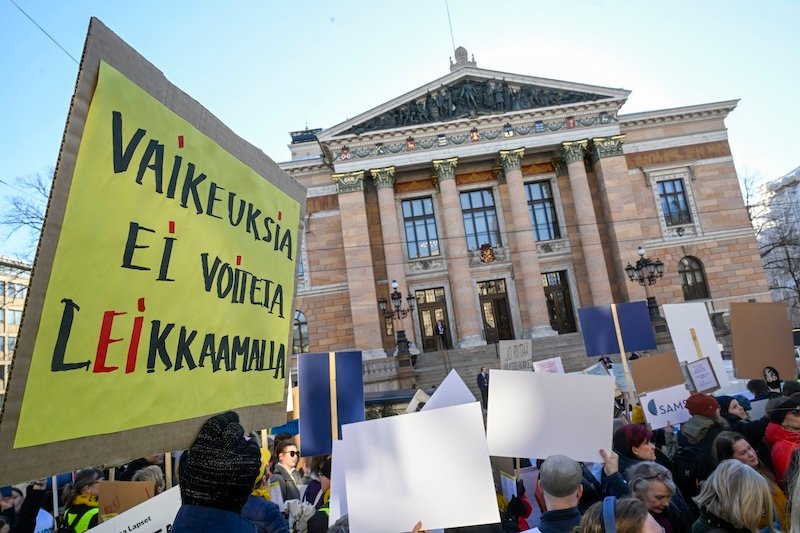
Outside the meeting venue, protesters gathered to oppose the planned cuts. Hundreds of demonstrators called on the government to reverse reductions affecting social organisations and vulnerable groups. Participants argued that savings should instead come from reversing earlier tax cuts.
The government has also recently allocated additional funding for defence and refugee support, further limiting room for new spending.
Ministers are expected to conclude talks on Wednesday, with final decisions to set the direction of public finances for the remainder of the government’s term.
HT