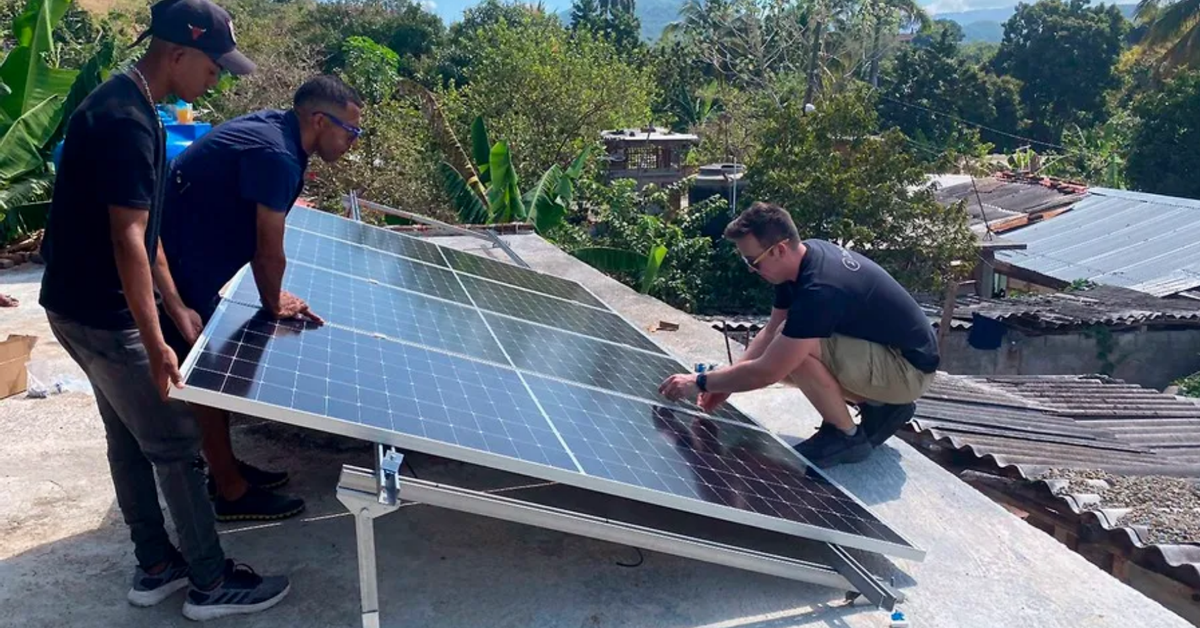
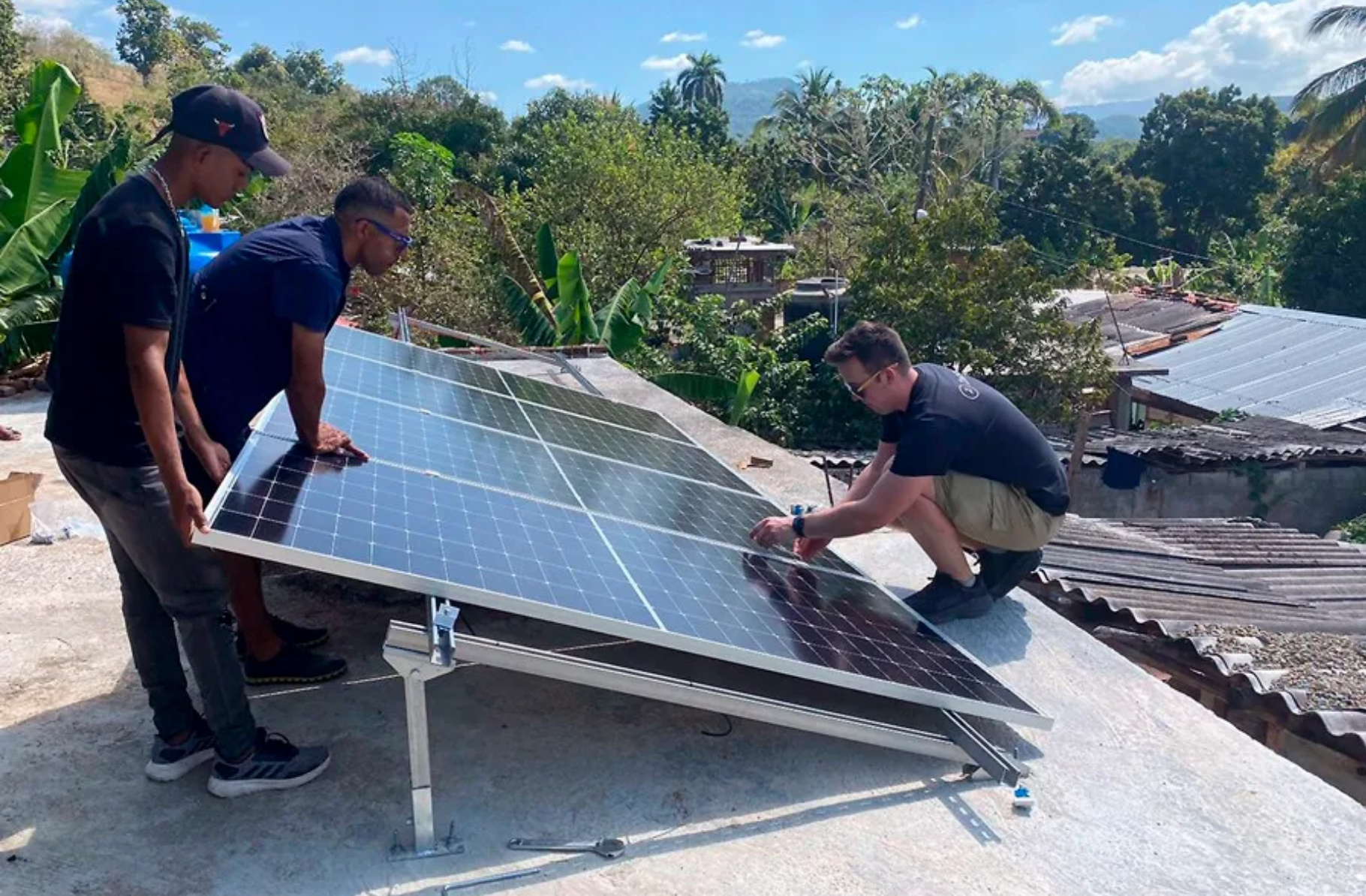
Madrid/The controversy has not stopped since Julio César Hernández Santana, head of the Municipal Directorate of Territorial Planning and Urban Planning in Matanzas, wanted to clarify on local television the regulations for installing solar panels in homes and a monumental mess was formed.
The official explained the mechanism, expressed in an indication from the National Institute of Territorial Planning and Urban Planning (Inotu), which requires that the citizen begin his management in the Physical Planning offices, from where he will be sent to the community architect to prepare a technical project. This previous step is essential for safety, since it evaluates the load capacity of the property and the specific location of the equipment.
Once the ownership documents and technical endorsement have been presented, the institution has a period of ten business days to issue the official authorization, which costs 68 pesos, although the problem is more closely linked to the architectural project, which is between 700 and 1,500 pesos.
The problem is rather linked to the architectural project, which is between 700 and 1,500 pesos
The regulations recognize ceilings, terraces, patios, garages and portals as areas in which it is possible to install panels, as long as they are private spaces and do not harm the neighbors. This complicates the situation for multifamily buildings, where there must be resident agreement and space is at a premium. The state of the blocks is no small problem, since damaging the waterproofing blankets on the roof is possible, with leaks and neighborhood disputes being a possible consequence.
In the case of the panels already installed – in Matanzas the number amounts to about 33,000 – there is what Hernández called flexible retroactivity, which means that there will be no fines with the entry into force of the standard, but a regularization of the panels must be carried out. The responsibility for security will be the owner’s, but by obtaining authorization you will be protected against a possible complaint if something happens.
Although the authorities admit that there is urgency and need, the procedure adds complexity that has not been well received. Above all – as they themselves recognize – because the crisis situation on the Island is multi-sectoral. Families do not have the financial resources to buy the expensive panels and now procedures are added that increase the price. The construction state of the buildings is frequently deplorable, the mobility to get around is not better and the workforce is reduced due to the exodus that has occurred on the Island in the last four years. In Matanzas there are only three community architects, so it will be almost impossible to process everything in reasonable times.
Yuni Moliner, journalist responsible for the controversy interviewhas been the first to put its finger on the issue, by titling the news ORDERING or more BUREAUCRACY? The author points out that “the measure attempts to introduce control into a practice that has grown rapidly and, in many cases, improvised. However, it comes at a time when solar panels are not just an option, but an immediate energy need for thousands of families” and emphasizes that, for the future, it offers legal certainty, but in an emergency situation it only complicates things.
One of the most well-founded comments has been the one left by the energy expert Juan Carlos Subiaut, which raises additional problems to those, also stated, of scarce human and material resources. Among them, the well-known inefficiency of the institution stands out due to its “inefficiency, corruption, voluntary and involuntary loss of documents”, queues, errors and “other etcetera”. Furthermore, the specialist considers that it is not consistent with the Government’s own policy, which although it has eliminated tariffs and other taxes, and created specific loans, while in this they are “ready to look for problems for a solution, which is currently imperative.”
Subiaut adds that there are countless problems in cities ranging from landfills to leaks and other misuses of resources that “occur under the passive, I won’t say complicit, gaze of that organization, but it has not spoken out about these illegalities.”
Subiaut adds that there are countless problems in cities that range from landfills to leaks and other misuses of resources that “occur under the passive, I won’t say complicit, gaze of that organization.”
These measures are joined by urban planning and architectural regulations, including those that affect historic centers – which imply additional authorizations from the Office of the Historian, among others –, those that govern respect for the urban image – alterations to facades – and compliance with fire and discharge regulations.
The debate unleashed by these regulations has left thousands of comments on social networks in which many citizens are expressing their discontent, already triggered by the many months that have accumulated of long blackouts and with no solution in sight. “You have to have a really tough face for this. People are putting up panels not because they want to, but because necessity has taken them there,” says one user. “What they have to do is provide electrical service like all countries in the world do and not screw up our lives anymore,” adds another.
Experts have also become active and are trying to explain that the State is doing well in regulating these issues, but that the moment should lead to a relaxation or moratorium. They express more measured opinions. Meanwhile, the Cuban Electrical Union has once again forecast a deficit of 1,840 megawatts for this Tuesday, a day after the Guiteras thermoelectric plant, in Matanzas, went offline again.
The two Turkish nonsense that was talked about so much this Monday – and that, as has been denial the Government itself, are nothing more than those that were already on the Island – will have to wait until mid-April to receive the Russian oil that arrived a week ago and whose refining is about to begin. The Belgin Sultanmoored in the port of Havana, has a production capacity of just 15 megawatts (MW), while the Erol Beylocated in Regla, contributes 63 MW to the national electrical system, which needs more than 3,000 MW to satisfy daily demand nationwide.