According to security analysts, organized neighborhood groups have proliferated in different municipalities of the country in recent years, in a context marked by the perception of insecurity and the limited response capacity of the State.
Experts agree that this phenomenon responds to multiple factors, including institutional absence, pressure from organized crime and the communities’ search for immediate protection.
Francisco Quezada, security analyst at the National Economic Research Center (CIEN), warns that, from a legal point of view, these groups cannot assume functions of the State.
He explains that the Constitution establishes that security and defense are powers of the Executive, exercised through the security forces.
“No group can assume responsibility for citizen security,” says Quezada, detailing that actions such as detaining people, confiscating vehicles or preventing passage constitute exclusive functions of the authorities.
He emphasizes that, although some of these organizations emerge for preventive purposes—such as patrols or community surveillance—the problem begins when they cross that limit. He added that there is the usurpation of state functions and even the commission of crimes.
In addition, it warns of a greater risk: the possible co-option of these groups of supposed neighbors by criminal structures.
According to Quezada, there are already precedents in which community organizations that initially sought local control ended up facilitating illicit activities, such as drug trafficking, through the protection of territories.
“In the short term they can generate a feeling of security, but later they can become structures of territorial control without regulation,” he indicates.
Doctor in criminology and independent analyst Federico Reyes agrees that the phenomenon has been increasing, especially in municipalities in the department of Guatemala.
Reyes points out that it is not only about the absence of the State, but also about factors such as the increase in the use of weapons, drug consumption and the commission of crimes such as extortion, homicides and human trafficking. He pointed out that this creates an environment of insecurity that drives neighbors to organize.
Reyes warns that this dynamic also makes it easier for external actors, including criminal groups, to infiltrate these local organizations.
It points out that, although institutions such as the Public Ministry, the Judicial Branch, the National Civil Police and the Army maintain a presence in different territories, this is not always enough.
“It is not a total absence, but there are limitations in coverage, planning and response,” says Reyes.
He added that it is necessary to strengthen the territorial analysis of crime to improve security strategies.
Organized neighbors exercise control
Jorge Alvarado, retired general and GT Citizen Security analyst, believes that these groups, under the pressure of the environment and the influence of negative leadership, may end up taking justice into their own hands.
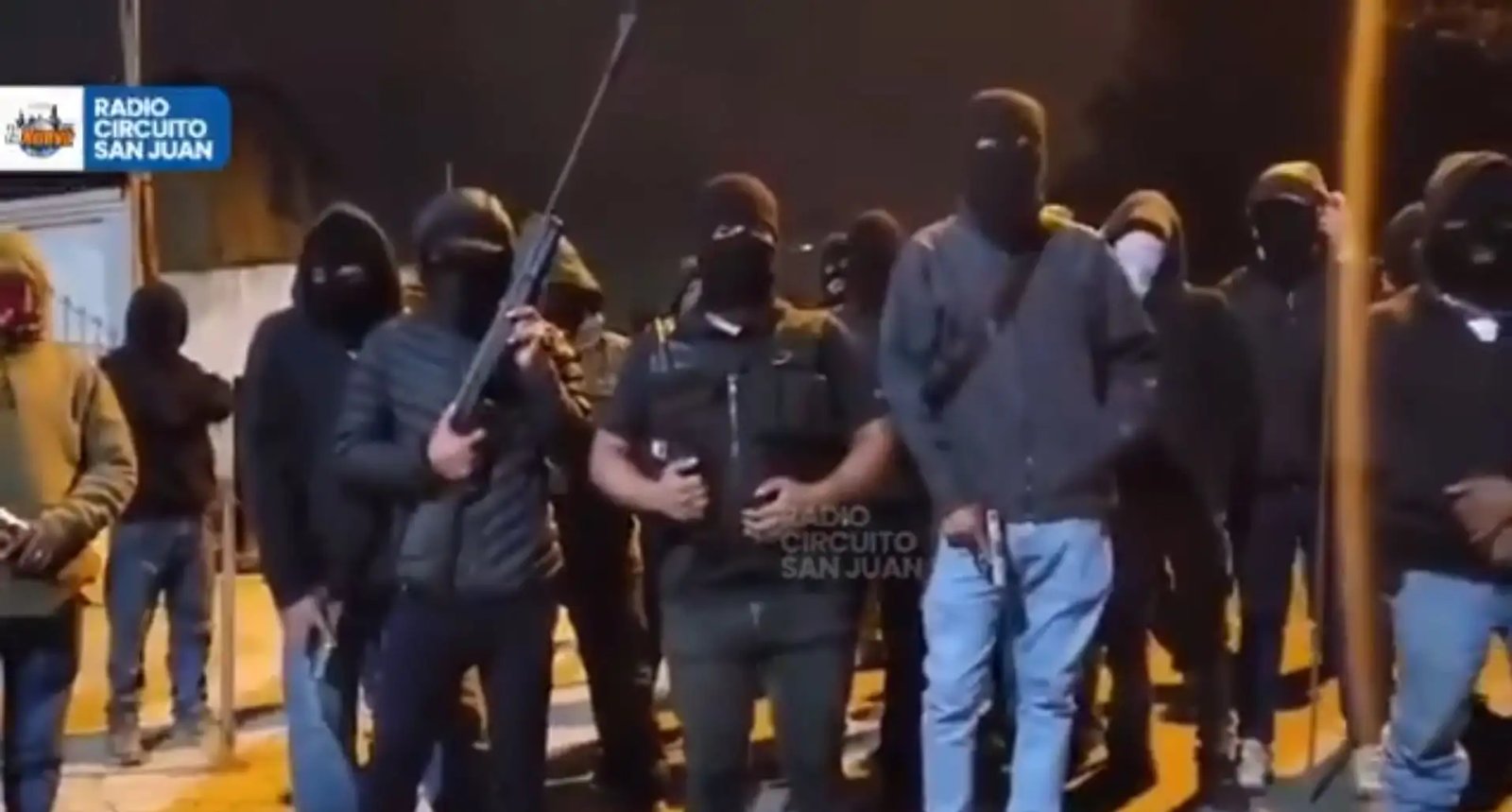
Alvarado points out that in San Pedro Sacatepéquez and Bárcenas, in Villa Nueva, Guatemala, groups of hooded men came to exercise control in the communities, but they also generated fear.
“Many times, what they were trying to combat, which was the perception of insecurity, they themselves propagated it with their attitudes,” he says.
The analyst points out that these structures are highly permeable to external interests, which increases the risk of them evolving into forms of organized violence.
“That line is very fragile and very short; they can easily migrate into situations of violence, especially if they are armed,” he warns.
Organized neighbors emerge in the internal armed conflict
Mario Mérida, former Vice Minister of the Interior, identifies the emergence of these groups as having historical antecedents in the country, particularly in civil self-defense patrols during the internal armed conflict.
According to Mérida, in this context the State was not able to cover the entire territory, which led to the organization of residents with military support.
“It is a continuity of that practice, where the population organizes itself in the absence of state presence,” he points out.
Mérida indicates that this phenomenon can evolve into more dangerous forms, such as execution groups or structures that control territories and limit the mobility of inhabitants.
The National Civil Police was consulted about the municipalities where they have detected this type of organizations, but at the closing of this note no response was obtained.