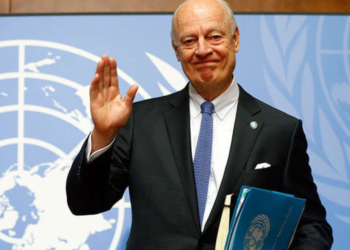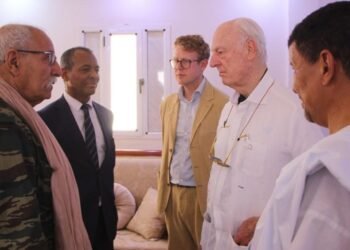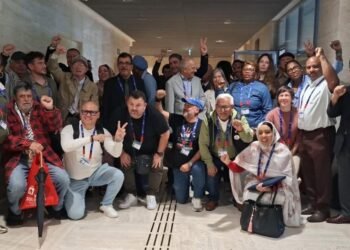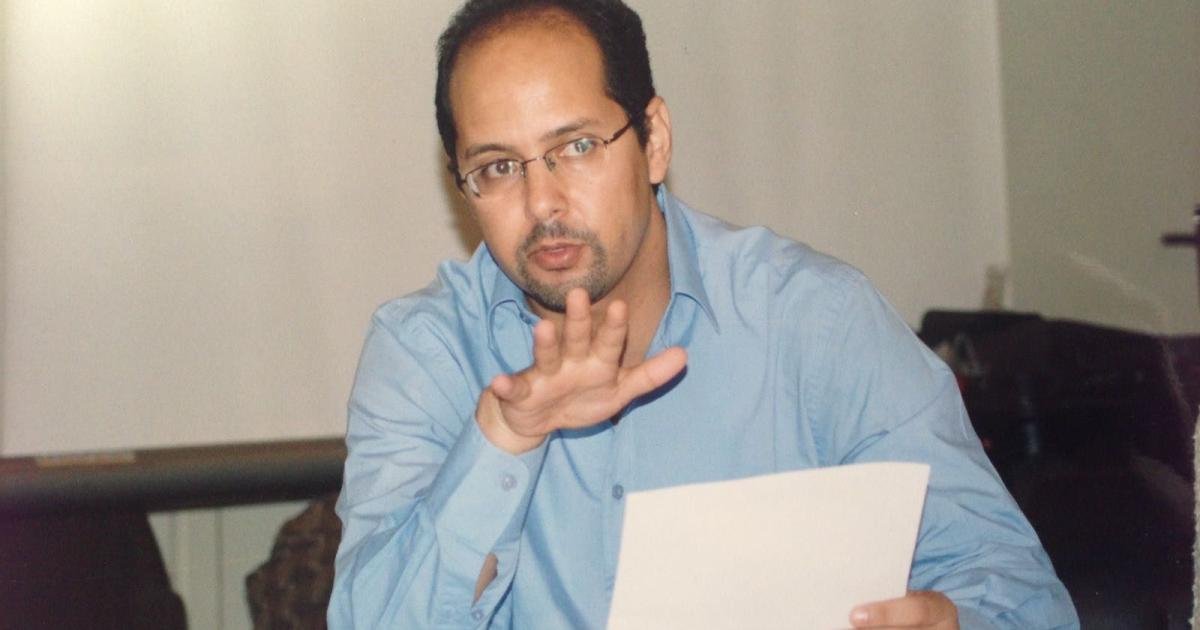
Paris (France), June 8, 2026 (SPS) – The well-known French newspaper Liberation shed light on the Battle of Dignity led by the Sahrawi activist and political prisoner, Naama Asfari, in the Moroccan Kenitra prison, in order to push the Moroccan occupation to implement the recommendations of the United Nations Committee against Torture and the Working Group on Arbitrary Detention in the Agdeem Izik case.
The article indicated that Naama Asfari, after three 48-hour warning hunger strikes, has embarked on an open hunger strike since the morning of Monday, June 8, in order to achieve his demands recommended by United Nations mechanisms in several resolutions and advisory opinions since 2014, most notably the abolition of the unjust sentences that came on the basis of confessions extracted under penalty of physical torture and ill-treatment.
In addition, the article adds, quoting Mrs. Claude Mongan, the wife of Sahrawi political prisoner Naama Asfari, saying, “My husband has never defended this type of protest method before. However, in the face of the absence of any progress regarding their file, he believes that nothing will change if he himself does not go on a hunger strike, which we do not know to what extent it will reach,” stressing in this regard, “Namaa is the only prisoner among all his comrades who has the psychological ability to continue this movement to the fullest extent.”
According to the detainees’ lawyer, the article adds, the confessions obtained by the Moroccan authorities during their trial were extracted under torture. They consider that there are many irregularities, from the perspective of international law, in the way the prisoners were tried and convicted before a military court and then before a civilian court. They also believe that the arrest of Al-Naama Asfari – along with other prisoners – the day before the camp was dismantled, casts doubt on the judicial procedures and on the charges against them.
In addition, several resolutions issued by the United Nations Committee against Torture (CAT), between 2014 and 2026, relating to a number of prisoners from the Gdeim Izik group, concluded that there were multiple violations of the Convention against Torture and Other Cruel, Inhuman or Degrading Treatment or Punishment, and in 2023, the United Nations Working Group on Arbitrary Detention issued an opinion on the group as a whole, concluding that “the “arbitrary” detention, and called for their “release” and “appropriate compensation.”
In addition to demanding his release, Al-Naama Asfari has other demands. Claude Monjean-Asfari, who has been banned from entering Moroccan territory and has the right to visit since 2019, explains, “He demands that the prisoners be transferred to places close to their families, that is, to Western Sahara, in accordance with Moroccan law itself and international law.”
Quoting a statement from the Association for the Protection of Sahrawi Prisoners in Moroccan Prisons, Liberation newspaper says that among the other goals of this hunger strike is “to protest against medical negligence and the systematic retaliatory measures to which Sahrawi civilian prisoners are subjected in Moroccan prisons,” noting that Mr. Naama Asfari had initially planned to start his strike on June 3, before receiving a request from one of his lawyers, Professor Masoudi, to postpone the start of the strike to allow him the opportunity to carry out his efforts. to the Moroccan Prisons Administration and submit his file of legitimate demands to it.” However, this last attempt did not lead to any results, so the prisoner decided to go on strike.
At the conclusion of the article, Liberation newspaper raised the cancellation of the visit of the United Nations Special Rapporteur against Torture, Ms. Alice Gill Edwards, in early June, for the second time, and Ms. Claude Mongan-Asfari expressed her regret for this, saying that “this is further evidence that Morocco does not want others to be informed of these issues related to torture.” (SPA)