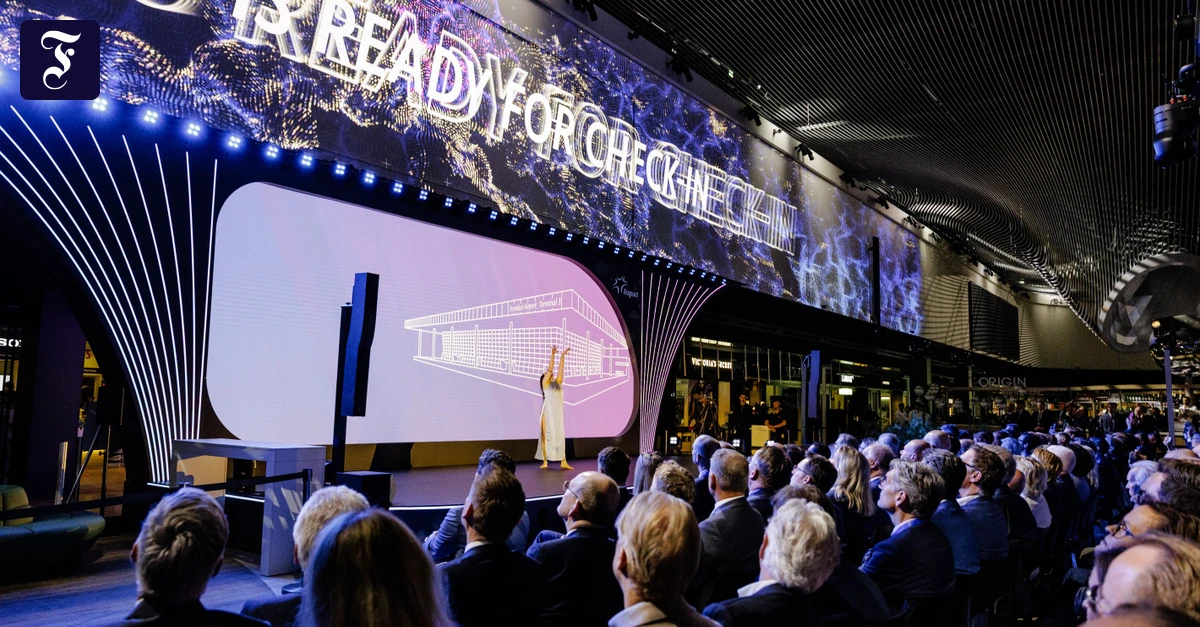
The new Terminal 3 at Frankfurt Airport was officially opened on Wednesday. The planning took 15 years, the construction took ten years, and four billion euros were invested. The building complex can handle 19 million passengers a year.
Fraport boss Stefan Schulte spoke of a “special day” for the company, Frankfurt and the region. Terminal 3 is a “clear signal for the future and competitiveness” of the hub. “We are setting an example in international competition” and proving “that we can carry out large-scale projects in Germany”.
Schulte thanked those involved in the project – he named the managing directors of the expansion company as representatives FraportHarald Rohr and Stephanie Pudwitz – as well as politicians and the region who supported the project. The line taken by the state governments over the past decades made the expansion possible: from the mediation process at the end of the 1990s to the early commitment of then Prime Minister Roland Koch (CDU) to the IPO, which provided Fraport with the funds for international business and investments.
Rhine: Frankfurt, not Munich, is number one
But the path was not entirely without resistance: the protests against aircraft noise and the construction of the northwest runway were present, said Schulte. He thanked Prime Minister Boris Rhein (CDU), also because he always fights for good conditions in air traffic in the federal government and the EU. The now announced reduction in aviation tax is an “important first step”, others must follow.
For Schulte, the expansion in the south makes future development possible, from which the airlines, including those in the north around Lufthansa, benefit. With additional building positions and shorter distances, punctuality will continue to improve, which, according to Schulte, is already above pre-Corona levels. Artificial intelligence helps: Frankfurt has one of the best-functioning security checks in Terminal 3, introduces walk-through screenings and uses AI for positioning on the apron.
Prime Minister Rhein spoke of an “architectural masterpiece” and a “visible commitment to economic strength”. Terminal 3 was created with “courage in the design, precision in the planning and reliability in the construction”. The enthusiasm of the 30,000 visitors at the terminal festival almost two weeks ago shows the acceptance in the region. The airport is the largest employer and the “heart muscle” of the economy. Compared to Munich Let’s be clear: “Frankfurt is number one.” Nevertheless, he doesn’t want to “gloss over anything,” says Rhein: Germany is the most expensive air traffic location in Europe, too highly regulated and taxed.
Josef: Planning security through political continuity
In recent years, 200 routes and 40 direct destinations have been lost and airlines have relocated fleets. 2026 must therefore be the “comeback year of German aviation”. If you don’t want a downturn, you need a “decrease in location costs”. Rhine called for tailwind instead of regulation from Brussels, as well as a concentration on strong hubs. Anyone who weakens Frankfurt and Munich will ultimately lose both.
Federal Transport Minister Patrick Schnieder (CDU) described Terminal 3 as a “signal of optimism, courage and optimism” and brought greetings from Chancellor Friedrich Merz (CDU), who was unable to attend a cabinet meeting. The federal government will present a modern air traffic strategy by summer. It should reduce costs, improve the competitive situation, tackle structural reforms, digitize European airspace, and network and automate air traffic control. Terminal 3 is equipped for this and sets standards.
Frankfurt’s mayor Mike Josef (SPD), head of the planning department during long phases of construction, told Berlin: Despite the pandemic, the terminal was completed on time, while delays occurred elsewhere without Corona. The project shows how important planning security that is based on political continuity is. Without the airport, Frankfurt would not be able to compete with global metropolises. It is not only a “gateway to the world”, but the reason why Frankfurt is the “economic capital of Germany”. Josef praised Condor’s move to the new terminal as a commitment to the location. Criticism of the expansion, for example because of noise and quality of life, is part of the political debate. Good politics must find solutions here through dialogue.
Before the opening there was also criticism from politicians. The Greens in the state parliament complained on Tuesday that Terminal 3 had created excess capacity that would only be covered up by the renovation of Terminal 2. Instead of the expensive new building, one could have invested in the cheaper renovation of the existing one, said the transport policy spokeswoman in the Hesse state parliament, Katy Walther.
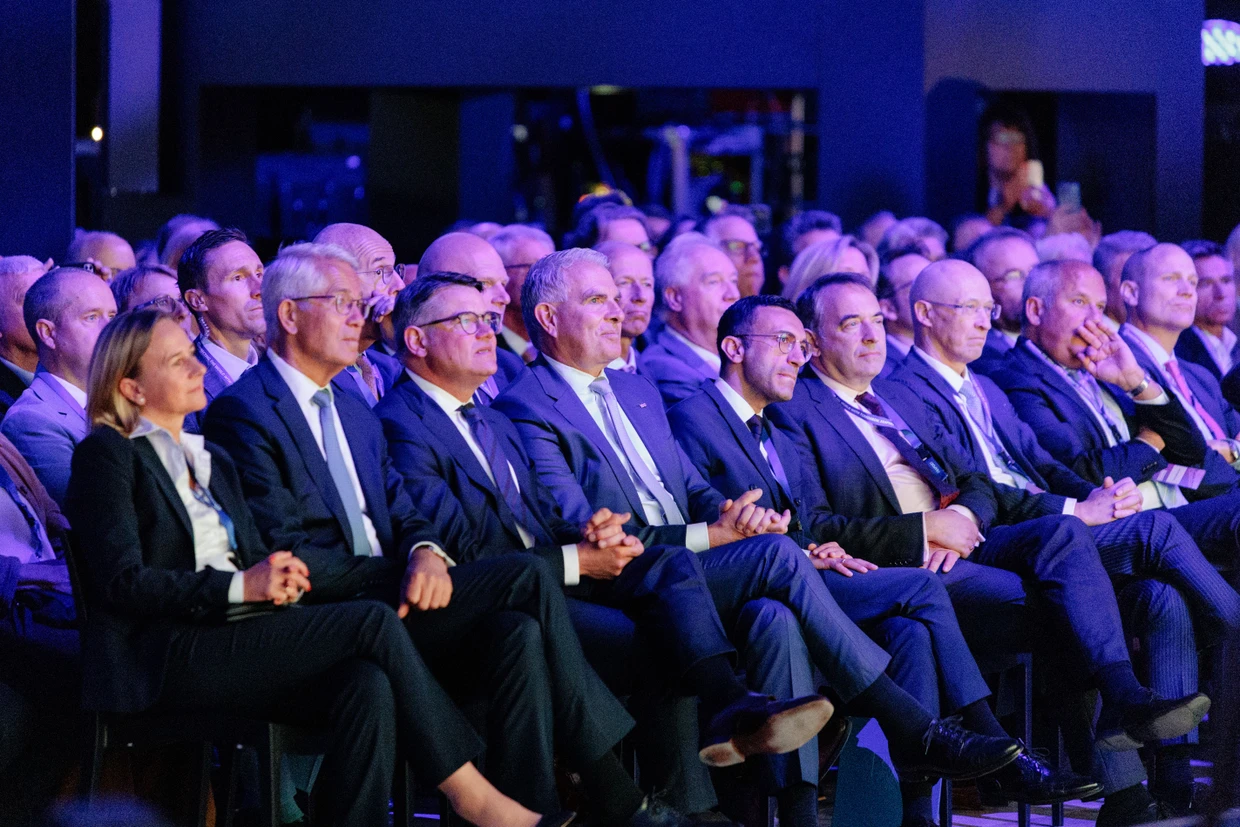
In addition to Rhein, Schnieder and Josef, the opening was attended by State Parliament President Astrid Wallmann (CDU), state ministers Kaweh Mansoori (SPD), Alexander Lorz, Roman Poseck and Manfred Pentz as well as former officials such as Volker Bouffier, Roland Koch and Petra Roth (all CDU), as well as business representatives such as Lufthansa boss Carsten Spohr, Condor boss Peter Gerber and IHK President Ulrich Caspar as well as US Consul General Brian Heath.