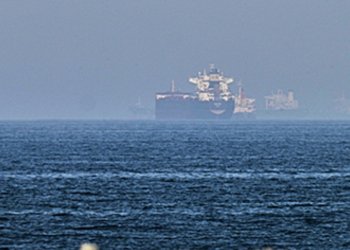
When even after two months the passage through the Strait of Hormuz did not stabilize, Ahmed El-Hoshy realized that the devil had played a joke. The CEO of Fertiglobe, one of the world’s largest fertilizer exporters, realized that he could no longer wait for an agreement between the warring parties and decided to redirect the transport of goods to alternative routes.
Instead of loading the goods onto ships in Abu Dhabi and passing through the narrow strait, Fertiglobe now transports fertilizer from factories by land, specifically by truck to a port outside Hormuz, where it is then loaded onto ships.
In addition to the fact that this route is longer and involves double transshipment, which increases costs, the company still points out that the new logistics is economically viable, due to rising prices.
– As long as we manage to solve logistical bottlenecks, the prices more than compensate for that. The market is literally crying out for commodities, El-Hoshy told the Financial Times.
In the Indian market, for example, the price of their products in the last six weeks has increased from around 500 to more than 900 dollars per ton.
Similar changes were introduced by numerous other companies from the Persian Gulf. Saudi Aramco, the world’s largest oil producer, has already diverted some of its exports to pipelines to the Red Sea, bypassing the point of contention.
Pakistan has opened its land and port facilities for the transit of third-country goods to Iran, creating an additional corridor that circumvents sanctions restrictions.
Big logistics players are also adapting. One of the largest shipping companies in the world, MSC, is launching a new route connecting Europe with the Middle East via Saudi Arabia, bypassing Hormuz.
Cargo from European ports will arrive in Jeddah and King Abdullah, from where it will be transported by trucks to Dammam, and then distributed to other ports in the Gulf. The first sailing is planned for May 10 from Antwerp, with stops in Germany, Italy, Lithuania and Spain, Bloomberg learns.
According to the South China Morning Post, authorities in Saudi Arabia, the United Arab Emirates and Turkey are rapidly developing alternative routes, from rail links and sea-land corridors to new oil pipelines, to reduce dependence on routes through the Strait of Hormuz. The corridors currently most discussed include transporting goods from ports in the UAE and Oman outside the Persian Gulf, then by rail through Saudi Arabia to Jordan, and then to the Mediterranean, via the Suez Canal or Syrian ports.
Some of these routes are already partially operational. At the Gulf Cooperation Council summit in Jeddah last week, leaders agreed to speed up the construction of a regional rail network that would connect Saudi Arabia with the UAE, Qatar, Oman, Kuwait and Bahrain. It is a project that was approved back in 2009, but is constantly stuck due to challenges in political and technical coordination among the six countries.
In parallel, the reconstruction of the historic Hijaz railway, which would connect Jeddah to Istanbul via Amman and Damascus, is being considered. The development of a multi-state network of oil pipelines, gas pipelines, power lines and water desalination systems is also being considered.