The Office of the United States Trade Representative (USTR) notified the inclusion of Colombia on the list of nations under observation in its technical report, prepared pursuant to Section 301 of the Trade Act of 1974, concluding that the country does not have a comprehensive legal prohibition to restrict the import of goods manufactured by forced labor.
READ ALSO
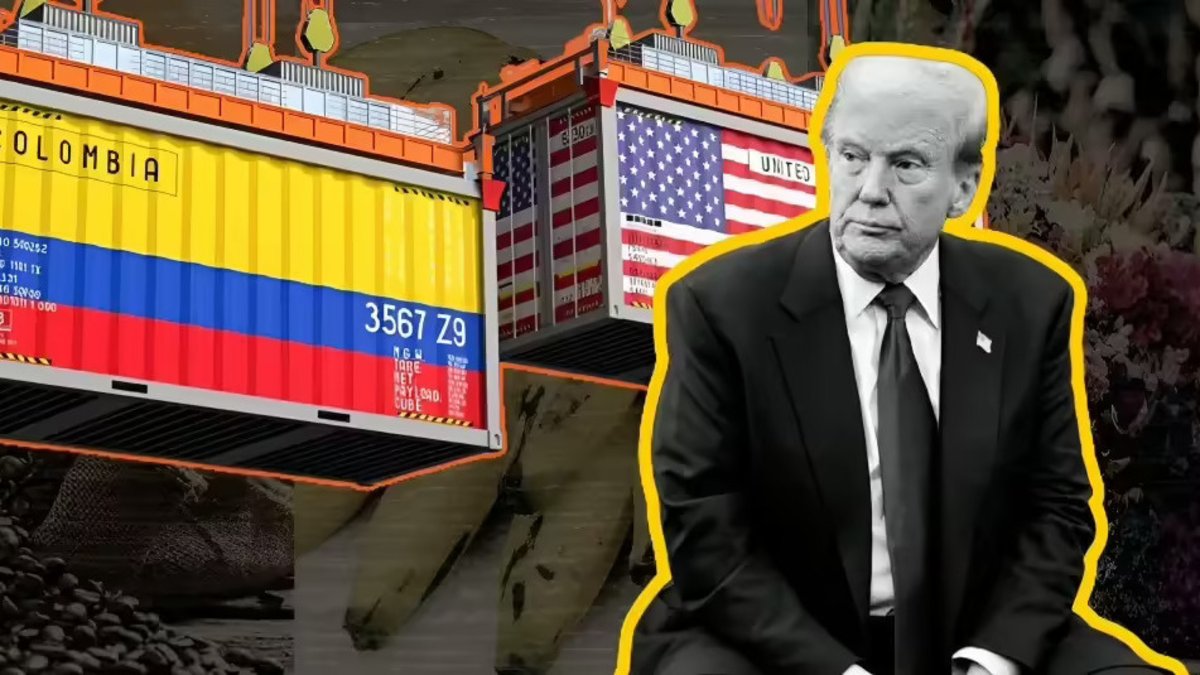
This finding places the domestic exporters in front of one 12.5 percent tariff proposal due to risk derived from the origin of raw materials or components provided by third countries.
According to data from the National Administrative Department of Statistics (Dane) corresponding to April 2026, The United States is the main buyer of national production, which represents 31 percent of the total value shipped throughout the country.
Colombian companies risk reviewing their products. Photo:Santiago Saldarriaga. EL TIEMPO Archive
Global inputs
The USTR research began on March 12, 2026, opening 60 simultaneous processes on economies that concentrate 99.4 percent of imports who enter the United States.
In it final report On June 3, 2026, the agency divided the findings into two levels of severity.
The first group includes Canada, Mexico, Ecuador, the European Union, Pakistan and Indonesia, nations that have prohibitive laws but fail to apply them, assigning them a proposed 10 percent tariff. Colombia was placed in the most critical category along with 53 other economies per lack an explicit legal framework and of supply chain oversight mechanisms.
The United States directly verifies that Colombia implement actions, plans and institutional measures aimed at verifying that local exporting companies – and the suppliers of these companies – have verifiable internal mechanisms for control or prevent such forced labor in their production lines.
To the not accrediting this regulatory oversightColombian industries that use raw materials — such as cotton from the Xinjiang region, polysilicon or aluminum — or components from Burma and Malawi, risk being identified as commercial bridges to evade US restrictions, activating severe reviews and inspections on their exports.
The report confirms the exposure in external sales of aluminum, cotton, electronics, lithium batteries, nickel and palm oil.
Ministry of Commerce, Industry and Tourism. Photo:Ministry of Commerce, Industry and Tourism.
Tariff asymmetry and the contraction of external sales
The USTR classification establishes a differentiated tax penalty that generates a gap against Colombia of 2.5 percentage points against direct competitors in the region that will receive the 10 percent tax.
For textiles and clothing a is designed reduced rate feebut in the other sectors the difference alters commercial conditions.
This regulatory environment coincides with the contraction of agricultural and manufacturing exports reported in April 2026. The agricultural, food and beverage group decreased by 27.0 percenttotaling 1,021 million dollars. This fall responded to 49.9 percent collapse in coffee sales untoasted and 20 percent decline in flowers and foliage cut, which overall subtracted 19.6 percentage points from the sector’s variation.
Germán Bahamón, president of the National Federation of Coffee Growers, warned about the exhibition of this sectorremembering that The US receives more than 40% of the national grain and that, in his words, “behind every cup there is more than 540,000 coffee-growing families who find in coffee a source of income, stability and hope”, in a chain that represents an activity of 343 billion dollars, equivalent to 1.3 percent of the US GDP.
The USTR report also associates risks related to cotton in clothing, critical minerals listed in the Trafficking Victims Protection Reauthorization Act (TVPRA) as the nickel and palm oil.
Exports Photo:Ministry of Commerce
Institutional deadlines
The tariff measures proposed by the USTR They are not applied automatically because the process is in public consultation phase and receiving comments.
The official schedule stipulates that the June 22, 2026 deadline expires To request participation in the hearings, the July 6 is the deadline to file written observations on tariffs and Public hearings will begin on July 7 to evaluate commercial actions.
Faced with this scenario, Javier Díaz, president of the National Association of Foreign Trade (Analdex), stated that “the first thing is that this it is not automaticthe process is ongoing and we should, by July 6, develop and adopt actions that allow us align ourselves with the countries that maintain the 10 percent tariff“.
The union leader added that “there are some products that would be affected if we do not act“and maintained that “although they continue to apply exceptions to key products of interest to Colombia such as coffee, bananas, avocado and others, there are some areas in which we are going to be affected“. When asked if official entities, such as the Colombian Ministry of Commerce, are already taking steps with Washington, he indicated: “I don’t know, but we will ask them to do so.”
From the binational union perspective, María Claudia Lacouture, president of the Colombian American Chamber of Commerce (AmCham Colombia), warned that “the USTR investigation must be taken with the utmost seriousness. Although there is no final decision yet, Colombia has until July 6 to act proactively and present a technical response that avoid possible tariff impact to their exports”.
The recommendations proposed to mitigate the country’s exposure contemplate the adoption of a Explicit legal prohibition against the importation of goods linked to forced labor —homologous to Section 307 of the U.S. Tariff Act of 1930—the development of customs verification tools for supply chains and the due diligence requirement for local importers.
According to AmCham Colombia, if these institutional actions are not registered, the sector analysis warns about corporate risks independent of state tariffswhich consist of the immediate requirement for audits by American private buyers, the loss of financing lines linked to sustainable investment funds (ESG) and a irreversible deviation of productive capacity towards competitors in the region, even though foreign sales for the first quarter report an accumulated growth of 14.5 percent, with 18,403 million dollars.
READ ALSO
READ ALSO