The German Football Association (DFB) has prepared itself like a fairytale for this World Cup in North Carolina. With a hotel that is reminiscent of an old English castle and, with the flowing flag decorations on the walls, inevitably reminiscent of the world of the sorcerer’s apprentice Harry Potter. With a training area on the wide stretch of the Wake Forest University relaxed and perhaps even inspiring campus atmosphere. Something like that shouldn’t fail when the DFB goes on a trip.
From the perspective of German football, hopefully it won’t end up being said that he needed magical powers to be successful on the pitch. The team lacks spirit Julian Nagelsmann not even because of the courage of the national coach. It is possible that the team will create something refreshing and surprising from this. But the reality of the summer of 2026 has so far not come much closer to the announcement of wanting to become world champion than it was during the home European Championship in 2024, when it ended in the quarter-finals.
Neuendorf’s denial of reality
At the same time, there is something else to fear: that the DFB has already failed on the other playing fields that will be important in this tournament before it even started.
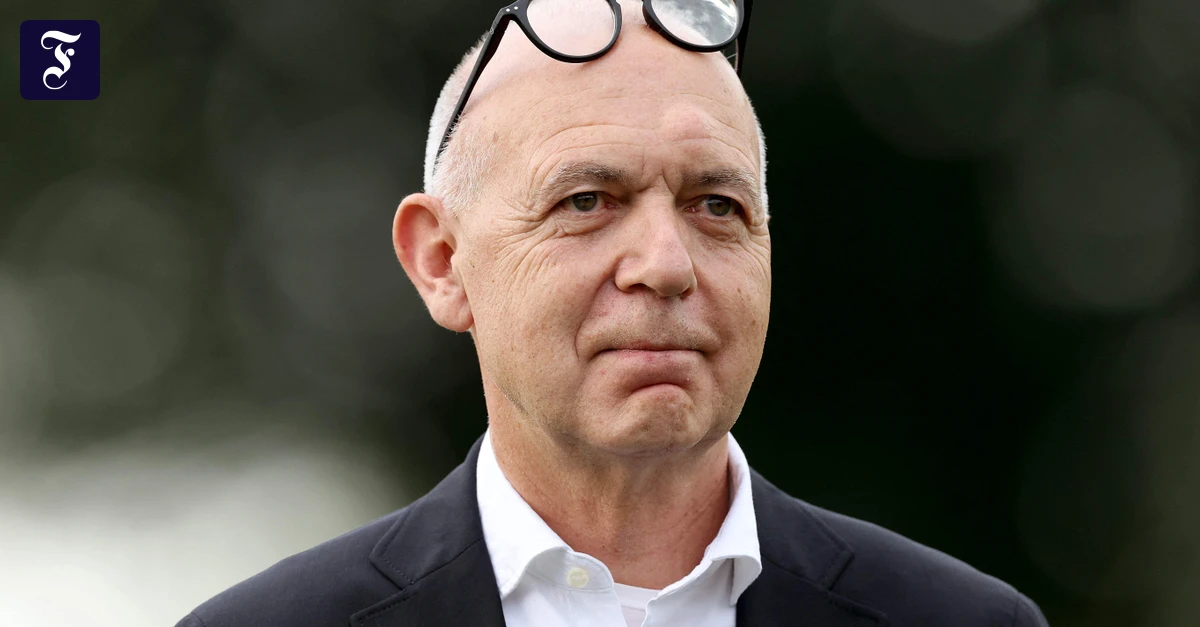
As Bernd Neuendorfthe president of the association, spoke to the German media a week ago at a sponsors event high up in front of the Chicago skyline, he was concerned with social responsibility. He also spoke about one of the World Cup host countries: The DFB is celebrating the 40th birthday of the Mexico Aidwhich he launched there after his impressions at the 1986 World Cup.
This is an honorable commitment, just as the DFB also initiates other valuable social projects in the World Cup host countries. But because Neuendorf didn’t say a word about the present, the special political challenges of this World Cup, his contribution seemed like it had fallen out of time and the overall picture of the past few months seemed like a denial of reality.
The president of the largest sports association in the world made himself as small as he could on the way to the World Cup. He has largely avoided the big questions that this tournament brings with it, especially in the United States. Not once did Neuendorf appear at a press conference that would have allowed his positions to be discussed.
Nothing can be expected from the DFB
When Neuendorf addressed his thanks to the hosts at the beginning of this week in Winston-Salem, where the DFB has set up its base camp, he spoke of putting North Carolina on the map for this World Cup. It would be much more important to put a few other topics on the agenda.
Nobody expects him or the DFB to engage in global politics. Nor does he have to, to quote a sentence from the only major interview Neuendorf gave, react to every tweet from Donald Trump. But one would have expected him to develop an attitude towards the oppressive circumstances of an event in which his association is taking part and to formulate it. This gives the impression that the DFB itself is sitting quite comfortably in a fairytale castle, while Africa’s referee of the year, a Somali, is turned away at the border. Or the Iranian team is allowed to enter the country, but under extremely disgraceful conditions.
It would be the task of the DFB and its president, who is also a council member of the International Football Association FIFA, to at least pursue world football policy and to ensure that FIFA lives up to its responsibilities – and also the rules it has set itself. For example, the requirement that the association is obliged to be politically neutral, which FIFA President Gianni Infantino, however, ignores in his unprecedentedly submissive opportunism.

In this regard, Neuendorf has expressed that nothing can be expected from German football under his leadership. One may credit him with the fact that he is in the same dilemma with Infantino as Chancellor Merz was with President Trump, namely, on the one hand, representing German interests, for example when it comes to the awarding of future tournaments, but on the other hand, defining a limit to what is morally acceptable. A FIFA Peace Prize for Trump – why not? The fact that Neuendorf – unlike Merz – does not even attempt to resist the unbearable speaks for self-sacrifice.
However, the association is right not to let these issues become too big for the players. Joshua Kimmich, who is going into his third World Cup at the age of 31, has never experienced one that wasn’t overshadowed by political debates. In both 2018 in Russia (Erdoğan) and 2022 in Qatar (“One Love”), the association was overwhelmed by separating the levels so that in the end the team was not the loser.
Of course, every player who wants to should be able to express themselves. But you should also respect if they don’t do this because of their sporting goals. If German football uses this to create a carefree appearance on the pitch, something would be gained compared to previous World Cups without any magic. The same cannot be said of its president, who obviously wants to watch this World Cup from the ivory tower.