Businesses must continue to register for value-added tax (VAT) once their annual turnover exceeds $200 000, despite a promised increase to $350 000 that was due to take effect on October 1.
Finance Minister Ryan Straughn also warned that businesses which opt out of VAT registration once the threshold is raised must stop charging the tax to customers.
Until then, raising the mandatory registration threshold is not in force, but Straughn said the legislation should be ready within weeks.
In an interview with Barbados TODAY, Straughn said the bill implementing the change was still being completed and that he expected to finish it before the end of the financial year.
“I say during the next few weeks or so that we can get it in place, before the next financial year,” he said.

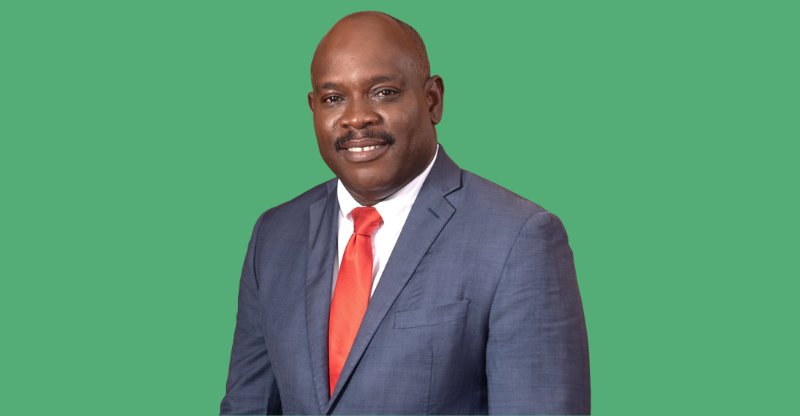
Minister of Finance Ryan Straughn. (File Photo)
The Budget, presented in the House of Assembly on March 16, announced the change, with Straughn saying the turnover threshold for businesses to register for VAT would rise from $200 000 to $350 000 from October 1.
The delay was because the drafting work was tied up with other policies that had to be prioritised, he said.
“We just had to do some shifting to make sure that we can get it done.”
Until the new law is in place, the $200 000 threshold stands. Straughn explained that a business with a turnover of $300 000, for example, must register now because the threshold remains unchanged.
“So long as your income is above a certain threshold, it is mandatory,” he said.
When the threshold eventually rises, businesses already registered will have a decision to make.
Straughn said: “Existing companies who may very well have a turnover, as I said, of $300 000 when we raise to $350 000 will then be able to make a decision as to whether they stay registered or not.”
New businesses below the higher threshold will not be automatically required to register for VAT on the basis of their turnover, he said, but will still have to register with the Barbados Revenue Authority (BRA) because of their other tax obligations.
Straughn cautioned that a business that opts out of filing for VAT can no longer charge VAT and that it would be “fraudulent” to keep pricing as though it did.
He said: “There’s a whole set of calculations that businesses have to make to determine whether or not it makes sense to either come off or not in the first place, but it’s really just a relatively straightforward process.”
Asked how many businesses stood to benefit, the minister said that could not be known in advance because raising the threshold does not automatically take businesses out of the VAT net.
“Don’t forget, as you move thresholds, it does not automatically mean that people fall out, because the reality is businesses get to claim back the VAT that they have incurred.”
He noted that some firms already register voluntarily, even though their turnover is below the current threshold.
“So even though the threshold is at $200 000 now, there may be entities that are below that threshold that choose to register because of the nature of the business, and therefore it makes sense for them to register.”
Only after the threshold is raised, he said, will it be known how many entities remain registered for VAT.
All businesses must have a tax number, which registers them for corporate tax, VAT and income tax, since businesses also file income tax on behalf of their employees.
Once a business is registered with the BRA, Straughn said, it becomes automatically “registered” and, depending on its turnover, it can then choose not to file for VAT.
Whatever they decide, Straughn stressed, all companies must be registered with the BRA and hold a tax number, and their annual turnover determines whether they are registered for VAT.
(LG)