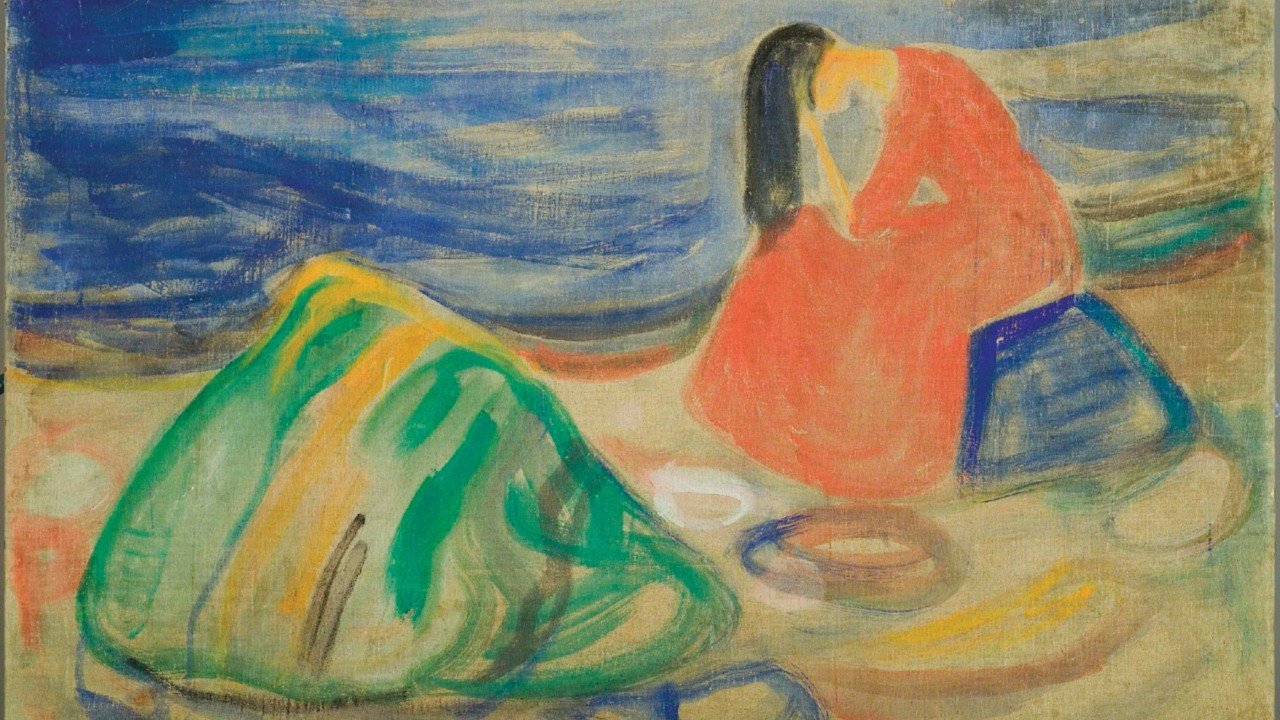
Freedom, death, resurrection. And then the well. In 1948, on the pages of the magazine Mercurytwo of the most authoritative voices of twentieth-century Italian literature, Natalia Ginzburg and Alba de Céspedes, stage a close and very lucid discussion on the female soul, on the possibility of it falling “into the well”. On the ability to get out of it. On death and resurrection.
«Women – accuses Ginzburg – have the bad habit of falling into a well every now and then, of letting themselves be overcome by a terrible melancholy and drowning in it, and struggling to get back to the surface».
The writer does not give discounts to her gender. With precise clarity and strengthens his thesis. She met calm women and restless women, women convinced they were ugly and others sure of their beauty, women who travel the world and women who can’t cross the threshold of their home. Women who work the land breaking their backs and women who get bored attending courses on the history of religions. Different in character, destiny, social condition. Yet they are equal in one thing: they all, sooner or later, fall into the well.
The well is depression, bottomless melancholy, paralysis of the soul. It is the lack of freedom, the inability to step outside oneself to face the world. It is a symbolic death, a passion that consumes and annihilates. The writer is saddened by this because in this propensity she reads a sort of female inability to face life. Resignation to a fate that is not favorable to women. A push towards death without the possibility of resurrection.
Because for Natalia Ginzburg, the author of wonderful novels, a refined intellectual, no resurrection is possible for the women who fall into the well. The well is their death, the fulfillment of their destiny. The only salvation is not to fall. Stay away. Stay in life. Accept its harshness, even its ugliness and wickedness. Act without giving in even when everything seems to be collapsing. As men do – he clearly states – who deal with important things or with themselves but only to be freer every day. And that they keep away from the wells.
It’s a harsh judgement. Merciless. A death sentence that women inflict on themselves. There is their pain. their inferiority, their inability to be in the world. And the impossibility – which the fall into the well documents – of changing it. Natalia’s is a judgment that does not give a second chance. He does not contemplate the ascent, the possibility of seeing the light again. He imagines no resurrection.
Is it really like that? Is it not possible to escape the sad fate that condemns women to a descent into the darkness of a gloomy existence, devoid of the light of hope? Alba de Céspedes replies to her writer friend with affection, but also with determination. She too has a profound knowledge of the female soul.
«I believe – he replies to Natalia – that these wells are our strength».
Alba does not deny the existence of the “well”, nor the female propensity to rush into it.
But the fall is not just cancellation, not death without escape but rather a descent to the deepest roots of being. Every time a woman sinks into the well, she actually hits the bottom of her humanity. He sees what only pain can see. And when it resurfaces, it brings with it a new, fruitful, generative experience that men – precisely because they do not fall into the well – will never be able to understand. The well for the author of Nobody goes back it is a condemnation but also a gift.
It’s true – he explains – those who fall into it experience fear, loneliness, inadequacy, fragility. But it comes out different. More aware. Capable of understanding what previously remained obscure. Capable of loving in a new way.
The woman in the well knows pity and above all welcomes within herself the suffering of other women. “How can one live, act, govern – he writes – with justice without knowing mercy?”. And from pity comes a profound solidarity, even between enemies.
And then the final thrust, aimed at the world of men. Alba reminds Natalia.
«It is always men who push us into the well. Have you ever fallen into a well because of a woman?
Women can arouse anger, envy, malice. But it is not they – claims de Céspedes – who cause that vertical fall into desperation.
Men, on the other hand, not only ignore the existence of those wells and what is learned there, but they also ignore that it is often they, “with ruthless innocence”, who push women into them.
Decades later, the comparison between Ginzburg and de Céspedes retains a surprising force. It is a clash of visions: should women avoid fragility and weaknesses or should they navigate them? Is death always the end or a necessary passage leading to another life?
And “the well”, almost eighty years after that debate, still asks us today about freedom, about pain, about difference. And above all, on the “resurrection”.
by Ritanna Armeni