Synopsis: In a rare political admission, Hun Sen says it is not the current prime minister’s fault that Cambodia was not ‘prepared for a fight’, when the border crisis erupted, stating the mistake is all his.
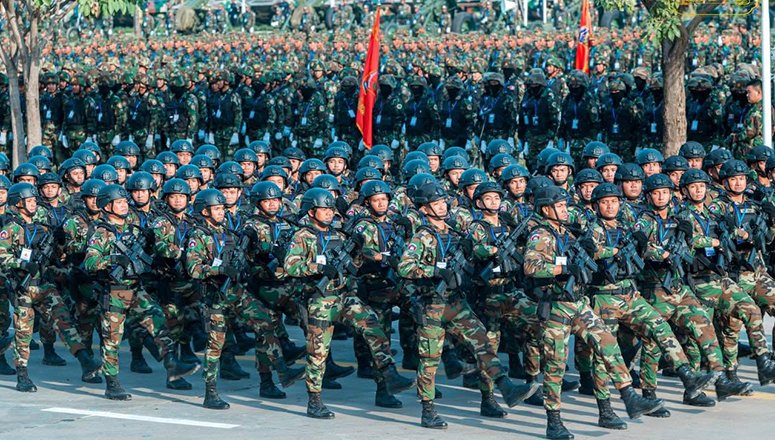
Acting Head of State Hun Sen has apologised to the Cambodian people for what he described as shortcomings in strengthening the military’s capabilities during his tenure as prime minister, acknowledging that prioritising socio-economic development and close ties with Thailand left Cambodia inadequately prepared in terms of weapons and ammunition in the event of armed conflict.
Experts say the government is now working to address these gaps through defence sector reforms.
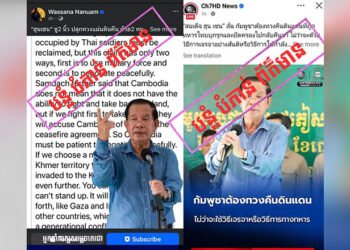
Mr Hun Sen’s remarks came yesterday during a meeting with more than 3,000 displaced families sheltering in Sla Kram commune, Svay Chek district, Banteay Meanchey province, where he said he bore responsibility for what he called an overreliance on diplomatic assurances that peace along the 800km Cambodia–Thailand border would be maintained.
“I apologise to the people of the country for being too trusting and not adequately preparing for my successor,” Mr Hun Sen said.
He said that during his time as premier, he prioritised developing infrastructure, social services, health, and education rather than spending the national budget on arms and military equipment.
As a result, when the border crisis with a neighbouring country erupted, Cambodia faced shortages of military equipment.
Mr Hun Sen said that this mistake was his own responsibility, not that of current Prime Minister Hun Manet.
Mr Hun Sen stepped down in August 2023 after more than 38 years in power, paving the way for Mr Hun Manet to lead the new government.
Mr Hun Manet became prime minister in August 2023.
“This is my fault, not that of the current prime minister. It is my fault for not being prepared for a fight.”
Mr Hun Sen recalled that he and former Thai Prime Minister Prayut Chan-o-cha worked closely together from 2014 to 2023, which is one reason he believed that a large-scale armed conflict would not materialise.
However, he said Cambodia has managed the situation by adhering to peaceful and diplomatic solutions rather than using military force.
Mr Hun Sen warned that in a context where the international community is showing sympathy and support for Cambodia, using weapons to retake positions held by the Thai side could lead to Cambodia losing its political and diplomatic advantage.
Mr Hun Sen’s speech was a rare political admission by a former prime minister directly acknowledging misjudging the regional security situation, while also sending a message that Cambodia will continue to pursue its territorial claims through legal, international, and diplomatic mechanisms rather than military force.
Seun Sam, a policy analyst at the Royal Academy of Cambodia, said Mr Hun Sen’s admission of responsibility for the failure to strengthen the national defence sector demonstrated political honesty and accountability.
He said that during the Khmer Rouge era, almost all infrastructure, including schools, buildings, and roads, was destroyed. After the Khmer Rouge period, Cambodia rebuilt these infrastructures, so allocating the national budget for social and economic development was a decision aligned with the country’s needs at the time.