Southeast of Greenland lies a mysterious cold region that scientists call the “cold spot.” This vast region of the North Atlantic has actually cooled in recent decades, in some places by as much as one degree.
Scientists now believe they have identified the most likely cause of the phenomenon: the Atlantic Meridional Overturning Circulation, or AMOC, a complex system of ocean currents, Metro reports.
AMOC transports warm, salty surface water from the tropics to the North Atlantic, where it cools and sinks deeper into the ocean. This system is often compared to a giant ocean conveyor belt that distributes heat globally and has a profound effect on weather.
According to a study published in the scientific journal “Geophysical Research Letters”, a significant change is currently underway: the AMOC is weakening. Although scientists have known for some time that the system is slowing down, they have not been able to agree on the reason.
Some researchers have suggested that stronger winds, which increase evaporation and remove heat from the ocean, could be the cause. The increased humidity creates more clouds, which in turn block sunlight over the ocean areas near Greenland.
However, the research team led by Wei Liu discovered that the cold spot extends to a depth of about a thousand meters. This indicates that the root cause is to be found in the ocean itself, not just in the atmosphere.
“People have wondered for years why this cold region exists. Our results show that the most likely explanation is a weakening of the AMOC,” Liu said.
Scientists used not only data from recent decades, but also historical observations from ships and satellites to reconstruct climate changes in the region in the distant past. The study found that heat loss from the ocean surface in this region has decreased since 1955.
What does the weakening of the AMOC mean for Europe?
Although part of the cold region is near Greenland, this area is also affected by global warming. Meltwater from the Greenland ice sheet is increasingly flowing into the Atlantic Ocean.
This fresh, cold water dilutes the warm, salty water coming from the tropics and carried by one of the most important branches of the AMOC, the Gulf Stream.
If one part of the system slows down, it could affect the entire AMOC. Scientists estimate that the system could weaken by at least 20 percent by the end of this century and even stop completely in the long term.
According to climate expert Jim NR Dale, this would mean less heat entering the North Atlantic from the tropics. As a result, winter in some European countries could become significantly colder.
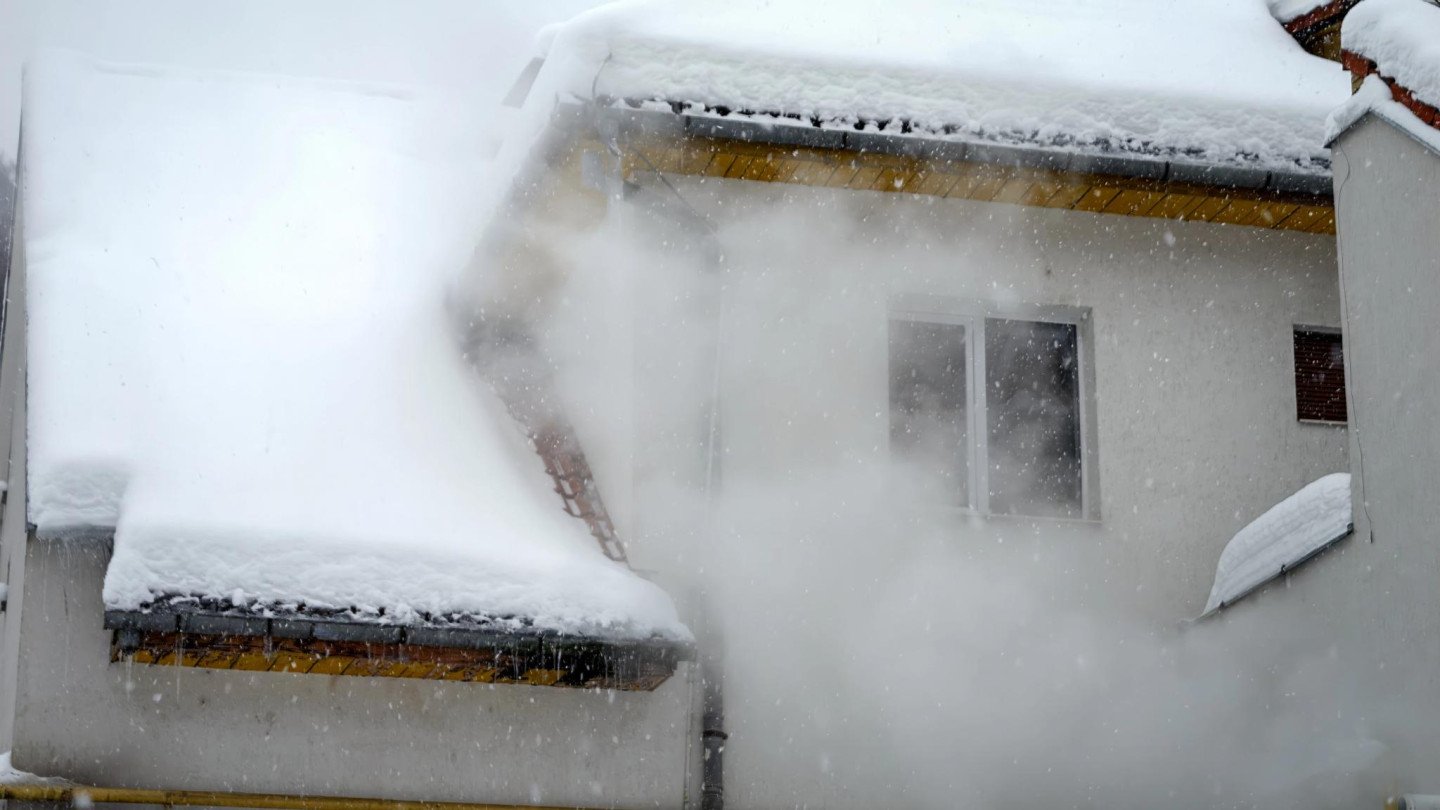
“Its eventual collapse would disrupt life in northern and western Europe as we know it today.” Winters could become similar to Canada’s – heavy snow, intense cold and prolonged sub-zero temperatures.” However, he said that scenario has yet to materialize.
The consequences will affect the whole world
Scientists estimate that the possible collapse of the AMOC will affect not only Europe. In North America, sea levels could rise faster than normal. In the Sahel region of Africa and monsoon regions of Asia, rainfall is likely to decrease, affecting both agriculture and water resources.
At the same time, the researchers admit that the available data do not yet provide a definitive answer, and other explanations cannot be completely ruled out. For example, some scientists believe that part of the AMOC system, the Norway Current, could actually intensify and absorb more heat.
Nevertheless, Dale agrees that a cold spot has long been visible on the global temperature map.
“This is almost certainly caused by the influx of meltwater from the Greenland ice sheet into the ocean. Colder water reduces evaporation, and a kind of atmospheric feedback occurs—the colder a region gets, the more it will cool in the future.”
In other words, the melting of the Greenland ice sheet could affect one of the world’s most important ocean systems, with downstream consequences ranging from changes in European weather patterns to global changes in precipitation patterns and sea levels.