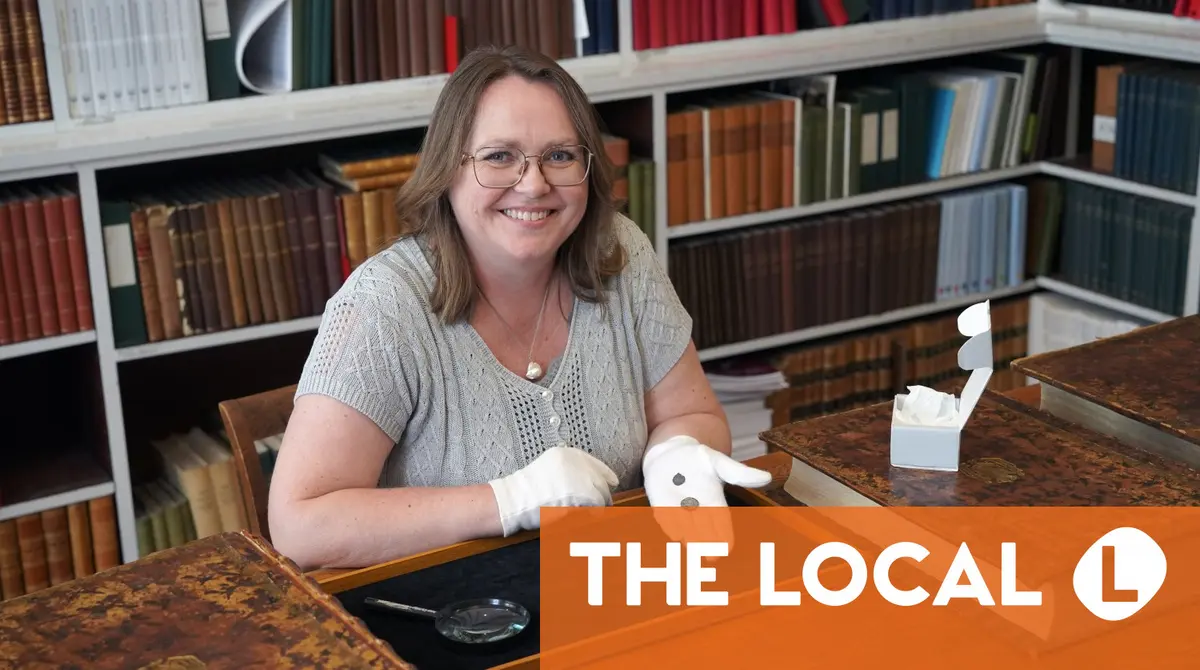
Two English coins from 1009 designed to ward off Viking attacks have been found by members of the public near Løgumkloster and Kåstrup in Jutland, according to Denmark’s National Museum.
Unfortunately for King Æthelred II, also known as Æthelred the Unready, who made the coins in response to a number of Viking raids, the protective coins do not appear to have been particularly successful ‒ they look like they were worn as jewelery by Danish Vikings.
Two of them have been found by metal detectorists in Jutland.
Only around 30 of the coins have ever been found – four or five in England, with the rest in Scandinavia and the Baltic countries. They are referred to as ‘Lamb of God’ coins due to the fact that the obverse side of the coin does not have a portrait of the king, but rather a lamb pierced by a cross, which is a Christian symbol of the sacrifice made by Christ.
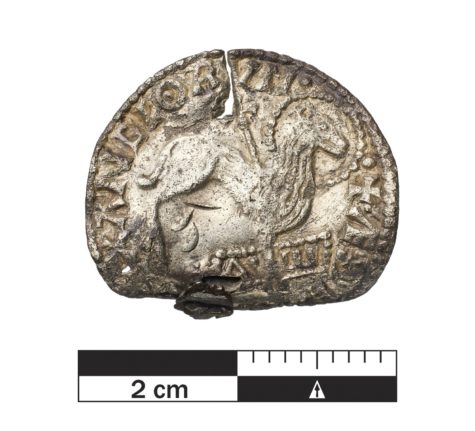
The Lamb of God seen on one of the coins. The other side features a bird soaring into the sky to represent the Holy Spirit. Photo: Søren Greve, National Museum of Denmark
Most of the coins found outside England have been altered, with loops added, suggesting that they were worn as jewelery or amulets, the museum said in a press release.
National Museum curator Gitte Tarnow Ingvardson told Ritzau that the coins are “extremely rare”.
“It gave me goose bumps, because these coins are extremely rare, and they convey a special and also paradoxical part of history. They were made to protect against the Vikings, but ended up instead as jewelery or amulets worn by Vikings. That is almost tragicomical,” she said.
According to the museum, the coins are believed to have inspired Danish coinage ‒ despite them being useless at warding off Viking raids.
“Danish coinage is inspired by and based on the well-organized English coinage,” Ingvardson said. “The Vikings soon realized that it was far more practical to use coins than to hack the silver into pieces for trading purposes.”
This also includes imitating the Lamb of God motifs, the museum says. Viking kings like Canute the Great and his son, Harthacnut, used the same motifs on their coins.
“What fascinates me above all is how a little coin is able to unfold the history of English kings and of Christianity in England in a way that links up with Danish Viking-Age kings, Danish coinage and even the establishment of the Danish state,” Ingvardson said. “Because this affects all of Viking-Age society. Just imagine that one little coin contains so much history!”
The coins have been declared great dane, a Danish legal term referring to valuable objects of a certain age (usually at least 100 years old) which have no identifiable owner. This means that they are officially the property of the state.