Tegucigalpa, Honduras
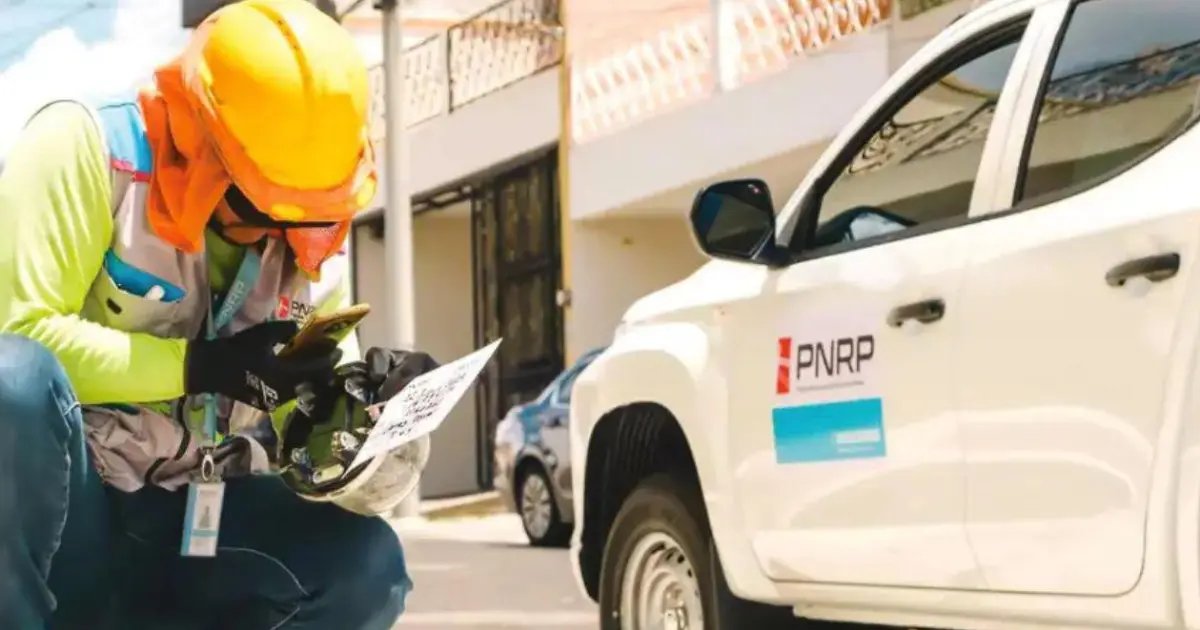
Between December 2022 and March 2023, the National Loss Reduction Program (PNRP) of the National Electric Energy Company (Enee) spent more than 2.2 million lempiras on fuel purchases without making clear in public documents or internal records how it was distributed and under what control it was consumed.
This report is part of a documentary series by LA PRENSA Premium on the discretionary use of resources at Enee. In a first installment, this investigation unit revealed how during the previous administration of the state company, almost 200 million lempiras were reported in trips, tickets, per diems and meals without sufficient public trace on a good part of that expense.
In a second publication, LA PRENSA Premium documented the discretionary use of cell phones and telephone plans that cost the state company more than 13 million lempiras. Now, this investigation exposes another aspect of the same pattern: fuel purchases whose destination and consumption were not clearly documented either.
Documents reviewed by this investigation unit show that the program carried out seven fuel purchases for 2.2 million lempiras: three contracts in Tegucigalpa, two in San Pedro Sula, one in Juticalpa and another in Choluteca.
In addition to the documentary trail, a source from the institution who was closely familiar with the handling of these purchases revealed that when the former PNRP officials wanted to prevent these processes from leaving a public trace, they did not send all the documentation to the Transparency and Fight Against Corruption Unit of the Enee.
What was exposed from within the institution indicates that this practice ended up becoming a routine within the program and generated friction with the management of Transparencia, which demanded this and other documentation while the PNRP administration refused to deliver it.
This statement coincides with the review carried out by this investigation unit, which did not find these files either in the Single Transparency Portal or in Honducompras of the State Contracting and Acquisitions Regulatory Office (ONCAE).
According to the findings of this investigation unit, the irregularity does not lie with the suppliers, but with the handling that the PNRP gave to the fuel.
LA PRENSA Premium consulted the former PNRP coordinator, Lesly Vanessa Arias Salazarwho defended that there were internal controls and administrative documentation that supported their execution.
Fuel and the blurred route
But it was when reviewing six contracts, along with a purchasing process awarded in San Pedro Sula, where the main finding appeared: the documents did prove the purchase of fuel, but they did not allow us to clearly follow which vehicles it would be assigned to or how each supply should be controlled.
The contract that left this problem most exposed was the PNRP-020-2023for 300 thousand lempiras. The document did not say how many vehicles would be supplied, it did not detail license plates, routes or areas of operation and it did not establish the place where the fuel should be delivered.
He also left open the authorization of the supply. The contract stated that the diesel would be delivered with the authorization of the contracting party or whoever it delegated, but it did not identify who could issue that permit or how that procedure should be controlled.
He PNRP-021-2023 He repeated a good part of that same scheme. He also did not leave in writing the place where the fuel would be supplied and again kept the vehicles that would be supplied unidentified.
In other words, the PNRP once again contracted diesel for a fleet that on paper remained diffuse. The fuel was purchased, but there were no clear rules to later reconstruct which unit it was assigned to or how it was distributed within the program.
He PNRP-33-2023 It corrected only part of the problem. Unlike the previous two, this one did leave the supply point in writing: a station in Alameda, on Central America Boulevard, in the capital.
That adjustment is not minor. It demonstrates that the PNRP could set some supply conditions more precisely, but it did not do so from the beginning.
In San Pedro Sula, in one of the purchasing processes, the Honducompras portal only shows the purchase order number PNRP-CMA-036-2022 and its award, along with the service specifications and the supply point linked to region 5 of the PNRP. But the contract as such was not published on the portal.
P contracts also have the same dynamic.NRP-022-2023, PNRP-025-2023 and PNRP-28-2023signed in San Pedro Sula, Juticalpa and Choluteca, respectively, and which together committed another 900 thousand lempiras in fuel.
In simple terms, the three repeat similar gaps: they buy diesel for non-individualized vehicles, they do not detail license plates, routes or areas of operation and they leave open how each load should be documented.
In that sense, the pattern was not limited to Tegucigalpa and San Pedro Sula: it also spread to other regions of the country.
The defense of Arias and the documentary contrast
Faced with these gaps, the former PNRP coordinator, Vanessa Ariasmaintained that the omissions detected in the contracts did not mean an absence of control and defended that the program did have internal mechanisms to authorize and settle the supply of fuel.
For example, regarding to whom the authorization that the contracts do not require was delegated, the former official explained: “Who do we delegate to? We delegated to the operations unit, which was the one who issued the orders to fill fuel in the crews’ vehicles.”
Arias also maintained that the documents on how the fuel was supplied and settled should not be sought in the contract, but in the settlements and administrative records generated during execution and uploaded to the Integrated Financial Administration System (Siafi) of the Ministry of Finance.
“All that fuel is liquidated, every gallon is liquidated” and “there are documents for all of this, everything is in files,” said Arias.
But that explanation does not close the documentary gap left by the contracts. Saul Buesoa member of the Transparency and Access to Justice Unit of the Committee for Free Expression (C-Libre), warned that these gaps not only erode transparency, but also open room for corruption.
“ We call that fraud. This is dangerous because it can contribute to the leakage of funds that belong to the Honduran people, because fuel is paid in advance and then it can end up filling up any car, even if it does not belong to the institution.”
Saúl Bueso, member of the Transparency and Access to Justice Unit of the Committee for Free Expression (C-Libre)
“We call that fraud. This is dangerous because it can contribute to the leakage of funds that belong to the Honduran people, because fuel is paid in advance and then it can end up filling up any car, even if it does not belong to the institution,” he said.
Bueso warned that the most delicate point is that the contracts do not clearly identify which vehicles could be supplied. Without that control, he explained, a purchase order can end up covering charges outside the program without formally tearing up the paper.
“If you don’t say what the cars are, then any car can go with a purchase order. The supplier relies on that order and, in the end, all the charges will add up to the total agreed upon in the contract,” Bueso warned.
Besides that, the article 148literal e, of Regulations of the State Procurement Law establishes that, even from the purchase order, the basic conditions of the supply had to be clear: what was going to be delivered, how it would be paid, where it would be received and under what form the delivery would be made.
The report had already warned
The gaps that the former official justified were also noticed from within Enee itself. In a report delivered on July 6, 2023 to the then general manager, Eric Tejadathe Transparency and Fight Against Corruption Unit warned about weaknesses in program purchases and contracts.
Even in that report, another relevant piece of information appears about the diesel purchasing process in San Pedro Sula, where it was noted that the order was only signed by two people, without names that would allow it to be clearly established who prepared it or who authorized it.
What is stated in this report and the warnings contained in that report will not remain only on paper. The current government reported that these processes, along with other purchases from later years in which irregularities were also detected, are under investigation.
With the investigations open within the Enee, the cases exposed in this LA PRENSA Premium documentary series are beginning to emerge as the tip of an iceberg. Underneath these contracts were not only voids on paper, but also signs of an opaque purchasing and contracting scheme.