It seems that every day there is another drama unfolding somewhere in the world. Climate is a major issue as many countries cope with unprecedented heat. Here in Jamaica, we are hoping and praying for rain as water levels in both Kingston and St Andrew dams are becoming critically low.
In the United Kingdom, as they come to terms with unusual heat spells and a new prime minister, Andy Burnham, their seventh in 10 years, came the announcement of the return of the Duke and Duchess of Sussex, Prince Harry and his wife, Meghan Markle, a seeming shock to the national system. The European Union is also dealing with heat, drought, and fires, concerned about their economies, immigration, and the war in Ukraine, including defence spending. The heat, fires and flooding are in North America too, following severe earthquakes in Venezuela and Colombia. Every country is concerned about policy decisions coming out of the USA, including those related to trade tariffs and the war in Iran. Something is always bubbling in the USA.
A major news item over this weekend was the collapse of trade negotiations between the USA and Canada.
Understanding this trade dispute
As neighbours, Canada has had trade arrangements with the USA from the 19th century. However, note that Canada’s concern about annexation by the USA has been around since then, which caused Canada to exercise caution in its relationship with the USA. Eventually, following studies, consultations, and improved relations, Canada agreed to negotiate a free trade agreement with the USA in the 1980s. The Canada-US Free Trade Agreement was concluded in 1987 and signed in January 1988. Note that Republican President Ronald Reagan, a free-trader, was in office.
This agreement was superseded by the North American Free Trade Agreement (NAFTA) in 1994 which included Mexico. NAFTA was initiated by and negotiated under Republican President George H. W. Bush, another free-trader, though it was signed into law by Democratic President Bill Clinton. NAFTA increased production and trade among the three countries. It worked quite well with the Tres Amigos (the three friends) until the advent of Republican President Donald Trump, favouring protectionism, in 2017.
President Trump declared NAFTA a terrible agreement and insisted that it be renegotiated. These negotiations covered 2017-2018. It was actually signed in November 2018 and a revised protocol signed in 2019. President Trump declared this updated agreement the best agreement ever negotiated. It was given a new name, the US, Mexico, Canada Agreement (USMCA). In Canada, it is called CUSMA, and in Mexico, it is known as T-Mex.
Becoming president in his second term in 2025, President Trump seemed to have changed his mind on USMCA. He threatened to impose tariffs on Canada and Mexico. Not only that, but he returned to the historical view of the USA annexing Canada as its 51st state and started referring to the Canadian prime minister as “governor”.
So, with a legally binding free trade agreement signed by President Donald Trump, Canada and Mexico began facing accusations of drug and trade malpractice, and threats of tariffs. The USA was also concerned about its trade deficits.
Note that in 2025, the USA exported to Canada goods valued at US$334 billion and imported goods valued at US$382 billion, giving a US deficit of US$48 billion. These are countries with integrated production systems. It is not expected that a country will have a trade in goods surplus with all its trade partners. The trade in services data with Canada also has to be analyzed and the US has a surplus in this trade, which was about US$28 billion in 2025. The trade is thus fairly balanced.
Review of USMCA (CUSMA)
A review of the USMCA was due after six years. This review was scheduled to commence on July 1. While Canada and Mexico supported extending the Agreement for a further 16 years, the USA did not agree. This triggered a system of annual reviews. It seems that Canada and Mexico have been having separate negotiations with the USA. So, what really are the concerns?
The USA threatened to impose 50 per cent tariffs on certain goods imported from Canada, coming with President Trump’s other recent Section 301 tariffs. As the negotiations progressed between the USA and Canada, it seems that an agreement was in view, when US Commerce Secretary Howard Lutnick introduced new proposals impacting Canadian sovereignty, their official languages, and right to negotiate free trade agreements with other countries. Note that the US Trade Representative (Jamieson Greer), a Cabinet post, is the lead trade negotiator.
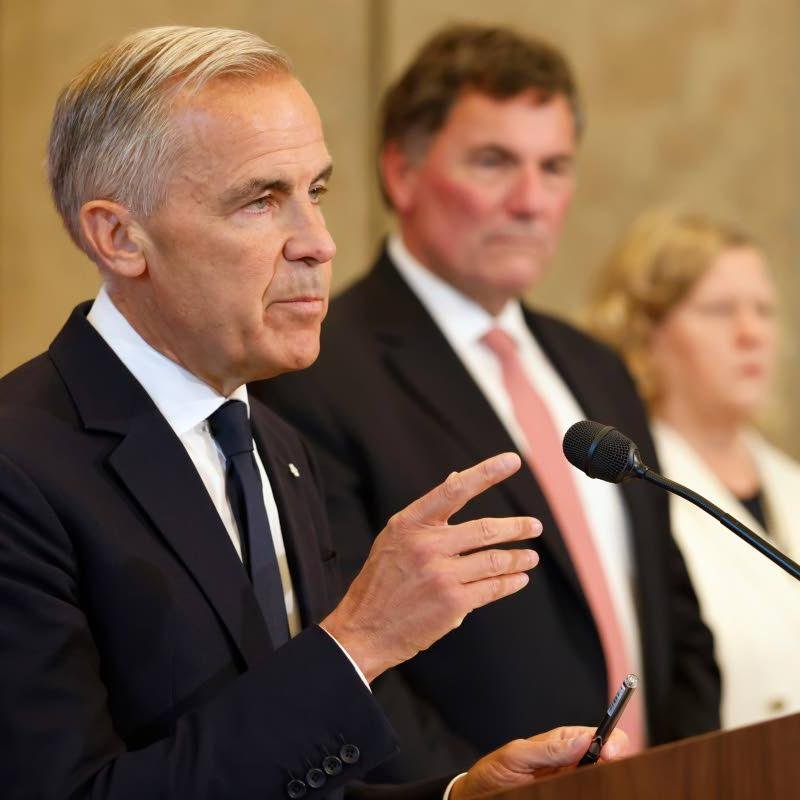
Canada’s Prime Minister Mark Carney called home his negotiators, walking away from the negotiations. He preferred no deal over a bad deal.
So, now, the USA is entering into a trade war with one of its main trading partners with whom it has quite balanced trade. If the US imposes 50 per cent tariffs on a selection of Canadian goods (to be paid by US consumers), the Canadians have indicated that they are not afraid to retaliate.
So, here we have a completely unnecessary trade war brewing between neighbours, allies and partners. The Canadians are now of the view that the US cannot be trusted and, given threats of annexation, that they must move to protect their economy and their country. They must be internally resilient and further diversify their trade. Canada is putting “elbows up”, readying to defend itself.
It is a time of trials with climate and economy stress; a trade war brewing with Canada; Cuba in a stranglehold; other countries in Latin America and the Caribbean in fear; war with no seeming end with Iran, with more threats being levelled against them and others; and there remains Ukraine and turmoil in the wider Middle East. In the meantime, others are watching the dramas unfolding in the USA itself and taking deep breaths.
Elizabeth Morgan is a specialist in international trade policy and international politics.