Monday, May 4, 2026
    The GeoStrategic Consensus
    No Result
    View All Result
    • Login
    • HOME
    • AMERICAS
      • Argentina
      • Brazil
      • Canada
      • Chile
      • Colombia
      • Costa Rica
      • Cuba
      • Dominican Republic
      • Ecuador
      • El Salvador
      • Greenland
      • Guatemala
      • Honduras
      • Mexico
      • Nicaragua
      • Panama
      • Paraguay
      • Peru
      • United States
      • Uruguay
      • Venezuela
    • ASIA-PACIFIC
      • Australia
      • Brunei Darussalam
      • Cambodia
      • China
      • Federated States of Micronesia
      • Fiji
      • Indonesia
      • Japan
      • Kiribati
      • Laos
      • Malaysia
      • Marshall Islands
      • Mongolia
      • Myanmar
      • Nauru
      • New Zealand
      • North Korea
      • Palau
      • Papua New Guinea
      • Philippines
      • Samoa
      • Singapore
      • Solomon Islands
      • South Korea
      • Taiwan
      • Thailand
      • Timor-Leste
      • Tonga
      • Tuvalu
      • Vanuatu
      • Vietnam
    • CARICOM
      • CARICOM – Non-English
        • Haiti
        • Suriname
      • CARICOM Associates
        • Anguilla
        • Bermuda
        • British-Virgin-Islands
        • Cayman-Islands
        • Curacao
        • Turks-and-Caicos
      • CARICOM English
        • Antigua and Barbuda
        • Barbados
        • Belize
        • Dominica
        • Grenada
        • Guyana
        • Jamaica
        • Montserrat
        • Saint Kitts and Nevis
        • Saint Lucia
        • Saint Vincent and the Grenadines
        • The Bahamas
        • Trinidad and Tobago
    • EURASIA
      • Armenia
      • Azerbaijan
      • Balarus
      • Georgia
      • Kazakhstan
      • Kyrgyzstan
      • Moldova
      • Russia
      • Tajikistan
      • Turkmenistan
      • Ukraine
      • Uzbekistan
    • EUROPE
      • Albania
      • Andorra
      • Austria
      • Bosnia and Herzegovina
      • Bulgaria
      • Croatia
      • Cyprus
      • Czech Republic
      • Denmark
      • Estonia
      • Finland
      • France
      • Germany
      • Greece
      • Holy See
      • Hungary
      • Iceland
      • Ireland
      • Italy
      • Kosovo
      • Latvia
      • Liechtenstein
      • Lithuania
      • Luxembourg
      • Malta
      • Monaco
      • Montenegro
      • Netherlands
      • North Macedonia
      • Norway
      • Poland
      • Portugal
      • Romania
      • San Marino
      • Serbia
      • Slovakia
      • Slovenia
      • Spain
      • Sweden
      • Switzerland
      • United Kingdom
    • MIDDLE EAST AND NORTH AFRICA
      • Algeria
      • Bahrain
      • Egypt
      • Iran
      • Iraq
      • Israel
      • Jordan
      • Kuwait
      • Lebanon
      • Lybia
      • Morocco
      • Oman
      • Palestinian Territories
      • Qatar
      • Saudi Arabia
      • Syria
      • Tunisia
      • Turkey
      • United Arab Emirates
      • Western Sahara
      • Yemen
    • SOUTH ASIA
      • Afghanistan
      • Bangladesh
      • Bhutan
      • India
      • Maldives
      • Nepal
      • Pakistan
      • Sri Lanka
    • SUB-SAHARAN AFRICA
      • Angola
      • Benin
      • Botswana
      • Burkina Faso
      • Burundi
      • Cabo Verde
      • Cameroon
      • Central African Republic
      • Chad
      • Comoros
      • Cote d’Ivoire
      • Democratic Republic of the Congo
      • Djibouti
      • Equatorial Guinea
      • Eritrea
      • Eswatini
      • Ethiopia
      • Gabon
      • Gambia
      • Ghana
      • Guinea
      • Guinea Bissau
      • Kenya
      • Lesotho
      • Liberia
      • Madagascar
      • Malawi
      • Mali
      • Mauritania
      • Mauritius
      • Mozambique
      • Namibia
      • Niger
      • Nigeria
      • Republic of the Congo
      • Rwanda
      • Sao Tome and Principe
      • Senegal
      • Seychelles
      • Sierra Leone
      • Somalia
      • South Africa
      • South Sudan
      • Sudan
      • Tanzania
      • Togo
      • Uganda
      • Zambia
      • Zimbabwe
    • HOME
    • AMERICAS
      • Argentina
      • Brazil
      • Canada
      • Chile
      • Colombia
      • Costa Rica
      • Cuba
      • Dominican Republic
      • Ecuador
      • El Salvador
      • Greenland
      • Guatemala
      • Honduras
      • Mexico
      • Nicaragua
      • Panama
      • Paraguay
      • Peru
      • United States
      • Uruguay
      • Venezuela
    • ASIA-PACIFIC
      • Australia
      • Brunei Darussalam
      • Cambodia
      • China
      • Federated States of Micronesia
      • Fiji
      • Indonesia
      • Japan
      • Kiribati
      • Laos
      • Malaysia
      • Marshall Islands
      • Mongolia
      • Myanmar
      • Nauru
      • New Zealand
      • North Korea
      • Palau
      • Papua New Guinea
      • Philippines
      • Samoa
      • Singapore
      • Solomon Islands
      • South Korea
      • Taiwan
      • Thailand
      • Timor-Leste
      • Tonga
      • Tuvalu
      • Vanuatu
      • Vietnam
    • CARICOM
      • CARICOM – Non-English
        • Haiti
        • Suriname
      • CARICOM Associates
        • Anguilla
        • Bermuda
        • British-Virgin-Islands
        • Cayman-Islands
        • Curacao
        • Turks-and-Caicos
      • CARICOM English
        • Antigua and Barbuda
        • Barbados
        • Belize
        • Dominica
        • Grenada
        • Guyana
        • Jamaica
        • Montserrat
        • Saint Kitts and Nevis
        • Saint Lucia
        • Saint Vincent and the Grenadines
        • The Bahamas
        • Trinidad and Tobago
    • EURASIA
      • Armenia
      • Azerbaijan
      • Balarus
      • Georgia
      • Kazakhstan
      • Kyrgyzstan
      • Moldova
      • Russia
      • Tajikistan
      • Turkmenistan
      • Ukraine
      • Uzbekistan
    • EUROPE
      • Albania
      • Andorra
      • Austria
      • Bosnia and Herzegovina
      • Bulgaria
      • Croatia
      • Cyprus
      • Czech Republic
      • Denmark
      • Estonia
      • Finland
      • France
      • Germany
      • Greece
      • Holy See
      • Hungary
      • Iceland
      • Ireland
      • Italy
      • Kosovo
      • Latvia
      • Liechtenstein
      • Lithuania
      • Luxembourg
      • Malta
      • Monaco
      • Montenegro
      • Netherlands
      • North Macedonia
      • Norway
      • Poland
      • Portugal
      • Romania
      • San Marino
      • Serbia
      • Slovakia
      • Slovenia
      • Spain
      • Sweden
      • Switzerland
      • United Kingdom
    • MIDDLE EAST AND NORTH AFRICA
      • Algeria
      • Bahrain
      • Egypt
      • Iran
      • Iraq
      • Israel
      • Jordan
      • Kuwait
      • Lebanon
      • Lybia
      • Morocco
      • Oman
      • Palestinian Territories
      • Qatar
      • Saudi Arabia
      • Syria
      • Tunisia
      • Turkey
      • United Arab Emirates
      • Western Sahara
      • Yemen
    • SOUTH ASIA
      • Afghanistan
      • Bangladesh
      • Bhutan
      • India
      • Maldives
      • Nepal
      • Pakistan
      • Sri Lanka
    • SUB-SAHARAN AFRICA
      • Angola
      • Benin
      • Botswana
      • Burkina Faso
      • Burundi
      • Cabo Verde
      • Cameroon
      • Central African Republic
      • Chad
      • Comoros
      • Cote d’Ivoire
      • Democratic Republic of the Congo
      • Djibouti
      • Equatorial Guinea
      • Eritrea
      • Eswatini
      • Ethiopia
      • Gabon
      • Gambia
      • Ghana
      • Guinea
      • Guinea Bissau
      • Kenya
      • Lesotho
      • Liberia
      • Madagascar
      • Malawi
      • Mali
      • Mauritania
      • Mauritius
      • Mozambique
      • Namibia
      • Niger
      • Nigeria
      • Republic of the Congo
      • Rwanda
      • Sao Tome and Principe
      • Senegal
      • Seychelles
      • Sierra Leone
      • Somalia
      • South Africa
      • South Sudan
      • Sudan
      • Tanzania
      • Togo
      • Uganda
      • Zambia
      • Zimbabwe
    No Result
    View All Result
    Agentially
    No Result
    View All Result
    Home MIDDLE EAST and NORTH AFRICA Morocco

    Elections 2026: the profiles to invest in for elected officials serving citizens and democracy

    The Analyst by The Analyst
    April 28, 2026
    in Morocco
    Elections 2026: the profiles to invest in for elected officials serving citizens and democracy


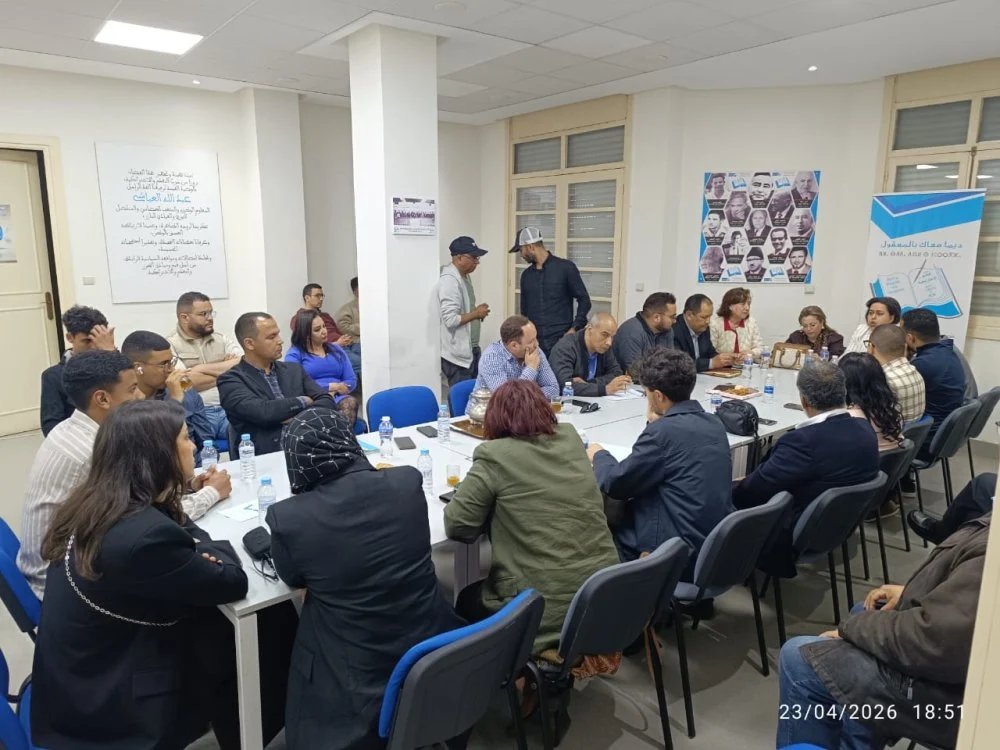
    The deadlines of 2026 and 2027 are not only an electoral issue. They raise the question of the mandate, the quality of representation and the political link to be rebuilt between the elected official and the citizen. It is on this ground that the Espace des cadres of the PPS of Casablanca-Settat chose to launch the debate and deploy its vision. From the joint interventions of party officials, elected officials and academics, the same requirement emerged: forming credible profiles, reestablishing links with citizens, cleaning up public practice are the sine qua non conditions for returning elected officials to their primary function, that of carrying trust, defending causes and fully inhabiting institutions.

    Before addressing upcoming deadlines, Dalila Loudiyimember of the political bureau of P.P.S.wanted to recall the meaning of this initiative. L’Frame spaceshe emphasizes, is not thought of as a framework reserved for activists alone, but as “a common space, open to all energies”, including those who are interested in political action without being part of a partisan organization. This openness gives its scope to the meeting. It is not only a question of preparing for the legislative elections of 2026, but of highlighting the responsibilities of elected officials, in Parliament as well as in local authorities.

    Rehabilitate the figure of the elected official

    Karim Tajmember of the PPS political bureau, extends this line by returning to a central distinction: that which separates, without opposing them, the local elected official and the national elected official. The first acts as close as possible to daily life, within the framework of local authorities – municipalities, provinces, prefectures and regions. Its field is that of local services, development, equipmentof transportationof thewaterof theelectricityfrom the health or eveneducation. The second exercises a national mission: legislate, amend, propose texts and control government action.

    But for Karim Taj, this national mission never erases territorial roots. A parliamentarian remains linked to the territory which supported him. From this articulation arises a profile requirement: seriousness, competence, probity, proximity to citizens and capacity for advocacy. It is this vision that the PPS aims to embody through its investitures. It is about presenting women and men capable of presenting credible alternatives, mastering issues and establishing a relationship of trust with citizens. In other words, qualify the human offer as much as the programmatic offer.

    Train before competing

    There training therefore appears to be a primordial necessity. The discussions also insisted on the qualification of elected officials and candidates, in connection with the work carried out by the PPS Academy and the measures supported by the local party structures. The issue goes beyond the technical preparation of an election. It refers to a broader conviction: a party does not prepare for elections through organization alone, but through political trainingideological and institutional of its executives, particularly young people.

    This requirement is consistent with the analysis of Karima Ragoubaprofessor at the Faculty of Legal, Economic and Social Sciences of Aïn Sebaâ. In its legal and constitutional reading, democracy depends neither on the mere existence of institutions nor on the regularity of elections. It depends on their effectiveness, the competence of elected officials and the link between responsibility and accountability. The debate thus moves towards the essential: not only who will be elected, but how the mandate will be exercised.

    READ ALSO

    Conflict in the Middle East: no amending finance law in sight, but risks on purchasing power and energy (El Mehdi Fakir)

    Casablanca: Arrest of two taxi drivers suspected of having fatally attacked a colleague – Today Morocco

    The mandate as background work

    In this same logic, Touria Skallimember of the PPS political bureau and former parliamentary deputy, brings the debate back to what, according to her, constitutes the substance of the mandate. “The role of the elected representative is not limited to the plenary session,” she recalls, emphasizing that parliamentary work is also carried out far from the cameras: in the commissions, the examination of texts, amendments, legislative proposals, control of the governmentthe evaluation of public policies and the parliamentary diplomacy.

    Looking back at the history of Moroccan Parliamenton the progression of female representation and on the low share of legislative proposals put forward by parliamentarians – a share which she places at around 10% of legislative production –, Ms. Skalli puts into perspective an often overlooked dimension of the mandate: that of in-depth legislative and institutional work. She recalls in this regard that elected officials are not confined to women’s issues alone: ​​they represent the nation in all matters submitted to the Parliament. This responsibility is exercised in the commissions as well as in the legislative initiative, whether it concerns support for young people seeking employment, maternal and child health or medical termination of pregnancy in certain specific cases.

    Parliament is therefore not just a place for speech. It is also a space for intervention on social policiesthere mental healththe cost of living, rights, freedoms and national causes, including Moroccan Sahara through parliamentary diplomacy. Touria Skalli, however, regrets that certain parliamentary reports, despite their findings and recommendations, do not always find a concrete translation, citing in particular the case of mental health.

    Proximity and limits of local power

    Mostapha Mandouran active member of the Casablanca municipal council and the Hay Hassani district council under the PPS, starts from the field to question the real margins of local elected officials. The tension is clear: local councilors are directly exposed to the expectations of citizens, but their means of action are tightened. Mr. Mandour mentions the limits imposed on the opposition, the budgetary constraints of the districts, the transfer of several skills to local development companies and, more broadly, the decline in the role of elected councils.

    In this context, the “advisor’s weapon” is often reduced to questioning, correspondence and advocacy. The observation shifts the debate: the crisis of confidence is not only due to elected officials themselves, but also to the institutional framework in which they operate. This reading is in line with the recommendations of the meeting, which call for reviewing the legal framework, strengthening control mechanisms and broadening the opposition’s margins of action.

    Moralize political action to restore confidence

    Without integrity, without assumed responsibility and without transparency, representation loses its strength and the mandate loses its legitimacy. Moralization thus appears to be the basis of the political bond and one of the conditions for the return of confidence. The participants insisted on the effective application of the principle linking responsibility and accountability, on integrity as a criterion for selecting candidates, on the fight against conflicts of interest and on the need to put back on the table the bill relating to the prevention of illicit enrichment, presented as a lever for transparency and the fight against corruption.

    Karima Ragoubaprofessor at the Faculty of Legal, Economic and Social Sciences of Aïn Sebaâ, places this requirement in a broader reading of democratic functioning. For her, the effectiveness of institutions, transparency and the fight against forms of rent-seeking are inseparable from real democracy. But this democracy does not rely on elected officials alone: ​​it also presupposes an active citizen, capable of voting, following public action, engaging in community life and using participatory democracy mechanisms.

    Karim Taj, member of the PPS political bureau, brings this requirement back to the direct relationship with citizens. An elected official can only convince in the long term if he is recognized for his credibility, his integrity, his seriousness and his presence on the ground. In this reading, moralization does not relate to an abstract register: it becomes a condition of electoral credibility as much as a source of democratic strengthening.

    Making proximity a political project again

    The meeting is therefore not limited to the institutional diagnosis alone. It also questions the quality of the link with citizens, at a time when distrust forces parties to review their way of speaking, listening and acting. In the conclusions, this requirement comes back clearly: rebuild a convincing political discourse, strengthen direct communication with citizens, reactivate proximity mechanisms and assume clear, realistic words, backed by the party’s record, its activist history and its program.

    Mostapha Mandour recalls that the link with citizens cannot be limited to electoral meetings: the mandate supposes a continuous presence, listening to grievances and monitoring the realities of the territory. Karim Taj, for his part, insists on the contract of trust between elected officials and citizens, based on credibility, competence and the ability to propose concrete responses. Touria Skalli and Karima Ragouba further broaden this reading: citizen participation does not stop at voting. It presupposes the monitoring of public action, associative commitment and the use of participatory democracy mechanisms. This explains the approach taken by the PPS: “Making proximity not a campaign reflex, but a sustainable political method, capable of restoring meaning to the mandate and consistency to the representative link”.

    A political line more than an electoral prelude

    At the end of the meeting, the threads are tied together coherently. Train executives, choose credible profiles, restore weight to the mandate, review certain institutional frameworks, moralize public practice, reconnect with the citizens : these sites do not form a simple inventory. They draw a deeper direction. THE P.P.S. seems to want to approach the 2026 deadlines through what gives the electoral act its true significance: the quality of the women and men called to represent, the solidity of their roots, the clarity of their commitments and the capacity of institutions to respond to social expectations.


    Source link

    Related Posts

    Conflict in the Middle East: no amending finance law in sight, but risks on purchasing power and energy (El Mehdi Fakir)
    Morocco

    Conflict in the Middle East: no amending finance law in sight, but risks on purchasing power and energy (El Mehdi Fakir)

    May 4, 2026
    Casablanca: Arrest of two taxi drivers suspected of having fatally attacked a colleague – Today Morocco
    Morocco

    Casablanca: Arrest of two taxi drivers suspected of having fatally attacked a colleague – Today Morocco

    May 4, 2026
    Oil: OPEC+ increases its quotas
    Morocco

    Oil: OPEC+ increases its quotas

    May 4, 2026
    Mr. Akhannouch: the government’s record is the fruit of everyone’s work, and the majority, united, believes that the priority is the homeland
    Morocco

    Mr. Akhannouch: the government’s record is the fruit of everyone’s work, and the majority, united, believes that the priority is the homeland

    May 4, 2026
    Mathematics: girls are dropping out again, the gap with boys is widening
    Morocco

    Mathematics: girls are dropping out again, the gap with boys is widening

    May 4, 2026
    Royal Appointment: HRH Crown Prince Moulay El Hassan Coordinator of Offices and Services of the General Staff of the FAR
    Morocco

    Royal Appointment: HRH Crown Prince Moulay El Hassan Coordinator of Offices and Services of the General Staff of the FAR

    May 4, 2026
    Next Post
    US company Culmen International to provide technical and human capacity training to Libya’s Customs Authority

    US company Culmen International to provide technical and human capacity training to Libya’s Customs Authority

    POPULAR NEWS

    Justin Bieber fans flood Coachella festival for headlining show – Entertainment

    Justin Bieber fans flood Coachella festival for headlining show – Entertainment

    April 20, 2026

    Over 600 flee homes as Army, NPA clash in Negros Occidental

    April 21, 2026

    Ex-DPWH exec recalls P800-M ‘delivery’ to Zaldy Co 

    April 20, 2026

    Former PM Paluckas suspends party membership, to waive immunity over criminal probe

    April 24, 2026
    Pres. Ali challenges CARICOM to transform into health research powerhouse

    Pres. Ali challenges CARICOM to transform into health research powerhouse

    April 23, 2026

    EDITOR'S PICK

    Boris Dežulović A reliable bet

    Boris Dežulović A reliable bet

    April 28, 2026
    From lattes to kennels, rural towns plug into pet economy for growth

    From lattes to kennels, rural towns plug into pet economy for growth

    April 22, 2026
    Irish energy-trading firm ElectroRoute to be sold by Mitsubishi

    Irish energy-trading firm ElectroRoute to be sold by Mitsubishi

    April 29, 2026
    Opinion

    Opinion

    April 17, 2026

    Recent Posts

    • Justice reviews Manuel Adorni’s expenses and will hear another witness in the case
    • Wild parrots copy their friends when deciding whether to try new foods, study finds
    • Weekly Comic | On World Press Freedom Day
    • IT consultant Shivam Teelucksingh T&T at an early stage of digital payments, experts say

      © 2026 Agentially - Navigating shifting sovereignties and global risk .

      Welcome Back!

      Login to your account below

      Forgotten Password?

      Retrieve your password

      Please enter your username or email address to reset your password.

      Log In
      No Result
      View All Result

        © 2026 Agentially - Navigating shifting sovereignties and global risk .

        This website uses cookies. By continuing to use this website you are giving consent to cookies being used. Visit our Privacy and Cookie Policy.