There are countries that prefer to forget, others remember.
But there are countries that, in addition to remembering the past,
They judge him.
Claudia Pineiro
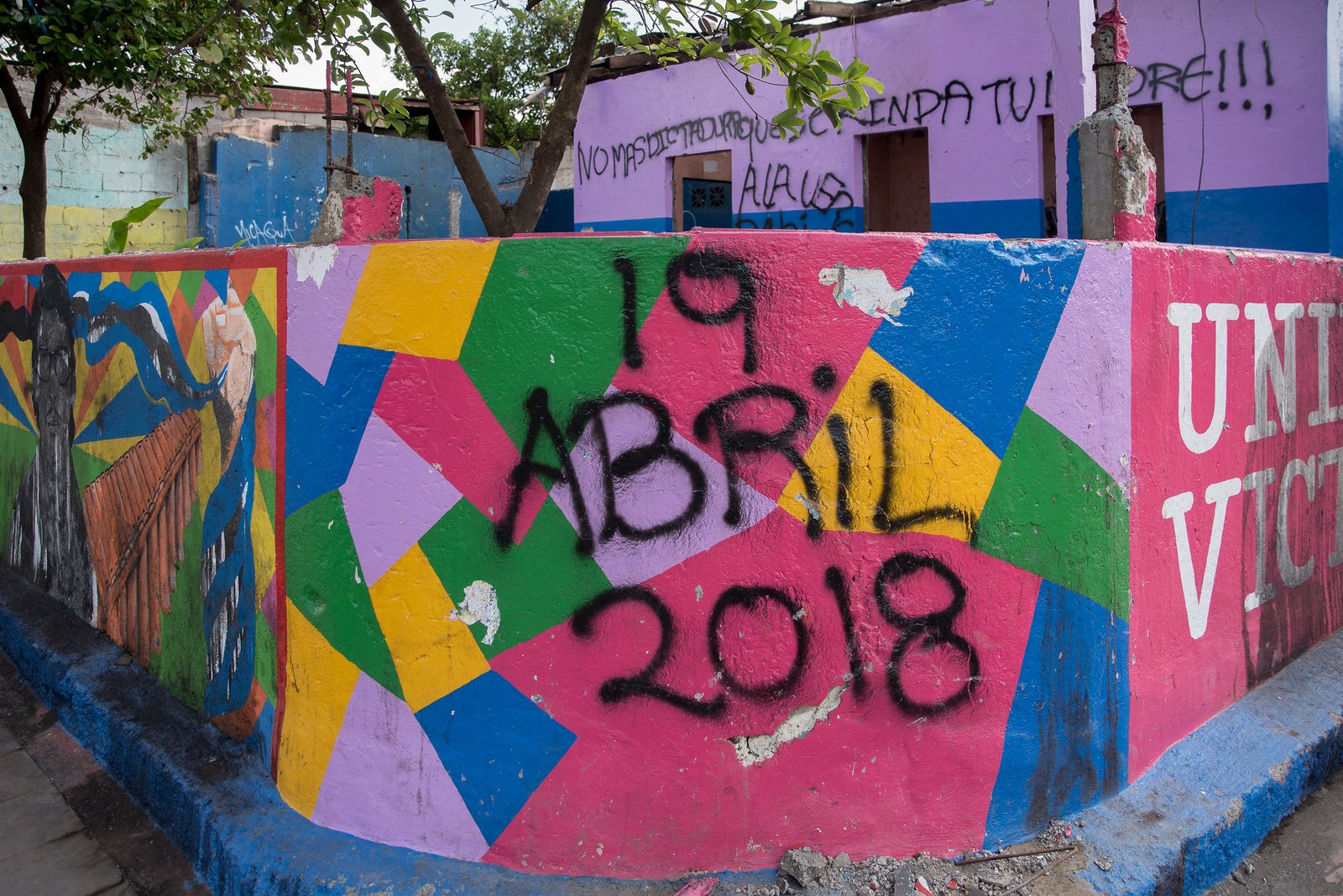
I confess that when I finished reading the article by the writer mentioned abovepublished on the occasion of the 50th anniversary of the establishment of the Argentine dictatorship, I felt directly challenged. And on the eighth anniversary of the April citizen rebellion even more so. Which side of history to stand on? Of those who prefer to forget by letting the gentle water of the years flow, or of those who choose to remember to put together what the author emphasizes as ethical memory? Eight years after the beginning of the massacres, we cannot remember only to delve into the pain. We have to be able to remember to construct judicial truth. The opposite would be to demobilize, to betray those murdered and the rest of the victims of the dictatorship.
In a first impression, in this eighth April, unlike the previous ones, there are three ideas that have been present in the different types of messages launched for the date: memory, justice and hope. It will be because the three are inseparable, one leads to the other and the next returns to the first.
Memory, by definition, is the enemy of forgetting. Forgetting, or in its manipulated version, lying, is the purpose of the dictatorship, committed from the beginning to fabricating what Trumpists have called alternative facts or post-truth. To show the useless narrative of the dictatorship trying to install in national and international public opinion that the April protests were an attempted coup d’état orchestrated by the United States. Worse still: that the murders did not occur or that they were self-inflicted, that the prisoners were traitors to the country and that the exiles were disposable elements who had no right to live in the country.
Without memory, that is, without accreditation of the facts, infamies would prevail, insidiousness would become the norm and the official history of the dictators would be the history that would be transmitted to future generations. Without memory, without documented evidence, the dictatorship would ensure impunity.
And here comes the other component of the trilogy: justice. If memory does not pave the way to justice, memory becomes a sterile ritual, rhetorical exercises that remind, but do not prevent, the repetition of the crimes that have spilled blood so many times in our history. That is why this time justice has risen to the top in the demands for the recovery of democracy. It could even be stated that for the first time justice has emerged as a cardinal value of our political culture, to the same extent that the enforceability of human rights has become the axis around which the fight against the dictatorship is waged.
As a member of the Nicaragua Never Again Collective highlighted a little while ago, there can be no transition to democracy without justice, nor justice without memory.
But none of the above would be possible without hope, in the singular. If ethical memory is the moral rereading of the past, and justice for the crimes of dictatorships is a long-term obstacle course, hope is the strategic bet that fuels confidence in the recovery of our country. Seen this way, hope is the compass that gives meaning to the efforts to preserve memory and the pursuit of justice. This is the hope that, as Gioconda Belli proclaims, creates realities, the one that does not wait for changes to rain from the sky, but rather keeps the course fixed to achieve them. The opposite, the loss of hope would be resignation; that is, the renunciation to continue fighting, including renunciation of justice, and therefore leaving the documented facts forgotten.
If after eight years these three concepts have been linked in the messages of exile, it is because we have known how to keep hope alive, despite the dictatorship’s campaigns inside and outside the country to instill fear, so that there are fewer and fewer people willing to denounce or give testimonies about the repressive waves. But as can be deduced from the countless commemorative activities of this eighth anniversary in different countries, the dictatorship has failed. The hope that fuels the fighting morale continues to enjoy good health.
However, some political expressions of the opposition still need to take the work of memory and justice seriously, and commit to hope. History teaches that every time it has been necessary to emerge from a political regime crisis, the first victim of pacts has been justice in the shadow of pragmatism; memory initiatives have been underestimated or simply thrown in the trash; and the commitment to hope has been stabbed at the first drinks table of pactists who only care about sharing power. They are the organizers of oblivion denounced by Juan Gelman.
But since hope is also elusive, if this happens, it will have to seek refuge in a civil society that, although it is not at its best, these years in the desert will have allowed it to recalibrate the importance of autonomy with respect to parties. The multiplication of social organizations after 2018, whose banner is the defense of human rights, could be decisive in frustrating possible positions favorable to the exchange of impunity for quotas of power in the name of peace.
This time the dictatorship will have to be judged by proving its guilt before national or international courts. With a regime that has demonstrated its inhumanity every day, we cannot trust in atonement for its guilt in any of the other three spheres established by Karl Jaspers for the case of Germany’s political responsibility after 1945. In politics we have already seen that it is very risky; Morally it is impossible with a dictatorship full of psychopaths; but neither in metaphysics with subjects who have anointed themselves as gods. The only possible sphere is the criminal one.
It is hard to say, but eight years after April, the only certain possibility that hope will survive, and that memory will serve to put those guilty of the April massacres in court, is in the ability of a civil society to rebuild itself. It is the part of the country that, between forgetting and remembering, will choose to remember to judge.