1986, key year in the history of Ràdio Valira.
We came from a radio blackout, the General Council had closed Ràdio Andorra and Sud Ràdio in 1981, and in 1985 Ràdio Valira began technical tests. In 1986 we opened and were the first frequency modulated radio.
What does the exhibition suggest?
A journey through 40 years and a tribute to the professionals who have kept the flame alive. It was not obvious to do radio 24 hours without computer media.
The exhibition has been extended until November 14.
It was supposed to last a month, but we exceeded 1,000 visits with good feedback from schools and associations, among other things, for the possibility of taking the audio guides, where you hear curiosities like the advertising of companies in the eighties, companies that are still alive!
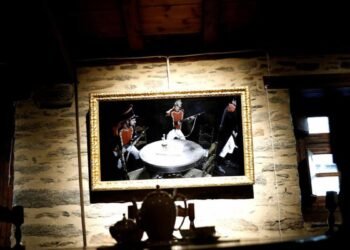
Another uniqueness is the recreation of a studio from the 80s.
It can be compared with a current study and it draws attention to the amount of machines that were needed, you see media such as a DAT, a minidisc, and how we made the first links. There are cell phones weighing around 10 kilos! Next door you have a studio from 2026, where practically everything is managed by software with the support of AI.
And it was said that radio would die when the internet came out.
Practically, 40% of the audience today is on the internet, not on conventional radio, streaming radio is here to stay, but it is clear that radio is not dying because it offers human company and local information, and this is valued.
Do you remember ‘La Guardiola’?
The first competition and the one that lasted the longest in the Catalan language, I think there is no Andorran from that time who did not participate. We played a song backwards and they had to guess it. Candela Colls, who is still in the house, presented it for many years!
They also highlight the rebroadcast of the 1987 avalanche.
A slide on the Escaldes road that caused two deaths. We were there 24 hours a day and also broadcast throughout Catalonia via Cadena 13. Fortunately or unfortunately, we gave a lot of live news, numerous snowfalls and events that have marked the country’s history.
What is the current challenge?
Continue to adapt to new technologies and reach the new audience, which ranges from 12 to 25 years old, creating content that is interesting beyond music radio.
And the future?
We are building a team of young people who I believe will be the future of radio.