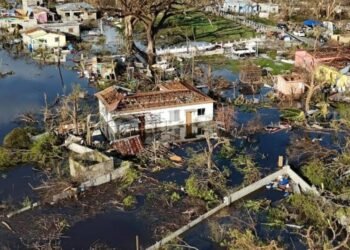
This newspaper remains disappointed that a governance oversight body was not established in legislation for the National Reconstruction and Resilience Authority (NaRRA), the special-purpose vehicle charged with leading Jamaica’s reconstruction after Hurricane Melissa.
While appreciating the need for speed and flexibility in a recovery effort of this magnitude, The Gleaner maintains that the NaRRA legislation concentrates too much power in the hands of the prime minister and the agency’s chief executive officer, notwithstanding the opportunity for post facto review by the State’s accounting and integrity bodies.
That said, The Gleaner’s Editorial Board recognises two important realities. First, the NaRRA is now an institutional reality with a mandate to undertake potentially transformative infrastructure projects that could significantly affect Jamaica’s economic growth and development.
Second, all Jamaicans have a stake in the NaRRA’s success and, therefore, an interest in ensuring that it delivers on its mandate with integrity and transparency. Taxpayers must receive value for their money.
To the extent that the board’s concerns have been eased, this rests on two factors: our confidence in the integrity and competence of NaRRA CEO Antony Anderson, and the commitments given by Professor Peter Blair Henry, chairman of the Jamaica Reconstruction and Resilience Oversight Committee (JamRROC). Although JamRROC is not established in law, it has been appointed by the Government to provide oversight of the NaRRA and to recommend which reconstruction and resilience projects should be prioritised.
UNANSWERED QUESTIONS
There remain many unanswered questions about the JamRROC’s operating structure, including how it will interface with the NaRRA, whether it will have real-time access to the authority’s data, and whether it will receive adequate resources to fulfil its ambitious agenda. Nevertheless, if Professor Henry delivers on his promises, NaRRA has a reasonable opportunity to succeed. Jamaicans would then be able to assess with greater confidence whether reported accomplishments are genuine and whether they are receiving a worthwhile return on their investment.
First, however, there is the Anderson factor.
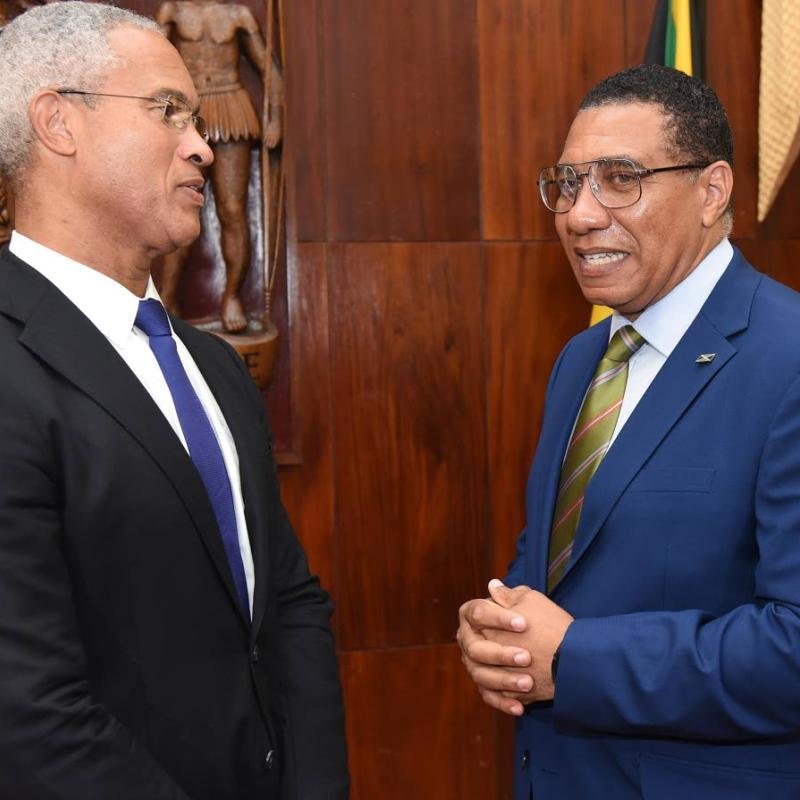
Antony Anderson has built a stellar reputation for integrity and competence. He first distinguished himself as a career military officer who rose to become chief of defence staff of the Jamaica Defence Force. He retained that respect as national security adviser to Prime Minister Dr Andrew Holness and later as commissioner of police, where efforts to reform a distrusted constabulary and expand its use of technology in crime fighting contributed significantly to the dramatic decline in murders in recent years.
That record explains why he enjoys the support of The Gleaner’s Editorial Board, which also accepts at face value his promise that “accountability will be embedded in the DNA of NaRRA”.
The board interprets that statement as a commitment that despite the urgency of reconstruction and the temptation to rely routinely on procurement shortcuts, accountability will remain central to the NaRRA’s operations. Indeed, what is often described as excessive rigidity in government procurement processes frequently reflects weak technical capacity or poorly developed project proposals. These technical shortcomings from proponents who ought to know better are often so obvious as to be explicable and to beg the question as to why they were made in the first instance – and the second and the third go.
The Government has not yet published a comprehensive policy document outlining the JamRROC’s mandate, budget, reporting arrangements, and operational framework. Consequently, the available details of its mission and programme of work are drawn primarily from Professor Henry’s remarks at the committee’s launch.
MANDATE
“Using our think-tank capacity for research, networking, and consultation, our first job is to advise the prime minister and the Cabinet on the selection of reconstruction for the fast-track NaRRA process,” Professor Henry said. “Because the prime minister’s and the Cabinet’s job is to select reconstruction projects that achieve strategic, one-Jamaica objectives even as they address local needs, JamRROC would advise and hold the prime minister accountable for (a) selecting reconstruction projects whose resilience-adjusted economic and social rates of return exceed their capital costs; and (b) working with the help of (NaRRA), the private sector, and international partners in attracting private capital, domestic and foreign, to fund projects that are commercially viable …”
However, questions remain. Given the law’s requirement that information held by the NaRRA remain confidential, it is unclear on what legal basis information will be shared with a body that has no standing in legislation and exists solely as a policy creation.
There are also concerns regarding resources. Professor Henry has promised a far-reaching public education and outreach programme and indicated that the JamRROC will conduct detailed analyses of the NaRRA’s project portfolio. Such undertakings will be expensive. Greater clarity is needed regarding whether the committee has received, or will receive, sufficient funding to carry out its responsibilities effectively.
The Editorial Board also notes Professor Henry’s statement that the JamRROC will focus on the NaRRA’s overall reconstruction portfolio rather than individual projects. This position requires further explanation. Major problems often emerge from a single project before spreading more broadly across an organisation’s operations.
For now, however, both the JamRROC and the NaRRA retain the benefit of the doubt. That does not mean they will be immune from The Gleaner’s scrutiny. On the contrary, their actions and performance will continue to be examined carefully in the public interest.