While Jamaica, like most small island developing states, hasn’t contributed to the carbon emissions that cause global warming, Kingston’s promise to pass climate accountability legislation is a move in the right direction. It suggests the Government’s willingness to go beyond rhetoric on climate governance to actions that should give stakeholders the ability to assess benchmarks that are anchored in law.
“The development of climate change legislation remains a strategic priority of the Ministry (of Water, Environment and Climate Change) (MWECC) and is reflected in its strategic and operational plans,” the ministry said in a statement to Parliament’s Public Accounts (PAC), responding to a performance audit on the Government’s climate adaptation strategies by the island’s auditor general.
The legislation, the MWECC said, was being developed in consultation with relevant ministries, departments and agencies as well as the Office of the Parliamentary Counsel (OPC) and the Attorney General’s Chambers (AGC).
“The proposed framework will seek to clarify institutional roles and responsibilities, strengthen coordination and accountability, support mainstreaming of climate change across sectors, and provide an appropriate basis for monitoring, reporting and implementation of national climate commitments,” the document said.
Significantly, this latest pledge on climate action coincides with a new report by the United Nations Environmental Programme (UNEP) warning that relative to 2025 levels, the world needs to cut carbon emissions by “18 per cent by 2030, 45 per cent by 2035 and 69 per cent by 2040” to keep the rise of Earth’s temperature to below 2°C by the end of the century.
“By contrast, the full implementation of the new nationally determined contributions (NDCs) submitted by around two-thirds of all countries would reduce emissions by five to eight per cent by 2030 and 11 to 15 per cent by 2035 relative to 2025 levels,” UNEP noted in the report.
OVERSHOT LIMIT
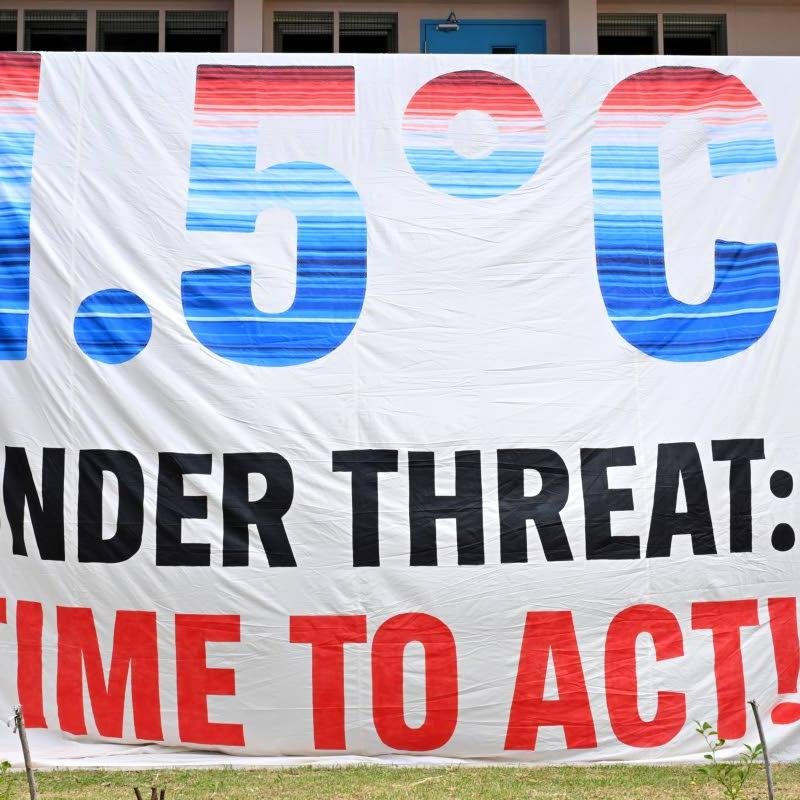
Compared to the start of the industrial period, the world has already overshot the 1.5°C limit on the rise of Earth’s temperature that the international community set in the Paris climate agreement. This makes the new task, according to UNEP, “not only to ensure that global warming stays well below 2°C, but to minimise the duration and magnitude of overshoot and establish a credible return path to 1.5°C by the end of the century”.
Historically, Jamaica has accounted for less than a quarter of one per cent (0.02 per cent) of global carbon emissions, by most measures, that countries pump into the atmosphere, causing it to heat, resulting in changing and largely unpredictable climate patterns.
However, the island has felt the effects of global warming, including eroding coastal areas because of rising seas; prolonged and intense droughts, such as it is experiencing now, and extreme storms, such as Melissa, the Category 5 hurricane that battered western Jamaica a year ago. That storm cost the island over 57 per cent of GDP in damaged and destroyed infrastructure and lost economic activity.
Jamaica is not only seeking to adapt to the changing climate environment, but has undertaken to further limit its own carbon emissions.
FOSSIL FUELS
Fossil fuels account for nearly 90 per cent of Jamaica’s energy consumption. As part of its effort to lower that mix, the Government’s policy is to ensure that half of the power grid is fuelled by renewables by 2030. Renewables currently account for between 12 per cent and 15 per cent of electricity generation.
Over the same period, the Government’s projection is for 16 per cent of the State’s public transit fleet to be run on electric power, while 12 per cent of private vehicles should be EVs.
While Auditor General Pamela Monroe Ellis acknowledged in her February review that the Government had made “meaningful progress in establishing the foundational elements for climate action”, she said that “the pace and effectiveness were insufficient to deliver the intended resilience outcomes”.
The absence of legislation was one of the highlighted shortcomings, which, the report said, “limited the translation of assessed risks into funded, measurable actions”.
The Government, hopefully, will act fast on this, as well as other gaps identified by the auditor general.