The Bar of Ireland has distanced itself from an event that was due to be hosted at its premises in Dublin featuring an address from Ghislaine Maxwell’s long-time lawyer about recent efforts to secure the Jeffrey Epstein accomplice’s release from prison.
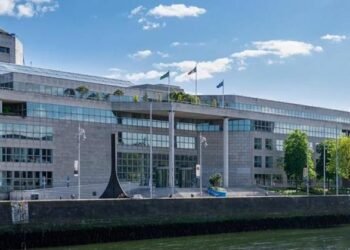
Leah Saffian, a California based attorney, had been scheduled to attend the Bar of Ireland’s Distillery Building on Monday to co-present a session titled: The Great Writ: Werewolves, Witch Hunts and Why Irish Habeas is Not a Fairy Tale.
A notice advertising the event in the bar’s newsletter said Saffian has for 10 years represented Maxwell, “who is often portrayed as a witch in media and photoshopped to resemble Cruella”.
During the hour-long session Saffian was due to give an overview of the United States federal law pertaining to cases challenging the legality of a person’s detention, known as Habeas Corpus petitions. The notice said she would discuss Maxwell’s recent petition for release via this method.
Maxwell, a former British socialite who has maintained her innocence, is serving a 20-year prison sentence for procuring teenage girls for Epstein to abuse.
The event was organised by the California Lawyers Association (CLA) which is visiting Ireland next week. The Bar of Ireland said the association on Friday confirmed it has cancelled the session Saffian was due to co-present.
“While not a Bar of Ireland event, details relating to it were shared with members in our member publication. The description of the event used was provided by the event organisers and The Bar of Ireland regrets any offence it has caused,” the bar said in a statement.
It added that it is the duty of lawyers to represent their clients. “They should not be identified with their clients or their clients’ causes or suffer adverse consequences as a result of being so identified,” the bar said.
Earlier, the Socialist Lawyers’ Association of Ireland said it was concerned about the “framing and language used in promoting this event, and the potential implications of that framing in the context of serious criminal offending and the rights of victims”.
The use of the terminology “witch hunts” in connection with Maxwell’s prosecution “risks creating a public narrative in which accountability for serious offences is recast as persecution”, it said in a statement.
The association, which describes itself as a collective of lawyers, legal academics and law students assisting social movements, stressed its concern did not relate to the principle of legal representation or the role of defence lawyers in upholding due process. It called on the Bar of Ireland to “reflect on the framing of this event and to consider how it may be received by victims of serious crime and the wider public”.
Epstein, a convicted sex offender and financier whose elite associates once included Andrew Mountbatten-Windsor and Bill Clinton, was Maxwell’s former boyfriend. He was captured by federal authorities in July 2019, on sex-trafficking counts. He died by suicide in a New York City federal jail about a month after his arrest.
Maxwell sought to appeal her conviction to the US supreme court in October, but it declined to hear her case.
She later filed a Habeus Corpus petition seeking to set aside her conviction. In a statement last November, Saffian referred to the petition, saying it provided “material evidence” not available at her 2021 trial.
“In the four years since the verdict new evidence has indeed come to light – and is continuing to do so. The Habeas petition demonstrates that had this evidence been available it would have had a material impact on the trial’s outcome,” Saffian wrote.
Saffian was approached for comment.
In a statement, Terrance J Evans, president of the CLA, said its proposed Habeas Corpus programme failed to meet CLA’s code of conduct.
“Consequently, we have cancelled the proposed Habeas Corpus program, and we sincerely apologize to everyone who was offended.
“CLA strongly supports freedom of speech. Every individual should have the right to legal representation, and no attorney should be judged by the behavior of their client. It is important to have dialogue about sensitive legal issues in a way that respects the rights of both victims and advocates. By cancelling this Habeas Corpus program, we seek to adhere to CLA’s standards. We endeavor to more carefully approach educational programs regarding these sensitive issues going forward.”