
– Advertisement –
By Staff Reporter
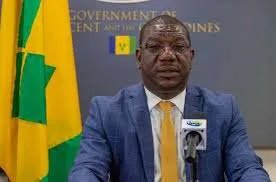
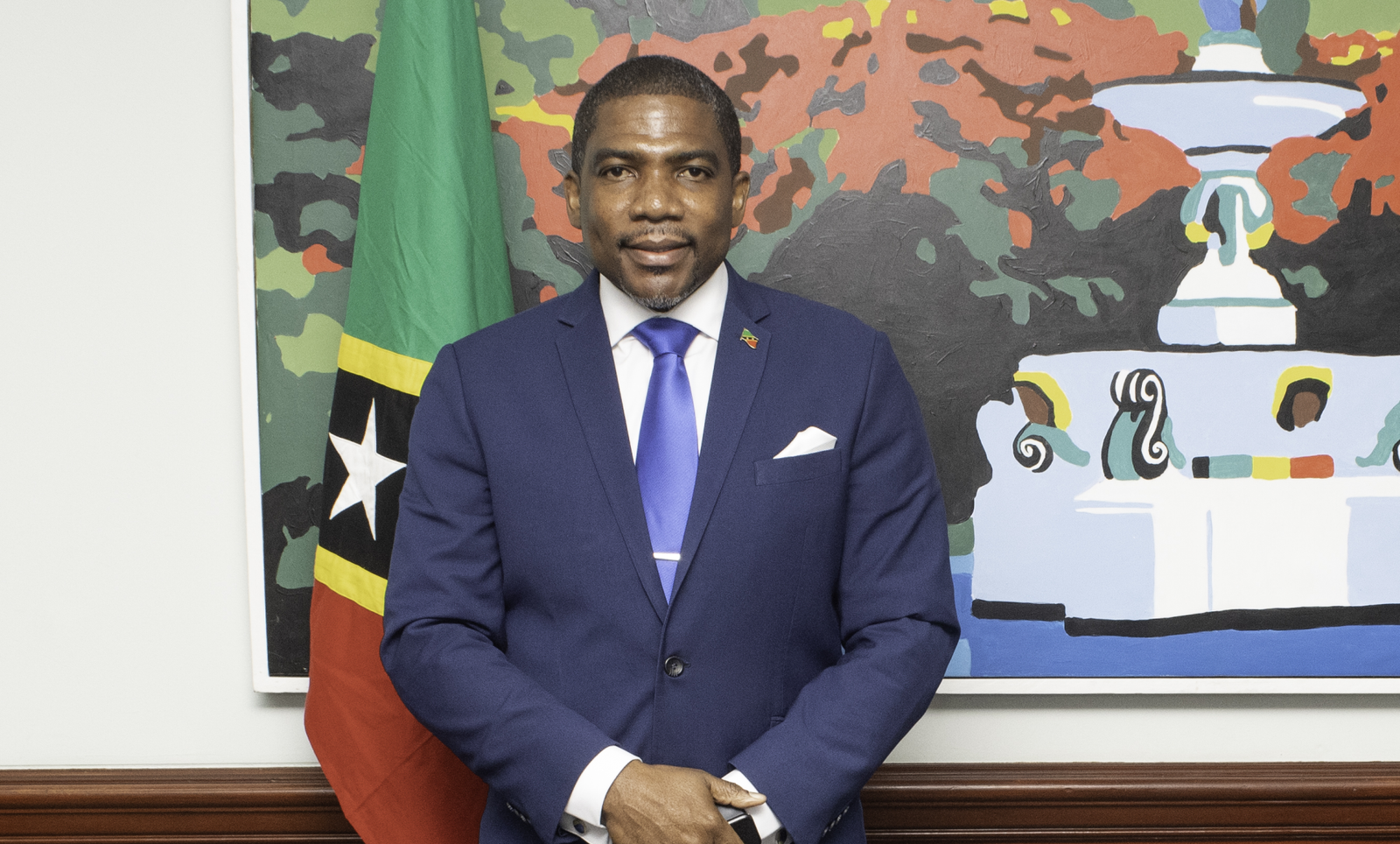
Prime Minister Dr. Terrance Drew has outlined a sweeping national plan aimed at reshaping the economy of St. Kitts and Nevis, while providing short-term relief to citizens grappling with rising living costs, declaring that the Federation must “save itself” amid global uncertainty.
Addressing the nation in a wide-ranging statement, Dr. Drew struck a tone of empathy and urgency, acknowledging the daily struggles of families, workers, business owners, youth and seniors.
“I speak to you not just as Prime Minister, but as a son of this soil… someone who walks among you, listens to you, and understands the realities that many of us are facing each day,” he said.
In response to ongoing economic pressures, the government announced a series of relief measures effective April 20 providing short-term relief to citizens grappling with rising living costs:
- Fuel Relief:
Excise tax on gasoline reduced by 50% (from EC$1.95 to EC$0.98 per gallon) and Customs Service Charge cut from 6% to 3% until July 31, 2026. - Tax-Free Energy Equipment:
All alternative energy products, including solar panels, will be exempt from VAT, CSC and import duties until December 31, 2026. - Shipping Costs:
Surcharges imposed by shippers will be excluded from customs duty calculations. - Discounted VAT Days:
Scheduled for April 17 (Easter), August 28–29 (Back-to-School), and December 11 and 19 (Christmas), allowing consumers to access goods at reduced tax rates.
“These measures are designed to put money back in your pocket… and help you breathe a little easier in a stormy world,” Dr. Drew said.
Despite outlining government initiatives, the Prime Minister urged citizens and businesses to play their part in navigating ongoing challenges.
“If you can grow a little food, share a ride, or fix what you have instead of replacing it—that is wisdom, not sacrifice,” he said.
He also called on businesses to pass savings from tax reductions on to consumers.
Referencing remarks made earlier this year at a CARICOM meeting, Dr. Drew reiterated a central message of self-reliance.
“No one will come to save us. We must save ourselves.”
He concluded with a call for unity and resilience, encouraging citizens to focus on progress rather than division.
“We are a small island state, but we are a large ocean state… our determination will carry us through every storm.”
The Prime Minister pointed to ongoing global instability—conflicts, supply chain disruptions, and volatile fuel prices—as key drivers of economic pressure within the Federation.
“For small island developing states like ours, these global realities are felt more acutely,” he explained, noting the country’s dependence on imports.
He stressed that inflation affecting citizens is largely imported rather than locally generated, adding that “shock after shock” has created widespread anxiety among the population.
Central to the address was a renewed push to reduce reliance on the Citizenship by Investment (CBI) programme, which Dr. Drew said could no longer serve as the primary pillar of national revenue.
Instead, the government is advancing its Sustainable Economic Expansion and Diversification (SEED) strategy under the broader Sustainable Island State Agenda (SISA) framework.
“This is a pivot from dependence to durability, from vulnerability to resilience,” he stated.
The plan focuses on expanding productive sectors, strengthening economic foundations, and ensuring long-term stability through diversification.
Dr. Drew highlighted major infrastructure and sustainability projects already underway.
Among them is a geothermal energy initiative on Nevis, where Iceland Drilling has been contracted to develop wells as part of a planned 30-megawatt power plant expected to supply both islands.
In addition, a 50-megawatt solar energy and battery storage project in Basseterre Valley is projected to deliver roughly 30 percent of the country’s electricity needs.
“We are not just changing light bulbs—we are rewiring our entire energy future,” he said.
Water security has also been significantly bolstered with the commissioning of a new desalination plant capable of supplying potable water to nearly 70 percent of the population, alongside the identification of 17 new groundwater sources.
On food security, the government has invested over EC$2 million in farmers and fisherfolk, launched greenhouse initiatives, and introduced an agricultural insurance programme to mitigate climate risks.
“Food is sovereignty. When you cannot feed yourself, you are not fully free,” the Prime Minister declared.
Tourism continues to show strong recovery, with cruise arrivals nearing one million and stayover numbers rising year-on-year.
Dr. Drew announced that P&O Cruises is expected to begin homeporting in Basseterre by November 2027—a move he said will significantly boost economic activity through increased visitor spending and local business opportunities.
He also pointed to international engagement efforts, including participation in the AfriCaribbean Investment Summit in Nigeria, as part of a broader strategy to connect citizens to global markets.
“The future of St. Kitts and Nevis must not be limited by geography, but defined by opportunity,” he said.
The government has delivered more than 800 housing solutions to date, with over 100 additional units currently under construction across multiple communities.
Plans are also advancing for a new climate-resilient Basseterre High School, with 95 percent of the workforce expected to be local.
Meanwhile, groundwork is progressing for the construction of a new Joseph N. France General Hospital, with physical works expected to begin in the second half of 2026 following site validation.
Dr. Drew reported progress in addressing crime through a public health approach that combines prevention, intervention and enforcement.
“Crime and violence is not just a law enforcement problem—it is a public health problem,” he said, noting a reduction in serious incidents.
A new Youth Economic Empowerment Bureau is also being established to support young entrepreneurs, reduce unemployment, and provide structured pathways into business and innovation.
“This is not a handout. This is a launch pad,” the Prime Minister stated.
– Advertisement –