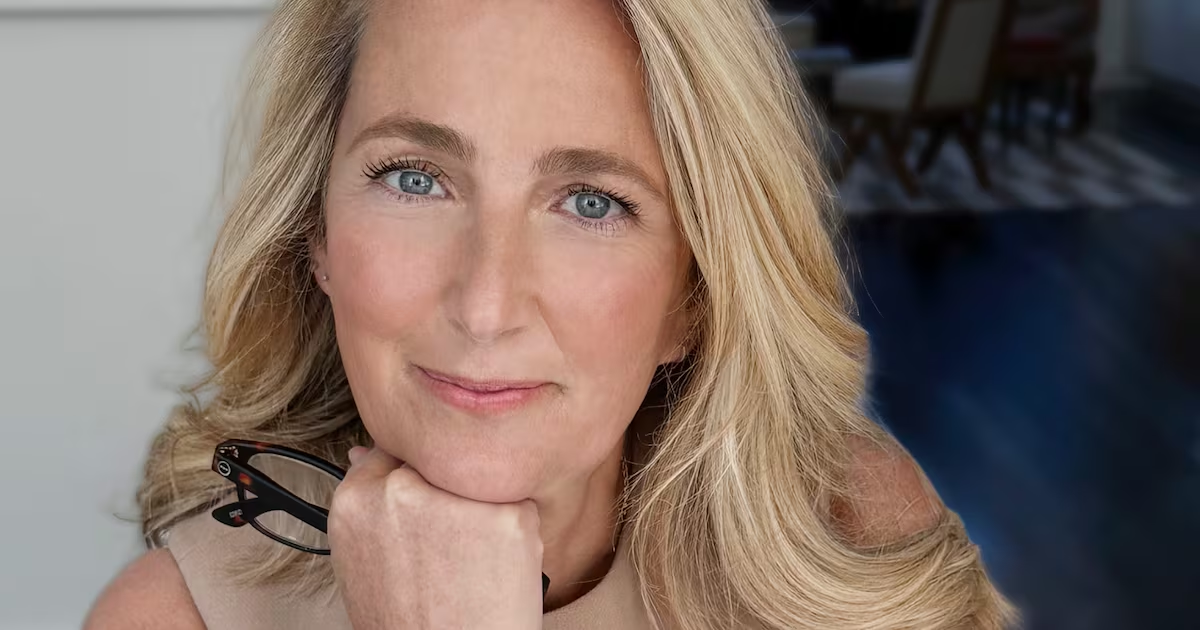
If you’re a woman married to a man – or if you’re a woman considering getting married to a man, or if you’re a woman contemplating no longer being married to a man, or if you’re a man to whom any of the above applies – you’ve either read Belle Burden’s Strangers, or someone has recommended you read it, or someone is about to. It is one of those books. It is ubiquitous: on all the bestseller lists, on Oprah, all over your Instagram feed, riling people up on X. Even if you have escaped it so far, you won’t for much longer, because there is a Netflix version starring Gwyneth Paltrow in the works. And now there is the inevitable backlash.
The memoir, which was published in the US in January having started life initially as a viral Modern Love column in the New York Times, is – on one level – the painfully ordinary story of the dissolution of a marriage in midlife. On another, it is a sorry tale of extraordinary privilege and colossal financial foolishness.
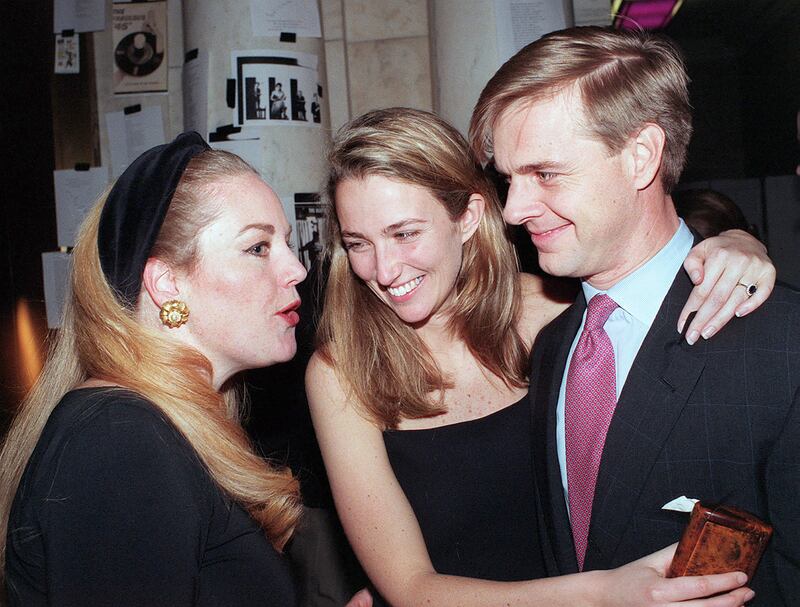
The short, more relatable version is that Burden thought she and her husband – she calls him “James” (while four seconds of googling reveals his real name, we’ll stick with James) – were in what had been a happy, if somewhat staid, marriage, for nearly 21 years. They had three children together. She was soon to turn 50. One night, a week or so into the first Covid lockdown, Burden was mopping the kitchen floor when she got a call from a stranger who said his wife was having an affair with James.
Not even 12 hours after the call, conflict-avoidant, birdwatching, boring James walked out, renouncing his attachment to all of it: to the home on Martha’s Vineyard and the other one in Tribeca; to custody of the children; to Burden herself; to their shared history. (But not, it would turn out, to the millions he had quietly accumulated.) She experienced the waves of panic and grief which come with the feeling that you no longer know, and may never have known, the person you have spent your whole adult life with. So far, so standard midlife cautionary tale.
The longer and less relatable version involves hedge funds, trust funds, country club memberships, $400,000 keys to private beaches, and unwise prenuptials.
[ ‘I voted for divorce 25 years ago. I never thought I’d need it’Opens in new window ]
But when you strip back the gilded trappings of their very comfortable life – the kind of life where, when you retreat to your beach house at the start of the pandemic, you make sure not to forget the children’s cellos – the book is, as Drew Barrymore put it, “an incredible tutorial” for women. Burden describes how, during the marriage, she “emptied my trusts” to buy the family’s two homes. James’s name went on the deeds to both, but a prenup meant the millions of dollars he accumulated during their marriage remained his alone when they divorced. “I could not afford to buy James out of either home. I would have to sell both,” she writes. Only at the very last hour did he agree to give up both properties.
The truth – or so a 3,200-word investigation in the New Yorker claims – is a little more complicated. Divorce records reveal she had total personal wealth worth about $63 million in no fewer than five trusts, various other assets, plus $50,000 dollars per month in baseline child support post-divorce. All things are relative, but even by the standards of, say, the average Russian oligarch, this is not financial penury.
Still, does it matter if her financially ruinous divorce is another woman’s wildest dreams scenario? Does it lessen the impact of her warning if she omitted key details and exaggerated the precarity of her position just a tad? Not if the legions of fans rushing to defend her is any indication.
That may be because many women recognise that, away from the noise and fury of an internet tearing itself up over the ethics of feeling sorry for a divorced heiress who should never have signed that prenup, the book may not tell the whole truth, but it tells some essential truths.
[ Step by step, how to get a divorce in IrelandOpens in new window ]
Burden says she wants women to consider what might happen to them when a marriage ends. They probably should also give a bit more thought to what happens from practically the moment it begins.
There’s nothing explicit in the average set of heterosexual marriage vows about the bride promising to love, honour and surrender her financial autonomy, but for many couples, it is still taken as read. Though there’s a striking lack of data on this issue for Ireland, we know that women’s earnings trajectory dips after they have children and never recovers, and that nearly 30 per cent of women work part-time, compared to about 13 per cent of men, a choice which impacts on their career prospects and pension entitlements. And while attitudes to caring roles may have changed in theory, in practice, women still shoulder far more of this.
If marriage is generally not great for women’s financial independence, separation and divorce can be catastrophic. An ESRI study in 2024 found that becoming a lone parent – the majority of whom are women – more than doubles the risk of economic vulnerability for someone previously married. Even women who have a degree and presumably better job prospects still have a 24 per cent risk of economic vulnerability should they find themselves raising children alone.
Irish people will talk all day long about the cost of a wedding: how much you have to pay for flowers or hotel deposits or whether you really need those little bags of sugared almonds for the guests. But our last relationship taboo may be the true price women pay for marriage and a family. That is the one many women are still paying 20, 30 or 50 years later.