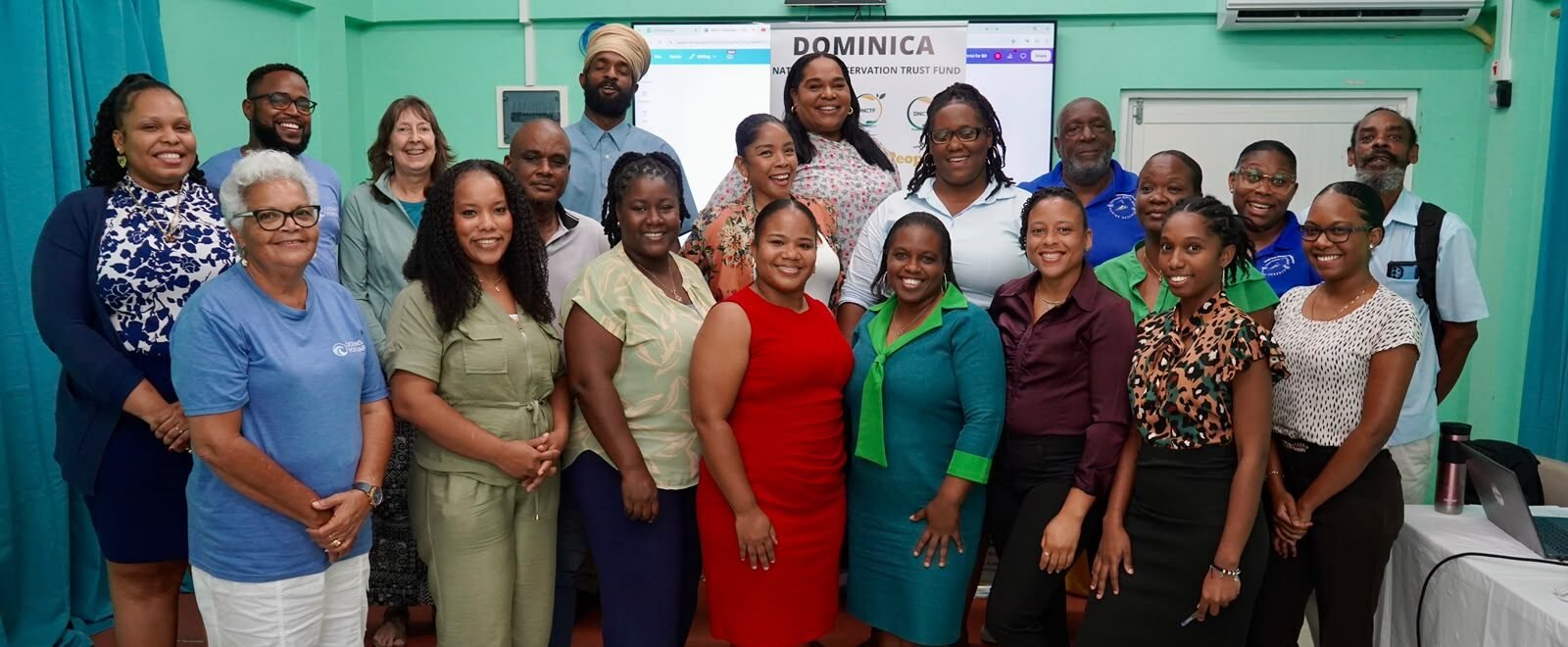

Recipients of conservation grants in Dominica have received additional training aimed at improving project management, financial accountability, and environmental safeguards as they implement biodiversity initiatives across the island.
As per a Dominica National Conservation Trust Fund (DNCTF) press release, the training focused on Financial Donor Reporting and Environmental and Social Management Planning (ESMP) and was held on Wednesday, July 28, 2026, for recipients of grants awarded under the Caribbean Biodiversity Fund’s (CBF) CRAB Pro-Nature Grant Programme.
The initiative was supported by the Agence Française de Développement (AFD) and the Fonds Français pour l’Environnement Mondial (FFEM) through the Caribbean Biodiversity Fund as part of the Caribbean Regional Architecture for Biodiversity (CRAB) Project.
The workshop was designed to assist organizations implementing two conservation projects: the Rapid Response to Lethal Yellowing Disease Project and the Enhancing Coral Reef Restoration, Monitoring, Surveillance and Compliance within the Soufriere and Scotts Head Marine Reserve Project.
The sessions were facilitated by Ms. Lyn Baron and DNCTF Chief Executive Officer Dr. Rhonda Linton, who guided participants through the financial and environmental requirements associated with donor-funded projects.
DNCTF reported that participants received practical instruction on financial reporting procedures, budget management, record keeping, supporting documentation and ensuring value for money. They also explored key aspects of environmental and social management planning, including environmental and social risk management, stakeholder engagement, grievance mechanisms, gender considerations, Indigenous Peoples, chance and environmental finds, incident reporting, monitoring and waste management.
The facilitators also highlighted best practices for implementing environmental and social safeguards, including identifying potential risks early, introducing mitigation measures, maintaining stakeholder engagement throughout project implementation, documenting activities, responding promptly to grievances and incidents, and monitoring the effectiveness of safeguard measures.
According to the DNCTF, supporting conservation efforts extends beyond providing financial assistance. The organization said strengthening the capacity of grant recipients is essential to ensuring conservation projects are effectively managed, remain accountable to donors and achieve lasting benefits for both biodiversity and local communities.