The question is not whether Albania and Kosovo need investments because the answer is clear. The question is whether we will be able to distinguish good projects from bad ones, without falling into the trap of automatically rejecting everything that comes from outside. The economic history of Europe shows that prosperity was not built on the fear of capital, but on the ability to attract and put it at the service of economic development.
Few topics evoke stronger reactions in Albania and Kosovo than foreign investments. It is enough to announce a large tourism, energy or industrial project and the debate quickly leaves the economy. Questions are raised about ownership, environmental impact, transparency, public interest and, occasionally, ulterior motives. Given the history of the region, these concerns are completely understandable and legitimate. Citizens must ask difficult questions and those in power must be ready to provide answers.
However, the debate often takes an unhelpful turn. Skepticism towards a certain project turns into skepticism towards the investments themselves. And this reminds me of what Milan Kundera called “The unbearable ease of being”, because of the unbearable ease with which we draw conclusions without knowing the facts. A project is declared good or bad, an investor is condemned or glorified, long before the projects, procedures, funding or real impacts are considered. This is a luxury that developing countries cannot afford.
Why is everyone competing for investment?
Across Europe, governments are competing aggressively to attract foreign capital. France recently announced new investments of around 93 billion euros under the “Choose France” initiative. Germany is vying for industrial projects, Ireland continues to attract global technology and pharmaceutical companies. The same applies to Poland, the Netherlands, Italy, Switzerland, Spain and many other countries.
These countries do not suffer from a lack of capital. They have developed financial markets, pension funds, strong institutions and access to significant domestic financial resources. However, they invest great political energy in attracting investors. The reason is that investments create jobs, bring technology, innovation and management know-how, strengthen supply and value chains, increase exports and productivity. They often open doors to international markets that local businesses find difficult to reach on their own.
If the world’s richest economies compete so fiercely for investment, then it is hard to argue that less developed countries can afford the luxury of indifference.
Albania and Kosovo need capital
The economic development of Albania, Kosovo and most of Southeast Europe depends on foreign investments. Both countries need modern infrastructure, competitive industries, clean energy, quality jobs and higher living standards. Both aim to get closer to the economic level of the European Union and create opportunities for young people to build their future in the country, not seek it in exile.
These ambitions require investments that are measured in billions of euros, not millions, investments from legal and transparent sources, not from money laundering or corruption. The local financial potential is not enough to finance this transformation, which does not only apply to Albania and Kosovo. Few countries at this stage of development have managed to modernize their economies without significant foreign capital. Neither Ireland nor Poland nor Estonia did.
Ireland’s transformation from one of Western Europe’s poorest economies to a global center of technology, pharmaceuticals and advanced services relied on decades of foreign investment. Poland’s economic rise after the fall of communism was accelerated by international companies that brought capital, knowledge and access to global markets. Estonia followed a similar path. None of these countries saw foreign investment as a threat, but as a tool for national development.
The paradox of Albania and Kosovo
Herein lies the paradox. Albania and Kosovo need investments more than most other European countries, but at the same time compete for a more limited group of investors. Unlike some countries in the region, both have chosen to build their future within the Euro-Atlantic space. Kosovo in particular has avoided orienting its development through Russian or Chinese capital. Albania has had some Chinese investments over the years, but its strategic orientation remains clearly western.
This is the right path, but also the most difficult path. Serious Western investors are not persuaded by political promises alone. They require legal certainty, functioning institutions, protection of private property, environmental standards, and legal predictability and consistency.
Before a single euro is invested, the project passes through the hands of lawyers, auditors, engineers, environmental experts, banks and regulators. Ownership, source of funds, property titles, permits, environmental impact and legal compliance are verified. For projects that take place in Europe, this control is even more rigorous. This is one of the reasons why Western investments are difficult to attract, but at the same time remain extremely important and necessary.
The case of the Albanian coast
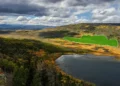
The debate about tourism projects in Albania deserves more depth than we are seeing today in the public discussion. The Albanian coast is one of the most beautiful and least developed tourist assets in Europe. Questions about environmental impact, public access, ownership structure, funding sources and long-term benefits are entirely legitimate. Every big project needs to be analyzed carefully.
But there is another question. How can Albania build a higher level tourism industry without strong investments?
Luxury resorts, marinas and supporting infrastructure require hundreds of millions, in some cases billions of euros. No country with Albania’s current level of local capital has built a modern tourism industry with its own resources alone. Across Europe, international capital has financed many of the projects that are today considered success stories. In 2025, American companies were the largest foreign investor in Europe, with a total of 943 investment projects. Even the most developed European economies continue to compete for American capital and international investment.
Capital has always moved from places where it is abundant to places where it is scarce. This is how economic development has worked for centuries. Therefore, the question we should ask is not whether foreign capital should participate in the development of Albania or Kosovo, but whether the projects and funding sources are legal, transparent, sustainable for the environment and in the interest of the society where they are developed.
Let’s not confuse the means with the goal
For Albania and Kosovo, the risk is not that they will receive too much foreign investment, but that they will continue to receive very little of it. The rejection of bad projects is institutional maturity, the demand for transparency is democratic maturity, environmental protection is national maturity.
But treating investment as a problem in itself risks confusing the means with the end. The goal is development, and development requires capital. The countries that manage to reduce the gap with the developed world are not those that are afraid of investments, but those that learn to attract them and use them in function of their long-term national interest.
And here we return to Kundera. Not in “The unbearable ease of being”, but in the unbearable ease with which we often make judgments before knowing the facts. Ultimately, the question is not whether Albania and Kosovo need investment because the answer is clear. The question is whether we will be able to distinguish good projects from bad ones, without falling into the trap of automatically rejecting everything that comes from outside.
The economic history of Europe shows that prosperity was not built on the fear of capital, but on the ability to attract and put it at the service of economic development.
(The author is an economist and founder of ECIKS – www.eciks.com)